
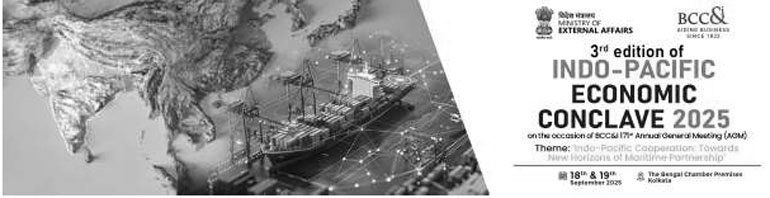
Inputs from Indo-Pacific Conclave to shape India’s policy blueprint
As global trade routes face mounting pressures from geopolitical tensions and climate shifts, India's Ministry of External Affairs (MEA) and the Bengal Chamber of Commerce and Industries (BCCI) convened the third Indo-Pacific Economic Conclave here, drawing diplomats, experts, and business leaders to forge pathways for regional resilience.
The two-day event, which wrapped up today, zeroed in on maritime partnerships, regional challenges, and the ripple effects of global trade dynamics on the Indo-Pacific - a region that accounts for over 60% of global GDP and nearly 80% of world trade. Held at the BCCI's premises amid Kolkata's bustling port heritage, the conclave underscored the Bay of Bengal's pivotal role as a trade nexus, aligning with broader initiatives like BIMSTEC's push for deeper ties in energy, blue economy, and disaster management.
Ajay Kumar, Joint Secretary in the MEA, kicked off the closing session by framing the gathering as a timely response to the region's evolving pressures. We have assembled a number of experts and diplomats from different countries in the Indo-Pacific, as well as experts from the Indian side and the business community," Kumar said. "The purpose is to look into a lot of challenges facing the Indo-Pacific region."
The agenda spanned a spectrum of pressing issues: spurring economic growth amid supply chain disruptions, advancing sustainability through cleaner energy transitions, easing trade constraints exacerbated by recent Red Sea attacks and U.S. tariff hikes, and bolstering maritime security in contested waters. Participants, including high-level delegates from 11 Indo-Pacific nations, brainstormed pragmatic fixes – from joint investments in green shipping corridors to harmonized digital trade standards – that could inform India's federal diplomacy and bilateral pacts.
Ajay Kumar emphasized the conclave's tangible outcomes, assuring attendees that the rich discussions wouldn't fade into obscurity. There have been a lot of valuable inputs, very important, very thoughtful deliberations," he noted. "We will prepare a document taking out all those deliberations and outcomes, which will be available to all of you, the public, the government, and policymakers. This is the purpose."
The event wove in India's ambitious Indo-Pacific blueprint, spotlighting Prime Minister Narendra Modi's SAGAR (Security and Growth for All in the Region) vision, the Indo-Pacific Oceans Initiative (IPOI), and SAGARMALA for port-led development. "There are a number of initiatives already announced at the highest level. This is not being done unilaterally. We are partnering with other countries, and it's an evolving process," Kumar added, hinting at ongoing talks with allies to counter emerging maritime threats without spilling specifics.
BCCI President Arnab Basu hailed the conclave as a step toward "a future-ready Indo-Pacific through investments in marine biodiversity conservation, climate resilience, and collaborative economic policies - one that ensures prosperity, stability, and ecological balance." Echoing this, the event invited global partners to join IPOI, positioning India as a bridge for inclusive growth in a multipolar world.
As the Indo-Pacific grapples with the U.S. -China frictions and climate-vulnerable sea lanes, Kolkata's conclave emerges as a beacon of multilateralism. With its policy compendium set for release, the forum could catalyze actionable shifts, from diversified supply chains to fortified maritime alliances, ensuring the region's economic engine hums on.