
Infosys Founders Snub Karnataka Caste Survey: A Disappointing Stand Cloaked in Privilege
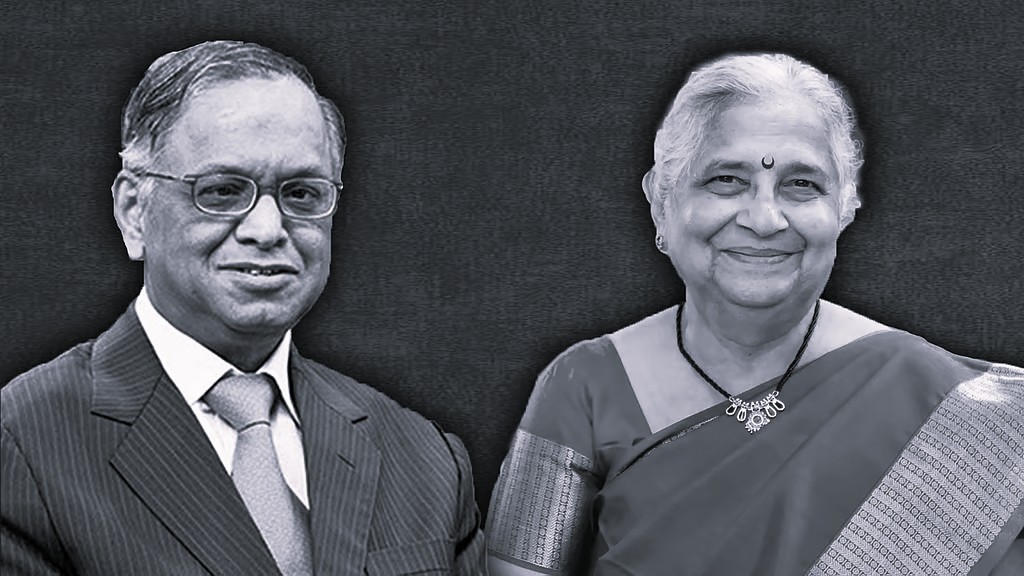
Infosys founder N. R. Narayana Murthy and his wife, Rajya Sabha MP and author Sudha Murty , have snubbed the Karnataka government’s socio-economic and educational survey—popularly called the caste survey—by refusing to participate, stating that they “do not belong to any backward community.”
The couple’s official letter to the Karnataka State Backward Classes Commission , verified by the commission itself, expressed a categorical refusal to share information, saying they “will not participate in this population census.” Their reasoning—that they do not belong to a backward class—has raised eyebrows for the way it sidesteps the purpose of the exercise and reduces it to an identity assertion rather than a civic responsibility.
For a couple who have long been celebrated as intellectual and moral voices in modern India, this stance is both surprising and troubling. The survey, designed to gather comprehensive socio-economic data across Karnataka’s nearly seven crore residents , is a crucial tool for the state to design targeted welfare and education policies . The more accurate and current such data is, the better governments can act to bridge inequalities, identify underrepresented communities, and distribute resources effectively.
By choosing to opt out—and doing so on the grounds of “not being backward”—the Murthys have, in effect, reinforced the very caste distinctions they could have helped dismantle. They could have, at the very least, declined participation on the principle that they do not believe in caste hierarchies . That would have been an ideological statement. But to explicitly claim they are not backward reeks more of self-identification with privilege than of moral conviction.
The Karnataka government, led by Deputy Chief Minister D. K. Shivakumar , has clarified that participation is voluntary. Yet, in a democracy where data drives justice , voluntary participation also tests the social conscience of those who have benefited most from systemic privilege.
Public policy relies not on individual vanity but on collective cooperation . Refusing a survey intended to improve the lives of millions—and doing so with an air of superiority—is less about privacy and more about the illusion of being above the public good . The Murthys’ letter, if anything, has reopened an uncomfortable question:
Is India’s elite still too proud to be counted?