
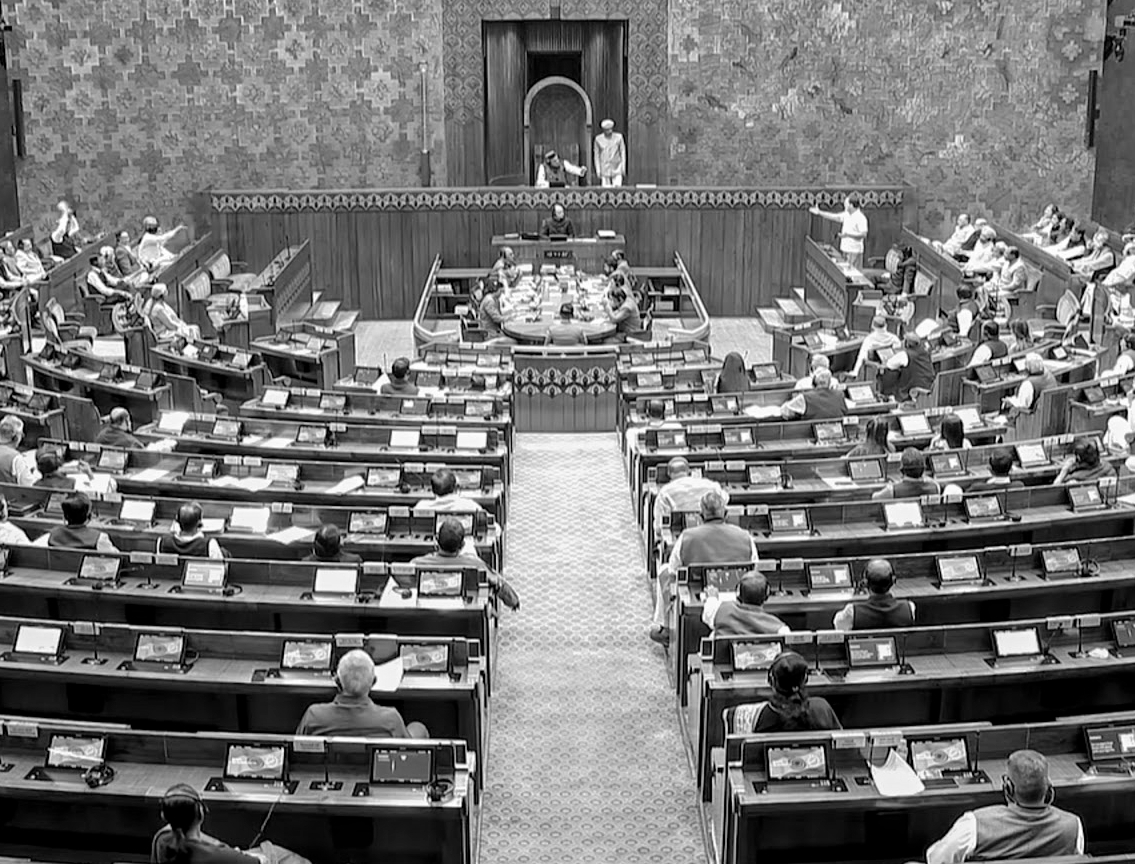
Industrial Relations Code (Amendment) Bill, 2026 Introduced in Lok Sabha
Seeking to prevent any future legal or administrative confusion, Union Labour Minister Mansukh Mandaviya on Wednesday introduced the Industrial Relations Code (Amendment) Bill, 2026 in the Lok Sabha through the supplementary agenda soon after the Question Hour.
The amendment aims to clarify the legal effect of the repeal of older labour laws that were subsumed under the Industrial Relations Code (IRC), 2020 . The 2020 Code had replaced three key enactments: the Trade Unions Act, 1926 , the Industrial Employment (Standing Orders) Act, 1946 , and the Industrial Disputes Act, 1947 which governed trade unions, industrial employment, and industrial disputes. Section 104 of the IRC contains savings provisions to ensure the continuity and legal certainty of these laws even after repeal.
According to the statement of objects and reasons accompanying the Bill, while the repeal of the older laws has already taken effect under Section 104, there is a possibility of future confusion arising from misinterpretations that the executive has the power to repeal these enactments independently. The proposed amendment therefore seeks to prevent any such misconceived claims and ensure clarity for courts, employers, employees, and trade unions.
The move is significant as it reinforces the smooth implementation of the IRC, 2020 , safeguards stakeholders from unnecessary litigation, and strengthens transparency and legal certainty in industrial relations governance. It underscores the government’s commitment to maintaining a stable and predictable legal framework for labour laws, while ensuring that the transition from older laws to the unified code does not create avoidable disputes.
The Bill, once passed, will formally remove any doubts about the continuity of provisions under the repealed Acts, thereby clarifying the legal landscape for industrial relations in India .