
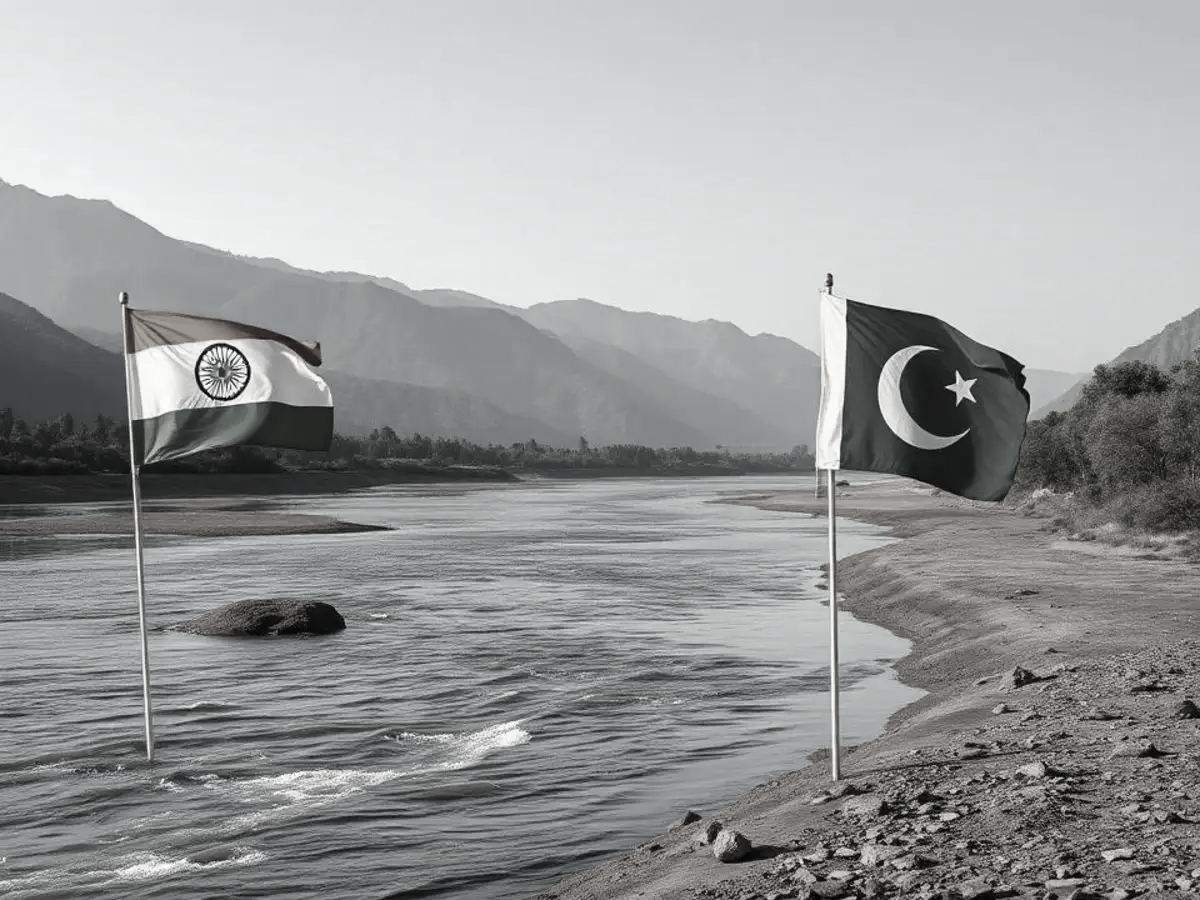
Indus water row sees new escalation as Pakistan issues war warning to India
Tensions between India and Pakistan have sharply escalated over the Indus Waters Treaty, with Islamabad warning that any suspension or disruption of water flows guaranteed under the 1960 agreement would be treated as an “act of war,” while New Delhi has maintained its security-driven stance and linked treaty cooperation to broader bilateral concerns.
On December 19, Pakistan’s Deputy Prime Minister and Foreign Minister Ishaq Dar accused India of “weaponising water” after Pakistan observed sudden and unusual fluctuations in the Chenab River’s flow. Dar said these changes occurred without prior notification and violated the core provisions of the Indus Waters Treaty. Addressing foreign envoys in Islamabad, he stated that such actions “strike at the heart of the treaty” and pose a direct threat to Pakistan’s agriculture, food security, economy, and regional stability. Dar warned that water is an existential issue for Pakistan and declared that “any attempt to stop or divert Pakistan’s share of water will be considered an act of war.”
Pakistan said it formally wrote to India seeking clarification over the abrupt changes in river flow, calling them unprecedented and destabilising. Islamabad maintained that the treaty mandates transparency, data sharing, and advance communication, especially concerning western rivers allocated to Pakistan. Dar said Pakistan remains committed to peaceful resolution but would not compromise on what he described as its “legitimate and lawful water rights” under international law. He also urged the international community to take note of what Pakistan views as unilateral actions that undermine one of the world’s most durable water-sharing agreements.
On December 20, Pakistan intensified its diplomatic outreach, reiterating that the Indus Waters Treaty does not allow unilateral suspension under any circumstances. Pakistani officials stressed that cooperation mechanisms under the treaty, including routine data exchange and technical engagement, have effectively stalled since earlier this year. Islamabad warned that continued disruption risks humanitarian and economic consequences for millions dependent on Indus basin waters.
India has not issued a direct response specifically addressing Pakistan’s latest allegations regarding the Chenab River flows. However, New Delhi has consistently defended its broader position in recent months, arguing that treaty cooperation cannot be insulated from security realities. Indian officials have maintained that India is exercising its legitimate rights under the treaty and has repeatedly accused Pakistan of undermining trust through cross-border terrorism. India has linked the suspension of treaty mechanisms to national security concerns following the April 2025 militant attack in Indian-administered Kashmir, which New Delhi blamed on Pakistan-based groups, an allegation Islamabad denies.
India has also rejected Pakistan’s attempts to internationalise bilateral disputes, asserting that issues related to water, like all outstanding matters, must be addressed bilaterally. Indian representatives have accused Pakistan of maintaining an “obsessive focus” on India while failing to address terrorism concerns. New Delhi has reiterated that Jammu and Kashmir is an integral part of India and has firmly opposed third-party mediation in India-Pakistan disputes.
The Indus Waters Treaty, brokered by the World Bank in 1960, governs the sharing of six rivers of the Indus basin. India controls the eastern rivers Ravi, Beas, and Sutlej, while Pakistan has rights over the western rivers Indus, Jhelum, and Chenab, with India permitted limited non-consumptive use. The treaty has historically survived wars and prolonged diplomatic breakdowns, making the current standoff particularly significant.
Analysts warn that escalating rhetoric over water risks transforming one of South Asia’s most resilient agreements into a new flashpoint. With water security deeply tied to livelihoods, food production, and regional stability, the continued breakdown of dialogue and treaty mechanisms threatens to further destabilise already fragile India-Pakistan relations.