
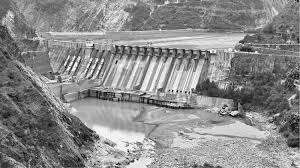
Indus water flow turns game changer for north
Union Minister Manohar Lal Khattar on September 19 announced a major development in India’s water management strategy. Water previously flowing under the suspended Indus Waters Treaty with Pakistan will now be redirected to Delhi, Haryana, and Rajasthan within the next one to one-and-a-half years, a timeline required to build and upgrade the pipelines, canals, and storage systems needed for safe distribution. The minister described it as a classic case of “aapda mein bhi avsar”,turning adversity into opportunity,highlighting how a crisis can be transformed into a resource advantage.
Background: Indus Waters Treaty The Indus Waters Treaty, signed in 1960, governed the allocation and use of the Indus river system and its tributaries-Ravi, Beas, Sutlej, Jhelum, and Chenab,between India and Pakistan. While India had exclusive rights over the eastern rivers (Ravi, Beas, and Sutlej), the western rivers (Indus, Jhelum, and Chenab), carrying about 135 million acre-feet of water annually, largely flowed to Pakistan. Following the Pahalgam terror attack in April, which claimed 26 lives, India suspended the treaty citing Pakistan’s failure to adhere to its conditions.
Impact on Northern states Redirecting this water has profound implications. Delhi, Haryana, and Rajasthan are perennially water-stressed, especially during summers and drought years. This additional supply can stabilize urban water grids, support irrigation in agricultural belts, and help industrial zones meet their water needs. For Delhi, it could ease pressure on the Yamuna and groundwater reserves. Haryana and Rajasthan, heavily reliant on canals and monsoon-fed reservoirs, stand to gain substantially for both farming and domestic consumption.
However, the shift is not without challenges. Ensuring safe storage, efficient distribution infrastructure, and minimizing wastage will be critical. Large-scale water transfer also requires careful environmental planning to prevent ecological damage and maintain riverine health. Strategically, this move underscores India’s growing emphasis on water security and regional self-reliance. By harnessing resources previously allocated externally, the country can strengthen its urban and agricultural resilience. That said, this decision comes months after the suspension of the Indus Waters Treaty following the Pahalgam attack in April, meaning these measures should arguably have been implemented much sooner to maximize benefits and address water needs more promptly.
In essence, the suspension of the Indus Waters Treaty, though a response to a security crisis, is transforming into an opportunity for northern India. With careful planning, this redirected water can boost agriculture, stabilize urban supplies, and secure livelihoods, turning a historic treaty challenge into a landmark advantage for the region.