
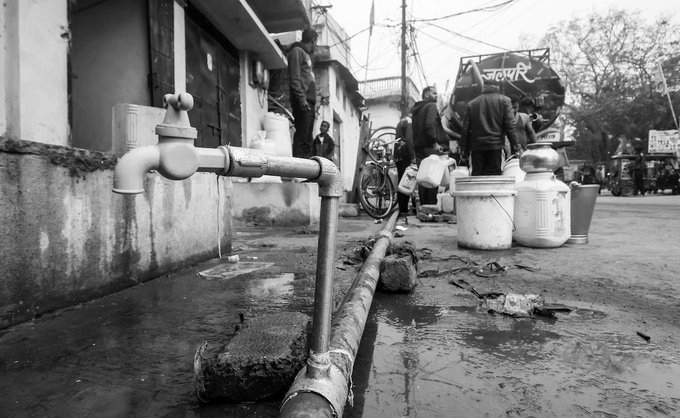
Indore water crisis: 62-year-old dies, locals say 29 dead from contaminated supply
A 62‑year‑old resident of Bhagirathpura in Indore has died amid a widespread outbreak of vomiting and diarrhoea that local families say was caused by contaminated drinking water, intensifying concerns over public health and governance failures in the area. His family members said he had suffered from diarrhoea and vomiting for nearly three weeks and was treated at the Urban Primary Health Centre before dying at home. They alleged that an ambulance was not provided when they requested hospital admission.
Local residents claim that as many as 29 people have died so far due to the outbreak that began in late December, triggered by contamination of the municipal water supply. Families and community leaders have pointed to a leak in the drinking water pipeline that allowed sewage to mix with potable water, leading to widespread gastrointestinal illness. Tests reportedly found E. coli bacteria in water samples from 51 tube wells in the area, confirming bacterial contamination.
The Madhya Pradesh government’s figures, however, differ sharply from local claims. In a report presented to the Indore bench of the Madhya Pradesh High Court, the state cited a “death audit” suggesting that 16 of the reported deaths may be linked directly to the water‑borne health crisis , while official tallies have at times ranged from four to seven confirmed fatalities. The audit was based on a review of deaths and medical records by a government committee.
The outbreak has affected hundreds to more than a thousand people , with patients treated for symptoms including vomiting, diarrhoea, dehydration and fever. Government health officials have reported multiple new cases continuing to surface weeks after the contamination was first detected, and hospital admissions have included patients in intensive care units.
Confusion and anger over the death toll have fuelled public frustration. Residents have questioned the discrepancies between official counts and family claims, and political tensions have risen, with opposition leaders accusing the state government of negligence and demanding accountability and compensation. Youth Congress activists held protests in Indore, demanding higher compensation for the bereaved and the resignation of local representatives.
In response to the crisis, the Madhya Pradesh High Court has appointed a one‑member judicial commission, headed by former High Court judge Justice Sushil Kumar Gupta, to conduct a formal inquiry into the water contamination and its impacts. The court has ordered the commission to submit an interim report within four weeks and has directed daily water testing and the establishment of medical camps in affected localities. Officials have also taken disciplinary action against municipal officers, including the removal and suspension of senior Indore Municipal Corporation officials.
The contamination has drawn wider scrutiny from the National Green Tribunal , which said the crisis exposed “serious governance failures” in urban water management, noting that similar contamination risks exist in other cities, and has constituted a fact‑finding team to report within six weeks. The tribunal highlighted delayed emergency response , inconsistent disclosures on fatalities, and lack of accountability as ongoing concerns.
Health experts warn that bacterial contamination such as E. coli can cause diarrhoea, vomiting, abdominal pain and fever, particularly affecting vulnerable groups such as children, the elderly and those with pre‑existing conditions. Authorities have suspended affected water supply lines, flushed pipelines, and arranged alternative safe water sources, while urging residents to boil or properly treat water before drinking.