
India–US trade talks gain momentum after months of Tariff-driven friction
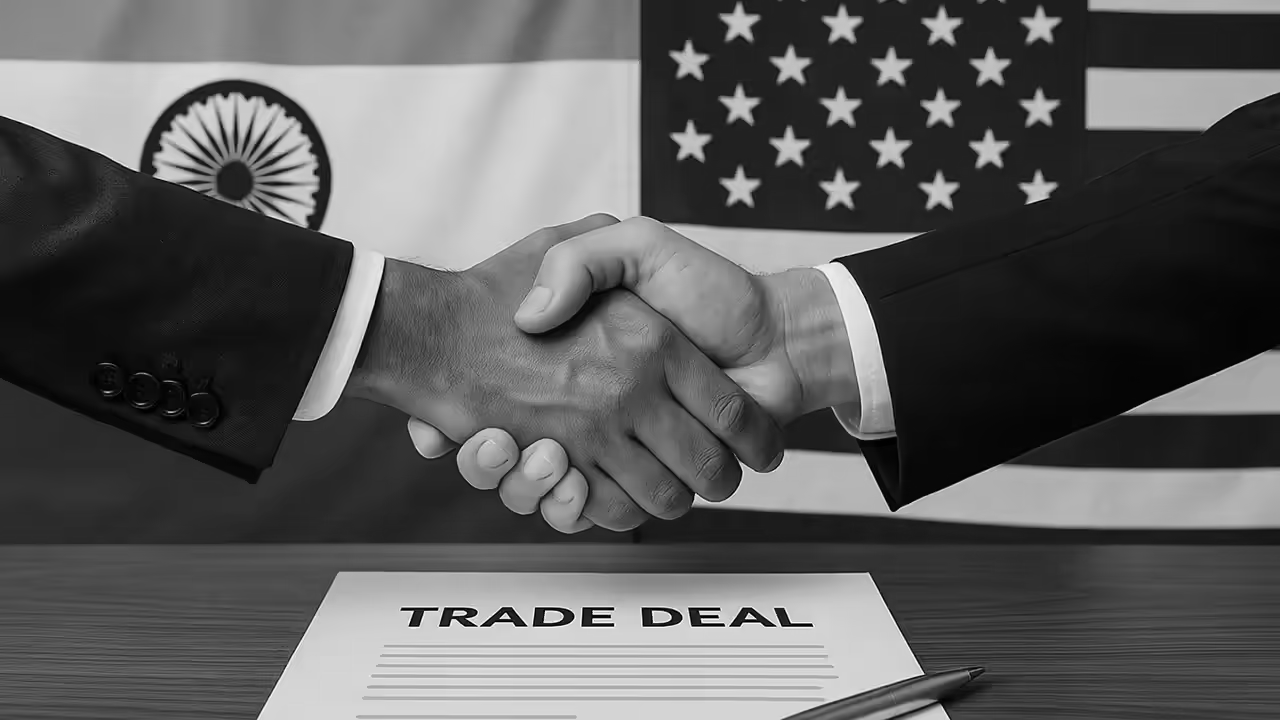
The long-awaited trade deal between India and the United States appears to be nearing completion, with President Donald Trump stating that both countries are “pretty close” to reaching a fair trade agreement. The statement, made during a ceremony at the White House, is being viewed as a potential breakthrough after months of tariff tensions and stalled negotiations.
The comments were made as Sergio Gor was sworn in as the new US Ambassador to India by Vice President J. D. Vance. It was stated by President Trump that “a much different deal than we had in the past” was being made with India, and that although India “doesn’t love him right now,” it was believed that “they will love us again.”
It was further mentioned by Trump that the tariffs imposed on Indian goods would be lowered “at some point,” and that the deal being worked on was “good for everybody.” These statements were interpreted as signs of renewed goodwill after recent economic strain between the two countries. According to officials, five rounds of talks have already been completed, and the two sides are now working on finalizing the language of the agreement.
The proposed trade deal primarily focuses on reducing tariffs and expanding market access for key products and industries on both sides. From India’s perspective, the agreement seeks easier entry for its major exports such as textiles and apparel, generic pharmaceuticals, marine products like shrimp and fish, agricultural goods including rice, spices, and tea, engineering items, gems and jewellery, and renewable energy components. India is also pushing for the restoration of its Generalized System of Preferences (GSP) benefits, which previously allowed several of these products duty-free access to the US market.
In return, the United States is pressing for greater access for its dairy products, agricultural commodities like almonds and apples, medical devices such as stents and implants, and energy exports including crude oil and liquefied natural gas. The deal also aims to facilitate broader cooperation in high-technology, digital trade, defence equipment, and clean energy sectors, creating new avenues for investment and innovation. Together, these efforts are expected to rebalance trade relations and lay the foundation for a fairer, mutually beneficial partnership between the two nations.
A* *s* *hift* *f* *rom the* *p* *ast* *,* *l* *essons from* *t* *roubled* *d* *eals :
The new progress has been viewed as a positive signal in what analysts have often described as a prolonged trade fiasco between the two nations. Over the past decade, efforts to build a stable economic framework have been repeatedly hindered by tariff disputes and regulatory disagreements.
In 2019, India’s trade benefits under the Generalized System of Preferences (GSP) were withdrawn by Washington, ending duty-free access for several Indian exports. The move followed disagreements over price controls on medical devices, e-commerce restrictions, and agricultural import policies. Negotiations later faltered as both countries struggled to bridge differences on tariff barriers and intellectual property rights. The tensions deepened when 50% tariffs were imposed on Indian goods by the US, including a 25% surcharge linked to India’s purchase of Russian oil. These actions were described by India as “unfair, unjustified, and unreasonable,” with New Delhi asserting that its energy decisions were based on national interest.
Renewed* *o* *ptimism :
The recent developments have been interpreted as a sign of renewed pragmatism in Washington’s approach toward New Delhi. It was emphasized by President Trump that India remains “an important economic and strategic security partner in the Indo-Pacific region.” He also stated that India possesses “the fastest-growing middle class” and represents “an amazing country of 1.5 billion people.”
It was further stated that Ambassador Sergio Gor would work to strengthen bilateral relations by promoting investments, boosting American energy exports, and expanding security cooperation. If concluded, the upcoming agreement is expected to mark a fresh chapter in India–US economic relations, signalling not only growing trade alignment but also deeper strategic cooperation between two of the world’s largest democracies.