
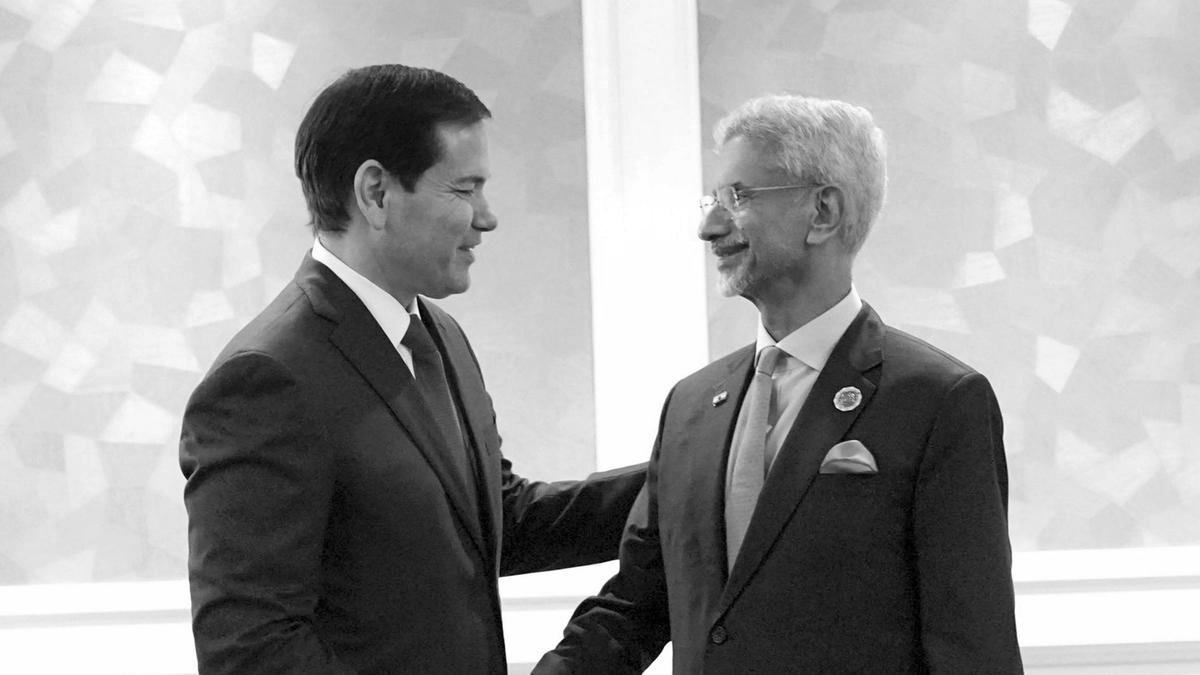
India-U.S. ties: Jaishankar, Rubio hold phone talks on trade, defence cooperation
External Affairs Minister Dr. S. Jaishankar on Tuesday held a phone conversation with U.S. Secretary of State Marco Rubio, discussing cooperation in trade, critical minerals, nuclear energy, defence, and energy. Jaishankar described the discussion as “ a good conversation ,” adding that both sides agreed to remain in touch on these and other issues.
In a statement on X, Jaishankar said, “Just concluded a good conversation with @SecRubio. Discussed trade, critical minerals, nuclear cooperation, defence and energy. Agreed to remain in touch on these and other issues.”
A U.S. State Department readout noted that Rubio congratulated India on passing the Sustainable Harnessing and Advancement of Nuclear Energy for Transforming India (SHANTI) Bill and expressed interest in deepening civil nuclear cooperation and expanding opportunities for U.S. firms. Both sides discussed ongoing trade negotiations and their shared interest in strengthening economic cooperation while reaffirming a commitment to a free and open Indo-Pacific.
The call comes a day after U.S. Ambassador to India Sergio Gor assumed office, highlighting continued engagement on the long‑pending trade deal and signalling possible upcoming meetings between leaders.
India-U.S. efforts to seal a comprehensive trade agreement have faced obstacles for over a year. The main constraints are U.S. demands for greater access to Indian agricultural, dairy, ethanol, and other tariff-protected sectors, while India has sought reciprocal access and balanced tariff reductions. Officials insist that any deal must be mutually beneficial.
Trade tensions have been compounded by U.S. tariffs on Indian goods, including 50 per cent duties and a 25 per cent levy linked to India’s past Russian oil purchases . Recently, President Donald Trump announced that countries trading with Iran would face a new 25 per cent tariff on their U.S. trade. Proposed measures in the U.S. legislature could impose tariffs up to 500 per cent on countries continuing to buy Russian oil. Indian sources said the Iran-related tariff is expected to have minimal impact, as India’s trade with Iran is under USD 2 billion, just 0.15 per cent of total trade.
Bilateral trade remains substantial. In 2024, India-U.S. goods and services trade totaled around USD 212.3 billion , with India exporting USD 87.3 billion and importing USD 41.5 billion. Both sides aim to more than double trade to USD 500 billion by 2030.
Defence cooperation continues to deepen. India holds Major Defence Partner status and Strategic Trade Authorization‑1 (STA‑1) with the U.S., enabling access to advanced technologies. Joint exercises such as Malabar, Vajra Prahar, Cope India, and SALVEX strengthen operational interoperability.
U.S. initiatives like Pax Silica , focusing on critical supply chains and advanced manufacturing, were also highlighted as areas for future collaboration.
The Jaishankar-Rubio call reflects efforts to navigate trade tensions while building deeper strategic and economic cooperation, showing that despite disputes and new tariff threats, both nations remain committed to their partnership.