
India’s Water Revolution: A New Era of River Basin Management Begins
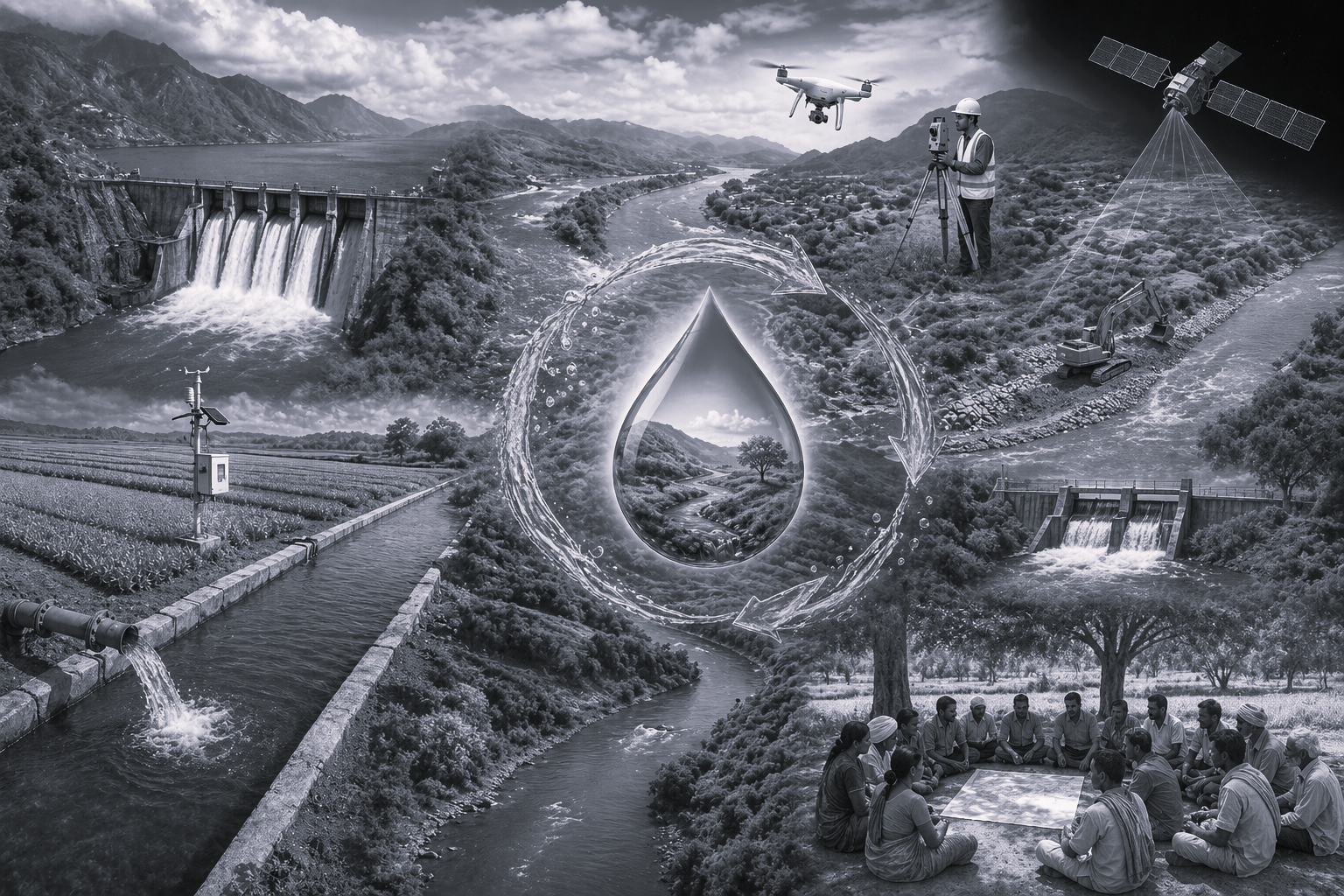
India is entering a decisive phase in its approach to water management, moving beyond fragmented infrastructure projects towards a comprehensive, science-driven system that treats rivers as living, interconnected ecosystems. At the heart of this transformation lies the River Basin Management (RBM) framework an ambitious initiative that seeks to redefine how water is conserved, distributed, and sustained across the country.
In a nation where agriculture supports millions and water availability is increasingly uncertain, this shift could determine not just economic stability but also long-term environmental resilience.
A Shift Towards Integrated Thinking
For decades, India’s water policies largely revolved around dams, canals, and irrigation networks designed in isolation. The RBM framework marks a break from that legacy. Instead of treating rivers as separate entities, it views entire basins including tributaries, groundwater systems, and surrounding ecosystems as unified units requiring coordinated management.
This integrated approach allows policymakers to address multiple challenges simultaneously: flood mitigation, irrigation needs, drinking water supply, and ecological preservation. With an expanded financial commitment for the coming years, the government is signaling that water security is now central to national planning.
Where Geography Meets Strategy
The programme’s focus areas reveal its strategic depth. Regions such as the Northeast, Jammu & Kashmir, and Ladakh are not only hydrologically significant but also geopolitically sensitive. Managing rivers in these regions carries implications that extend beyond development touching upon national security and international water-sharing dynamics.
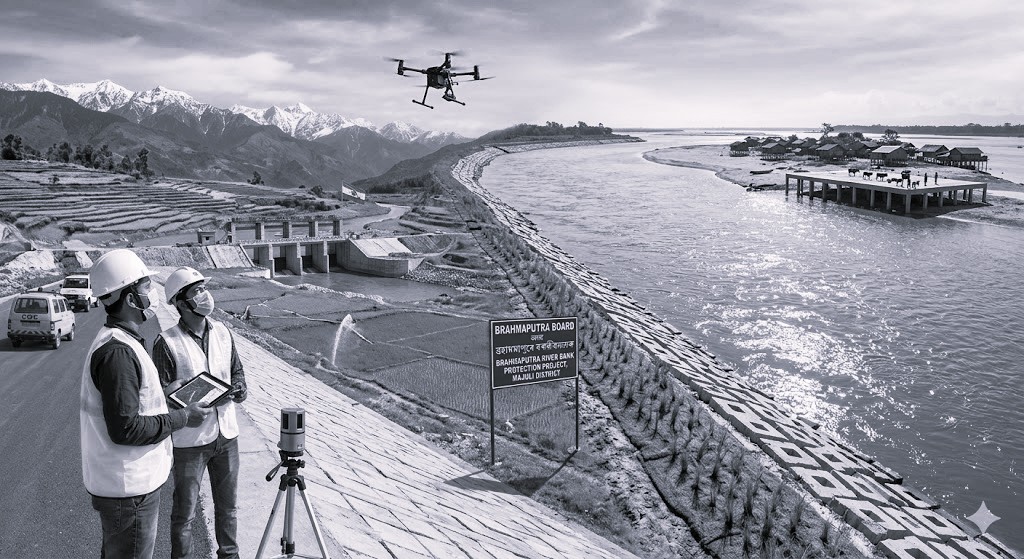
In the Northeast, mighty rivers like the Brahmaputra bring both fertility and destruction, while in the north, the Indus basin plays a crucial role in India’s treaty obligations and energy ambitions. The RBM framework attempts to align these diverse priorities within a single, coherent strategy.
Technology at the Core of Decision-Making
A defining feature of this new approach is its reliance on advanced technology. Satellite imagery, Geographic Information Systems, LiDAR mapping, and drone surveys are now integral to river studies and project planning.
These tools are enabling authorities to forecast floods with greater accuracy, monitor river behaviour in real time, and design infrastructure that is both efficient and resilient. In difficult terrains like the Himalayas, where traditional surveys are often impractical, technology is proving indispensable.
Lessons from the Northeast
Nowhere is the impact of this approach more visible than in the Northeast. Long plagued by annual floods and riverbank erosion, the region is witnessing targeted interventions that combine engineering with ecological sensitivity.
Protective structures in erosion-prone areas, elevated platforms in flood zones, and sustainable water management systems in hill regions are beginning to reduce vulnerability. At the same time, initiatives focused on springs and local water sources are improving access for remote tribal communities, showing how localized solutions can complement larger basin strategies.
The Promise and Debate Around River Interlinking
Running parallel to RBM is the ambitious river interlinking programme, which aims to redistribute water from surplus basins to deficit regions. The idea holds transformative potential reducing drought, expanding irrigation, and even boosting inland navigation.
In southern India, plans to channel surplus waters from the Godavari into rivers like the Krishna, Pennar, and Cauvery could reshape the agricultural landscape, particularly in drought-prone regions.
Yet, the vision is not without contention. Environmental concerns, interstate water disputes, and the sheer scale of investment required make interlinking one of the most debated aspects of India’s water policy. Its success will depend on balancing engineering ambition with ecological caution.
Sustainability as a Guiding Principle
Unlike earlier development models, the RBM framework places strong emphasis on environmental sustainability. Rivers are being treated not merely as water carriers but as ecosystems that support biodiversity and regulate climate.
Efforts such as restoring wetlands, strengthening riverbanks through bio-engineering, and increasing forest cover in catchment areas are integral to the programme. These measures aim to ensure that development today does not compromise ecological health tomorrow.
Communities as Stakeholders, Not Beneficiaries
One of the most significant departures from past approaches is the emphasis on community participation. Local populations especially in tribal and rural areas are no longer passive recipients of government schemes but active contributors.
Traditional knowledge systems are being integrated with modern science, while training programmes are equipping communities with the skills needed to manage water resources sustainably. This participatory model is not only improving project outcomes but also strengthening rural economies and reducing migration.
Challenges That Remain
Despite its promise, the RBM initiative faces substantial challenges. Harsh terrains, limited working windows in mountainous regions, and complexities associated with transboundary rivers continue to test implementation.
Institutional coordination, data accuracy, and timely clearances are additional hurdles. However, increased central funding and direct intervention in resource-constrained states are helping to keep projects on track.
A Defining Moment for India’s Future
India’s water challenge is stark: a large population dependent on limited freshwater resources. In this context, the River Basin Management framework represents more than a policy it is a long-term vision for survival and growth.
If executed effectively, it has the potential to secure agriculture, power generation, and ecological balance while positioning India as a global model in sustainable water governance.
Beyond Management, Towards Stewardship
India’s evolving water strategy reflects a deeper realization that managing water is not just about infrastructure, but about stewardship. By combining science, policy, and people’s participation, the country is attempting to turn one of its greatest challenges into an opportunity.
The success of this transformation will ultimately depend on how well India can align development with sustainability ensuring that every river continues to sustain life, livelihoods, and the nation’s future.