
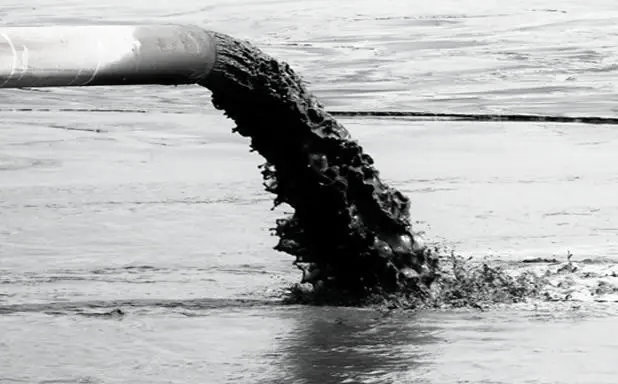
India’s wastewater could become its next big resource- $35 billion economic opportunity by 2047
India’s treated used water (TUW) sector could grow dramatically from treating just 28% of its wastewater today to reusing 31,265 million cubic metres per year by 2047, a 4.2‑fold increase over current levels. This expansion could unlock up to INR 3.04 lakh crore (USD 35 billion) in economic value, including Rs 72,597 crore (USD 8.35 billion) in annual market revenue and Rs 1.56-2.31 lakh crore (USD 18–27 billion) in infrastructure investment, if supported by proper financing, regulation, and modern infrastructure.
Treated used water comes from households, industries, and urban utilities. Domestic wastewater includes water from kitchens, bathrooms, and laundry; industrial wastewater comes from factories, refineries, and power plants; and municipal runoff includes street cleaning and stormwater. Currently, India generates over 72 billion litres of wastewater daily, but only about 28% is treated, and most cities lack proper reuse infrastructure. Wastewater treatment in India primarily relies on primary and secondary STPs, with only a handful of plants using tertiary treatment, sand filtration, or basic disinfection. Real-time monitoring, automation, and energy-efficient technologies are limited.
Major contributors in India’s TUW sector
Public-private collaboration is driving growth in the sector. Municipal corporations operate most treatment plants, supported by government programs such as AMRUT and the National Mission for Clean Ganga, while private players provide design, operation, and maintenance services. Major companies leading India’s wastewater treatment and reuse market include VA Tech Wabag, Thermax, Ion Exchange India, Veolia, SUEZ, and Vishvaraj Environment Ltd. These firms are critical to scaling urban and industrial reuse while introducing modern technologies and infrastructure.
Treated water is primarily used for industrial processes, irrigation, landscaping, and urban utilities such as street cleaning and flushing toilets. Beyond economic benefits, TUW addresses India’s urgent public health and environmental needs. Millions of citizens still lack safe drinking water, and rivers remain dangerously polluted. By turning wastewater into a renewable resource, India can reduce freshwater extraction, improve urban resilience, and ensure cleaner water for all.
The Liquid Waste Management Rules 2024 mandate bulk users to treat and reuse at least 20% of their wastewater immediately, increasing to 50% by 2031. The study also proposes water reuse certificates, which allow companies exceeding their reuse targets to trade credits with those falling short, creating economic incentives for compliance. Expanding reuse could generate over one lakh jobs in plant operations, construction, technology services, and municipal management, while attracting green investment, generating municipal revenue, and reducing river pollution.
Global comparison: Learning from the leaders
India currently reuses only about 10-12% of its treated wastewater, far behind countries like Singapore (40%), Israel (90%), Australia (15-30%), the USA (10-15%), and the UAE (70-80%). Singapore’s NEWater program uses ultrafiltration, reverse osmosis, UV, and ozone disinfection for near-drinking-quality water. Israel combines membrane bioreactors, tertiary filtration, and advanced monitoring to supply farms reliably. Australia, the US, and the UAE use advanced biological treatment, RO/UF, UV, automation, and SCADA monitoring, ensuring both safety and efficiency. These countries demonstrate how modern technologies, smart monitoring, and proper infrastructure can drastically improve reuse rates and public health outcomes.
To catch up globally, India can scale membrane bioreactors (MBR), ultrafiltration/reverse osmosis, UV or ozone disinfection, smart SCADA monitoring, and automated quality control systems. These technologies can make wastewater safe for industrial, irrigation, and urban utility purposes while creating a circular economy that transforms waste into wealth.
Voices from CEEW
Shalu Agrawal, Director of Programmes at CEEW, said, “Every litre reused is an investment in our cities’ resilience, industries’ competitiveness, and energy security. Treated water is not the end of a cycle; it is the beginning of a circular economy for urban India.” Nitin Bassi, Fellow at CEEW, added that urban local bodies must lead the shift by developing long-term plans, fair tariffs, and diverse funding. With proper planning, India can turn wastewater from a liability into a financially sustainable and environmentally restorative resource.
India’s wastewater, once considered waste, is now emerging as a valuable resource for economic growth, job creation, environmental protection, and public health. With proper infrastructure, regulation, technology adoption, and public-private collaboration, the country can follow the footsteps of global leaders and transform its water future.