
India’s UPI Revolution: Engine of Inclusion, Innovation, and Global Fintech Leadership
India’s Unified Payments Interface (UPI) has undergone a remarkable transformation, emerging from a simple digital payment tool into a foundational pillar of the country’s economic infrastructure . What began as an initiative to enable seamless peer-to-peer transfers has now evolved into a powerful engine of financial inclusion, innovation, and global influence , reshaping how millions participate in the financial system.
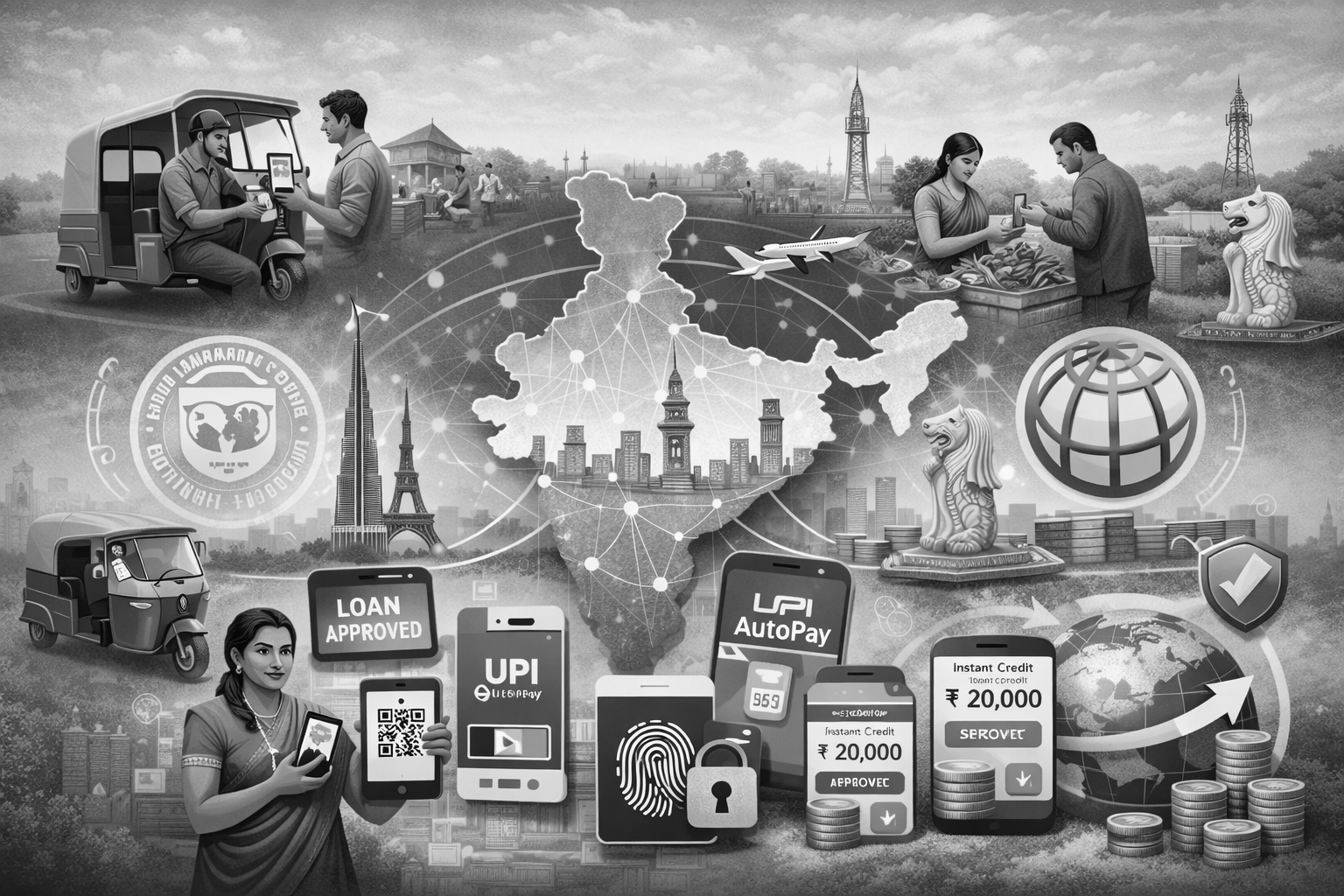
At the heart of this transformation lies its ability to bring the previously underserved into formal finance . By enabling instant, low-cost transactions , UPI has reduced dependence on cash while opening new pathways to credit, savings, and insurance . Across India, street vendors, autorickshaw drivers, small merchants, and rural users are now part of a digital ecosystem where transactions are completed in seconds. This shift is not merely technological it represents the gradual disappearance of the urban-rural and formal-informal divide , marking a decisive step toward inclusive growth.
The scale of adoption underscores its impact. UPI now processes billions of transactions annually , accounting for a significant share of global real-time digital payments. However, the real story lies beyond volume in the creation of digital financial identities . Transaction histories generated through UPI are enabling lenders and fintech firms to assess creditworthiness, thereby extending financial services to those who were historically excluded from formal banking systems.
Simultaneously, UPI is evolving into a comprehensive financial ecosystem . Innovations such as UPI Lite for small-value transactions , UPI AutoPay for recurring payments , and credit integration on UPI platforms are expanding its scope beyond payments. Supported by NBFCs and fintech companies , the ecosystem now offers micro-loans, flexible repayment systems, and tailored financial products, effectively transforming UPI into a financial operating layer for the digital economy.
Trust and security remain central to this expansion. Strengthening this framework, the Reserve Bank of India has mandated enhanced two-factor authentication (2FA) for digital transactions from April 1, 2026. By incorporating biometrics, secure tokens, and OTP-based verification , the move aims to significantly reduce fraud risks while reinforcing user confidence. Additional measures such as risk-based authentication and adaptive security systems are further ensuring a balance between seamless user experience and robust protection.
For businesses, UPI has simplified operations by eliminating the need for cash handling and enabling instant settlements , thereby improving efficiency and expanding customer reach. For banks and financial institutions, it has enhanced real-time service delivery , allowing secure, scalable transactions while leveraging existing infrastructure. In effect, UPI has created a unified platform that benefits users, merchants, and institutions alike .
Beyond domestic success, UPI is increasingly shaping the global digital payments landscape . Recognised by institutions such as the International Monetary Fund and the World Bank , India’s model is now seen as a benchmark for digital public infrastructure . With linkages established in countries including the UAE, Singapore, France, and Nepal, UPI is facilitating cross-border transactions and remittances , strengthening India’s role as a global fintech leader. Global leaders, including Emmanuel Macron , have acknowledged its unprecedented scale and efficiency.
Looking ahead, UPI is poised to deepen its impact through credit expansion, offline payment capabilities, and AI-driven financial services . As adoption spreads further into semi-urban and rural regions, the platform is expected to play a critical role in bridging economic gaps and enabling broader participation in growth.
UPI today stands as more than just a payment system it is a people-centric digital platform that has redefined financial access in India. By combining technology, trust, and inclusivity , it has not only transformed how transactions are conducted but has also laid the foundation for a more equitable and digitally empowered economy .