
India’s Space Startups Eye Global Markets as PM Modi Calls for Wider Applications
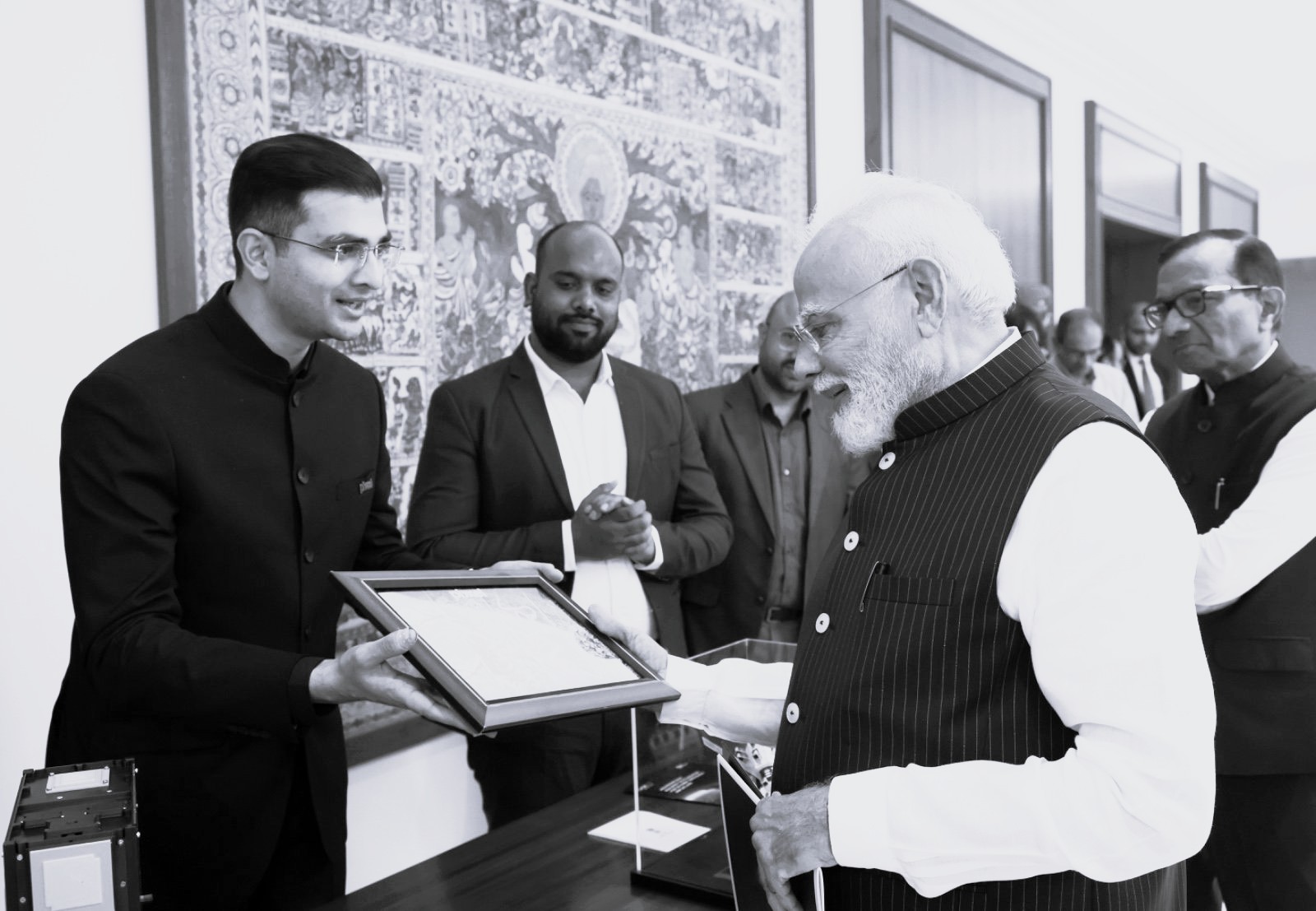
Prime Minister Narendra Modi on Friday interacted with the CEOs and founders of 20 Indian space startups, calling for wider applications of space technology, stronger cross-sector collaboration and an ecosystem capable of attracting global talent, companies and investment to India. The interaction, held at Seva Teerth, comes as India's private space industry expands beyond launch vehicles and satellites into propulsion, avionics, Earth observation, artificial intelligence, space-debris management, climate intelligence and defence applications.
The participating companies included Skyroot Aerospace, Agnikul Cosmos, Pixxel, Dhruva Space, GalaxEye, PierSight, Bellatrix Aerospace, Digantara, SatSure, Suhora Technologies and Manastu Space, among others. The CEOs highlighted the rapid progress of the private space industry, saying companies had invested significant effort in developing indigenous capabilities and technologies. They also pointed to growing international interest in adopting and leveraging technologies developed by India's emerging private space sector.
The transformation is reflected in the industry's growth from one registered space startup in 2014 to around 440 by 2026. Private investment has also risen sharply, reaching $618.5 million by March 31, 2026, compared with $100.5 million in 2021–22. Of the total, $187 million was invested during 2026 alone, indicating increasing investor confidence.
The expansion follows the 2020 decision to open the space sector to private participation, followed by the Indian Space Policy 2023 and liberalised foreign investment rules. Automatic-route FDI is now permitted up to 74% for satellite manufacturing and operations, 49% for launch vehicles and spaceports, and 100% for manufacturing satellite, ground-segment and user-segment components.
The government has also introduced financial mechanisms including a ₹1,000-crore Venture Capital Fund and a ₹500-crore Technology Adoption Fund to help startups move technologies from development to commercialisation. Meanwhile, NSIL has signed 118 Technology Transfer Agreements covering 83 ISRO and Department of Space technologies, strengthening the link between public-sector research and private industry.
Modi urged companies to focus on applications that can improve people's lives, particularly through collaboration with agriculture, environmental and social-development organisations. He suggested that space companies working in agriculture partner with agricultural universities and departments to help farmers make better-informed decisions, while space-debris companies could work with environmental organisations.
The government estimates India's space economy at around $9 billion, with potential to reach $40–45 billion over the next decade. Modi said India should build an ecosystem where “when the world thinks of space, it looks towards India,” positioning the country as a magnet for global talent, companies and investment.
He also called for closer collaboration between space startups and Atal Tinkering Labs to encourage curiosity about space among children. With a rapidly expanding startup base, rising private investment and growing international interest, India's space sector is increasingly moving from a government-led model towards a globally competitive commercial ecosystem.