
India’s Space Sector Soars With Chandrayaan-3, SPADEX and NISAR Milestones
India’s space programme has recorded a series of significant achievements over the past three years, strengthening the country’s capabilities in satellite launches, space exploration and commercial missions, the Department of Space said in a written reply in the Rajya Sabha.
Between July 2023 and June 2026, India successfully conducted 12 launch vehicle missions, placing 11 national satellites and nine satellites for international customers into orbit. The period also witnessed several landmark developments that have further enhanced India’s position in the global space sector.
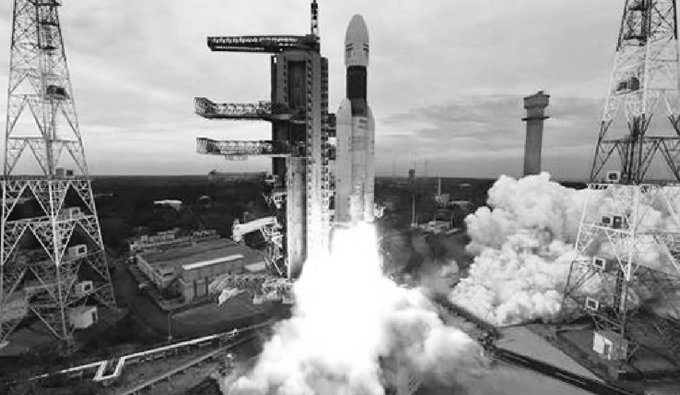
The Chandrayaan-3 mission marked a historic achievement as India became the first country to successfully soft-land near the Moon’s south polar region. The country also launched Aditya-L1, its first dedicated solar observatory mission, and achieved the milestone of 100 launches from the Sriharikota spaceport.
Another major accomplishment was the SPADEX mission, through which India became the fourth country to demonstrate docking and undocking capabilities in space. The development of the Small Satellite Launch Vehicle (SSLV) was also completed, with a technology transfer agreement signed with Indian industry.
The period also saw the successful launch of the NASA-ISRO NISAR mission and the deployment of heavy satellites using the LVM3 launch vehicle.
To expand launch capacity, the government has approved a Third Launch Pad at Sriharikota, while an SSLV Launch Complex is being developed at Kulasekarapattinam in Tamil Nadu, which will serve as India’s second rocket launch site. The government is also promoting private participation through policy reforms and incentives, including support for startups and MSMEs, technology commercialisation and streamlined authorisation processes.
Meanwhile, ISRO is developing advanced technologies, including reusable launch systems, semi-cryogenic engines, LOX-Methane propulsion and the Next Generation Launch Vehicle (NGLV).
The country’s space economy is targeted to reach USD 44 billion by 2033, with infrastructure expansion and greater private-sector participation expected to drive future growth.