
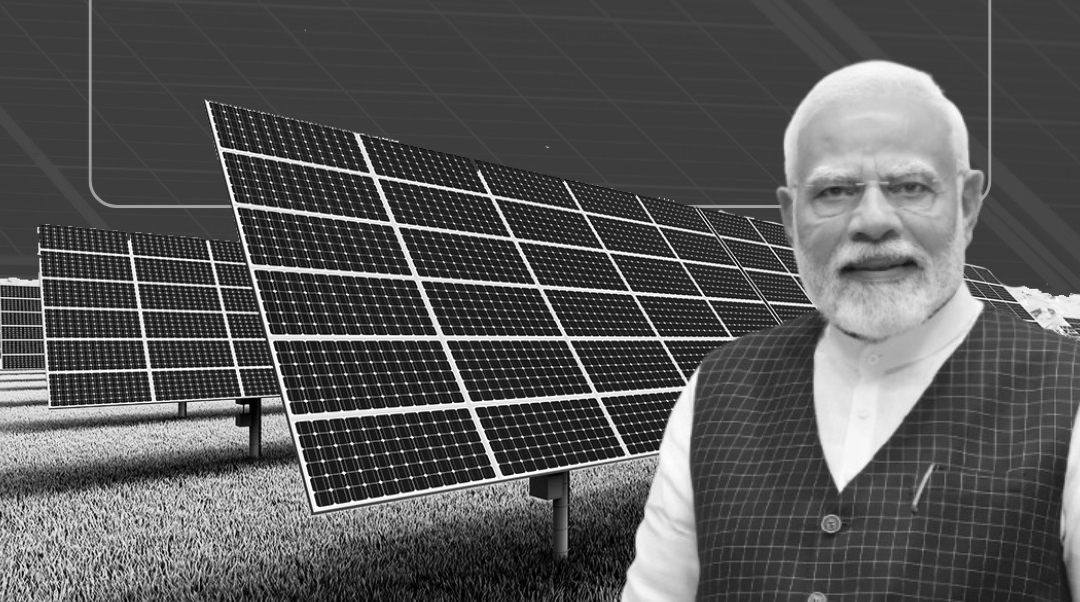
India's solar revolution - Harnessing the sun for a sustainable tomorrow
In a landmark address on Thursday, Union Minister for New and Renewable Energy Pralhad Joshi highlighted the rapid strides made under the PM Surya Ghar Muft Bijli Yojana, announcing that over 20 lakh households now have rooftop solar systems installed nationwide, with another 30 lakh set to join soon. This scheme, aimed at empowering one crore households with free electricity through solar panels, underscores India's ambitious push towards renewable energy. While no specific timeline was provided for reaching the halfway mark of the one crore target, the minister emphasized its demand-driven nature and urged states to accelerate adoption. He also approved a utility-led model for those without rooftops and noted that nearly half the beneficiaries are already enjoying zero electricity bills, demonstrating tangible relief for citizens while promoting long-term sustainability.
This announcement comes amid broader efforts to meet India's renewable energy goals, including a 550 GW non-fossil fuel target by 2030. As of July 2025, India's cumulative solar power capacity stands at 119.02 GW, comprising 90.99 GW from ground-mounted plants, 19.88 GW from grid-connected rooftops, 3.06 GW from hybrid projects, and 5.09 GW from off-grid systems. This represents a staggering 30-fold increase from just 2.5 GW in 2014, positioning India as the world's third-largest solar producer. But what drives this momentum? How does it align with national objectives, and what impacts will it have on India's economy and environment? This article delves into these questions, exploring subsidies, leading states, major projects, awareness initiatives, current progress, and the promising future ahead.
Boosting solar power for a greener India
India's solar push is rooted in its Nationally Determined Contributions (NDCs) under the Paris Agreement, committing to 50% of cumulative electric power from non-fossil sources by 2030 and reducing GDP emission intensity by 45% from 2005 levels. The overarching goal is to achieve 500 GW of non-fossil fuel capacity by 2030, with solar expected to contribute around 280-300 GW. This aligns with the net-zero emissions pledge by 2070, addressing energy security amid rising demand projected to double by 2040 while curbing fossil fuel imports that cost over $100 billion annually.
Key objectives include:
- Energy security and accessibility: Reducing reliance on coal (which powers 70% of electricity) and imports, ensuring affordable power for 300 million rural households.
- Economic diversification: Building a domestic solar manufacturing ecosystem, with 100 GW module capacity already achieved through Rs 50,000 crore investments, creating over 12,600 direct jobs.
- Environmental sustainability: Cutting CO2 emissions by 1 billion tonnes by 2030 via solar, mitigating climate impacts like erratic monsoons.
- Innovation and self-reliance: Targeting "Swadeshi" (indigenous) solar cells by 2028, extending to wafers and ingots, fostering a full value chain.
Initiatives like the Jawaharlal Nehru National Solar Mission (launched 2010) and recent GST reductions (from 12% to 5% on solar equipment) make technologies more affordable, as noted by Minister Joshi. The PM-KUSUM 2.0 scheme, awaiting Cabinet approval for launch post-March 2026, will further solarize agriculture.
Economic and environmental benefits for the future
Boosting solar power will profoundly shape India's future, blending economic vitality with environmental resilience. Economically, solar could add $100-200 billion to GDP by 2030 through job creation (5-6 million by 2030, up to 9-10 million by 2047) in manufacturing, installation, and maintenance. It reduces energy costs, households save Rs 15,000-18,000 annually under PM Surya Ghar and boosts exports, with domestic manufacturing curbing $5-10 billion in annual imports. States like Rajasthan and Gujarat have seen local economies flourish via solar parks, attracting FDI and supporting "Make in India."
Environmentally, solar mitigates climate change by displacing coal, potentially avoiding 1.5-2 GtCO2 emissions by 2030 - equivalent to planting 200 million trees. It combats air pollution (responsible for 1.6 million deaths yearly) and water scarcity, as floating solar reduces evaporation by 60-70%. Long-term, it enhances resilience against extreme weather, supporting biodiversity and sustainable agriculture via schemes like PM-KUSUM. Globally, India's solar leadership via the International Solar Alliance (ISA) positions it as a climate champion, fostering green diplomacy and technology transfer.
Challenges like grid integration and storage persist, but innovations (e.g., battery systems) and policies (e.g., 47 GW storage target by 2032) will address them, ensuring solar's role in a $30 trillion economy by 2047.
Central government's support for rooftop solar
Under the PM Surya Ghar Muft Bijli Yojana, the central government offers tiered subsidies to make rooftop solar systems accessible for households. For systems up to 2 kW, ideal for small households, a subsidy of Rs 30,000 per kW is provided, covering 60% of the benchmark cost, with a maximum of Rs 60,000. For systems between 2 and 3 kW, the subsidy includes Rs 30,000 per kW for the first 2 kW, plus Rs 18,000 per kW for the additional capacity, capped at a total of Rs 78,000, with 40% subsidy on the extra capacity. Systems above 3 kW receive no additional central subsidy, though state-level incentives may apply, and low-interest loans are available to support installation costs.
Subsidies are disbursed via Direct Benefit Transfer post-DISCOM inspection (within 30 days). Eligibility: Indian citizens with rooftops and valid electricity connections; no prior solar subsidies. Over 1 crore registrations in the first month highlight its appeal, with states like Uttar Pradesh and Maharashtra leading. This not only cuts bills but generates Rs 15,000-18,000 crore annual savings nationwide.
Pioneers in solar power generation
India's solar energy landscape is thriving, with several states leading the charge in installed capacity and innovative initiatives as of March 2025. Rajasthan stands at the forefront with an impressive 26.9 GW of solar power, driven by the massive Bhadla Solar Park, one of the world's largest at 2.25 GW, and contributed 6.5 GW in FY2025 alone. Gujarat follows with 12.8 GW, leveraging projects like Pavagada-like solar parks and pioneering canal-top solar installations, adding 3.6 GW in the same fiscal year. Karnataka, with 10.6 GW, is powered by the 2 GW Pavagada Solar Park and added 2.5 GW in FY2025. Tamil Nadu, holding 8.5 GW, is pushing rooftop solar and wind-solar hybrid projects, contributing 2.0 GW this year. Maharashtra, with 7.2 GW, advances through initiatives like the Mukhyamantri Saur Krishi Vahini, adding 2.3 GW. Andhra Pradesh, with 6.5 GW, is rapidly scaling up through utility-led models and the Kurnool Ultra Mega Solar Park (1 GW), with 1.5 GW added in FY2025. These states collectively underscore India's robust solar growth, blending large-scale projects with innovative policies to meet the nation's ambitious renewable energy targets.
These states benefit from subsidies, net metering, and land availability, generating jobs and revenue while reducing fossil fuel dependence.
Innovating with floating solar on rivers and oceans
India's ingenuity shines in floating solar, addressing land scarcity. No large-scale ocean projects yet (due to challenges like waves), but river/reservoir initiatives are transformative. The Omkareshwar Floating Solar Park (600 MW, Madhya Pradesh) on Narmada River backwaters is the world's largest, covering 12 sq km; 90 MW commissioned in 2024, preventing 12 lakh tonnes CO2/year and saving 60-70% evaporation. Tata Power's 126 MW at Omkareshwar (2024) features the largest floating inverter platform, conserving 32.5 million cubic meters of water annually.
Other notables:
- Ramagundam (100 MW, Telangana, 2022): On reservoir, reduces evaporation by 382 million liters/year.
- Kayamkulam (101.6 MW, Kerala, 2022): On backwaters, generates 167 GWh/year.
- Simhastham (50 MW, Maharashtra): On Koyna River.
- Bhakra Nangal (5 MW pilot, Punjab): On Sutlej River.
These projects, often hybrid with hydro, enhance efficiency (10-15% via water cooling) and grid stability, with potential for 10-45 GW nationwide.
Government's societal initiatives
Awareness is key to adoption. The National Solar Mission includes exhibitions, workshops, and training via 30 state-level and 484 district renewable parks since 1995. The PM Surya Ghar portal (pmsuryaghar.gov.in) enables easy registration, with a toll-free helpline 15555. SECI's campaigns target rural areas, while ISA (headquartered in India) promotes global knowledge-sharing. Biogas and solar cooking programs educate on off-grid benefits. States like Gujarat's Surya-Gujarat Yojana and Tamil Nadu's subsidies amplify efforts, reaching millions via media and community events.
Installed panels so far
As of September 2025, India boasts 119 GW solar capacity, up from 92 GW in October 2024 a 30% YoY surge. Q1 2025 added 7.8 GW, H1 18 GW (31% growth). Rooftops: 19.88 GW, with 10 lakh homes solarized under PM Surya Ghar by March 2025.
The future is luminous: 25 GW annual additions targeted for FY2025, scaling to 280 GW solar by 2030 within 500 GW non-fossil. By 2032, solar could meet 23% of electricity. Innovations like perovskite cells (23%+ efficiency) and 47 GW storage will ensure reliability. Investments: $200 billion needed, with PLI driving 39 GW manufacturing. Challenges grid upgrades, module shortages will be met via policies like ISTS waivers. India's solar odyssey, from 20 lakh rooftops to global leadership, promises a resilient economy, cleaner air, and empowered citizens. As Minister Joshi envisions, it's both a challenge and opportunity illuminating a sustainable future for generations.