
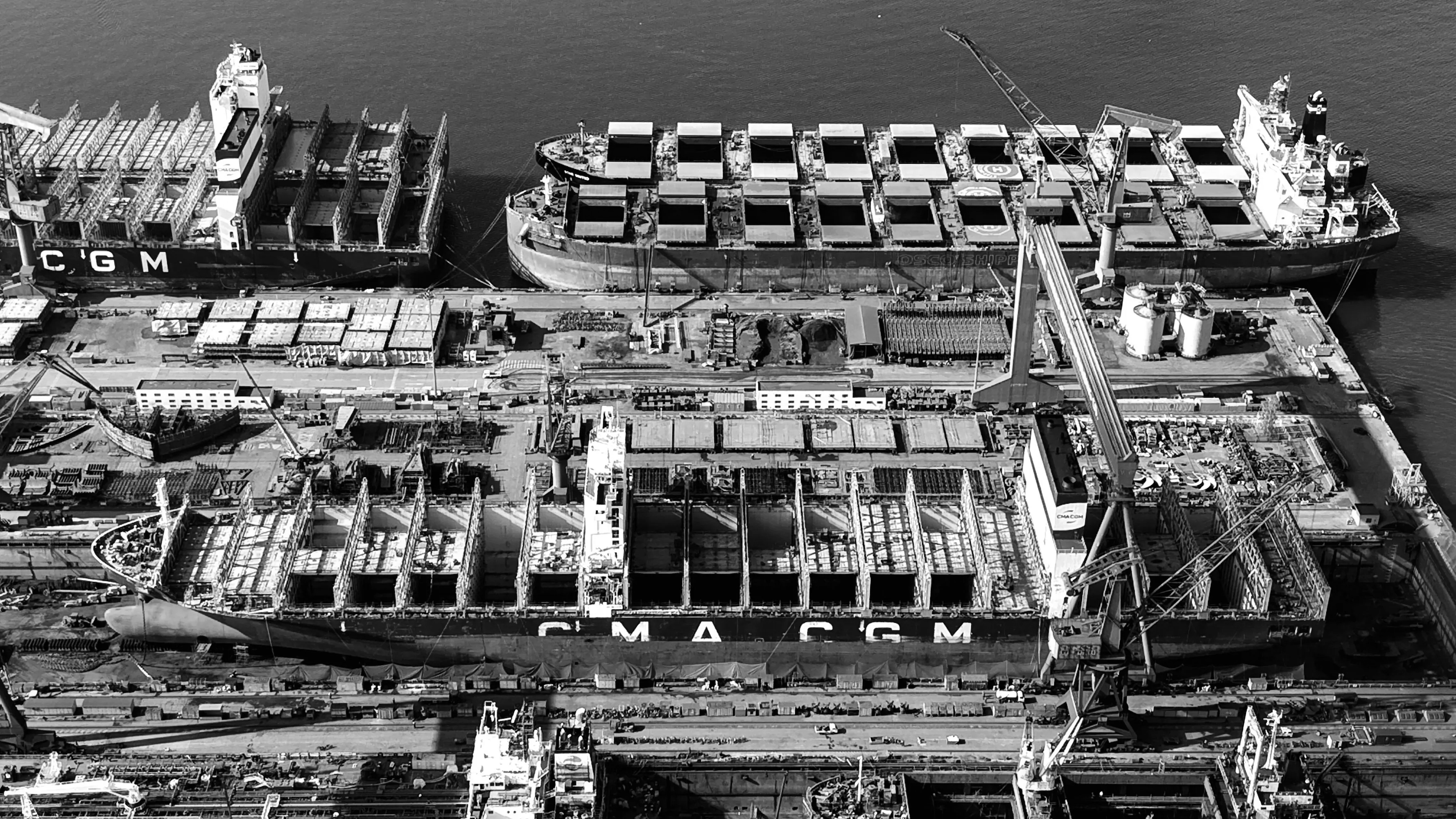
India’s Shipbuilding Sector Nears Inflection Point on ₹2.3 Lakh Cr Pipeline: PhillipCapital
India’s shipbuilding sector is entering a decisive phase, driven by rising defence requirements, a renewed policy push, and an ambition to emerge as a global maritime and defence manufacturing hub. This assessment comes from a recent institutional research report by PhillipCapital, a global financial services and research firm, which argues that the sector is approaching a multi-decade transformation threshold.
PhillipCapital is a Singapore-headquartered financial group with operations across Asia, Europe and the US, and is active in India through PhillipCapital (India) Pvt Ltd. The firm provides equity research, brokerage, and investment advisory services to institutional and retail investors. Its shipbuilding study is part of its sectoral research coverage, aimed at identifying long-term investment opportunities arising from structural policy, budgetary, and strategic shifts.
According to the report, defence shipbuilding remains the backbone of India’s shipbuilding ecosystem. Defence shipbuilding is funded primarily through the Indian Navy’s capital allocation under the Union Defence Budget, not through a separate shipbuilding fund. In FY 2025–26, India’s total defence budget stands at about ₹6.81 lakh crore, of which the Indian Navy received roughly ₹97,150 crore, or nearly 20 per cent of the total allocation.
Within the Navy’s budget, capital expenditure used for new platforms and modernisation is estimated at around ₹63,000 crore. Of this, approximately ₹28,000–30,000 crore annually flows directly into shipbuilding and shipyard infrastructure, covering warships, submarines, fleet support vessels and dockyard upgrades. Large naval platforms are not funded in a single year but through staggered, milestone-based payments spread over 8–12 years, allowing multiple high-value projects to run in parallel.
PhillipCapital estimates that the overall naval modernisation pipeline now exceeds ₹2.3 lakh crore, covering projects at various stages of execution, approval and planning. Importantly, the firm notes that this pipeline is spread over a 10–15 year horizon, extending into the mid-2030s, reflecting the long construction and induction cycles associated with destroyers, frigates, submarines, aircraft carriers and support vessels. This provides multi-year revenue visibility for Indian shipyards rather than a short-term spending spike.
Despite this strong defence pipeline, India’s position in the global shipbuilding race remains modest. The country currently ranks outside the global top 15 in overall shipbuilding by tonnage , far behind leaders such as China, South Korea and Japan, which together dominate more than 90 per cent of global commercial shipbuilding. India’s output remains heavily skewed toward defence vessels, patrol craft, ferries, and repair and refit work, with limited participation in large commercial shipbuilding.
Over the past five years, however, the funding structure has enabled India to advance some of its most ambitious naval programmes. These include the construction and commissioning of INS Vikrant, India’s first indigenously built aircraft carrier, commissioned in September 2022 after nearly 13 years of construction. Other key programmes include Project 15B Visakhapatnam-class destroyers, Project 17A Nilgiri-class stealth frigates, Kalvari-class submarines, and new fleet support and auxiliary vessels.
The cumulative cost of these ongoing and recently completed programmes exceeds ₹1.3–1.4 lakh crore. Despite their scale, the phased funding model has allowed the Navy to sustain multiple builds simultaneously without placing disproportionate pressure on annual defence budgets.
India’s frontline naval vessels are built largely by government-owned shipyards, including Mazagon Dock Shipbuilders Limited, Cochin Shipyard Limited, Garden Reach Shipbuilders & Engineers, and Hindustan Shipyard Limited. Private players such as Larsen & Toubro play a growing role in auxiliary vessels, modules and systems integration, but the construction of major combat platforms remains primarily PSU-led. PhillipCapital identifies these public sector shipyards as the principal beneficiaries of the current expansion cycle due to their strong order books and rising indigenisation levels.
Beyond defence, the report highlights a significant policy shift aimed at reviving India’s broader shipbuilding ecosystem. In 2025, the government approved a ₹69,725-crore Shipbuilding and Maritime Development Package, including a ₹25,000-crore Maritime Development Fund, a ₹24,736-crore Shipbuilding Financial Assistance Scheme, and a ₹19,989-crore Shipbuilding Development Scheme. These measures are separate from the defence budget and are intended to address long-standing cost, scale and infrastructure disadvantages faced by Indian shipyards vis-à-vis East Asian peers.
Globally, shipbuilding is rarely a free-market activity. China dominates the industry through state-owned giants and extensive subsidies, while South Korea and Japan support private shipyards through policy bank financing, R&D grants and export guarantees. The United States relies almost entirely on its defence shipbuilding budget, which exceeds ₹2 lakh crore annually. PhillipCapital notes that India’s evolving model combining PSU-led defence shipbuilding with civilian subsidies mirrors the early stages of strategies adopted by other major shipbuilding nations before they scaled up commercially.
Exports are emerging as a key growth lever. India’s defence exports reached a record ₹23,622 crore in FY 2024–25, supported by government-backed lines of credit and government-to-government deals. Naval platforms and patrol vessels are increasingly being positioned as scalable export products, particularly for friendly nations in the Indian Ocean Region under India’s SAGAR doctrine.
India currently ranks around 23rd–25th globally in defence exports and remains a marginal player in commercial shipbuilding. However, the government has set a target of ₹50,000 crore in annual defence exports by 2029, and PhillipCapital argues that sustained naval demand, rising indigenisation, and parallel civilian shipbuilding incentives could gradually improve India’s standing in both defence and commercial shipbuilding over the next decade.
In essence, PhillipCapital’s research reflects an investor-driven assessment of how policy clarity, long-term budget visibility and strategic imperatives are converging to reshape India’s shipbuilding industry. While India still trails global leaders by a wide margin, the report suggests that the 10–15 year naval modernisation pipeline represents the strongest opportunity in decades for the country to climb the global shipbuilding rankings.