
India’s Rise ‘Unstoppable’, Growth Trajectory Will Be Decided by India Alone: EAM Jaishankar
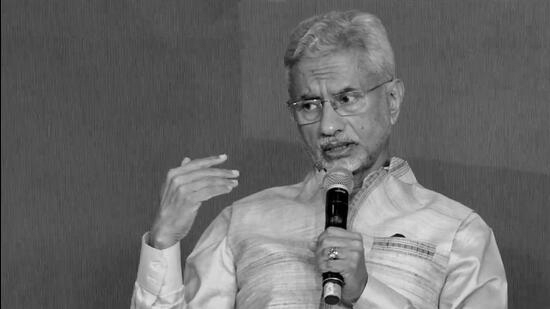
S. Jaishankar on Saturday asserted that India’s rise on the global stage is “unstoppable” and emphasised that the trajectory of the country’s growth will be determined by its own strengths , not by the mistakes or policies of other nations.
Speaking at the Raisina Dialogue in New Delhi, Jaishankar said the rise of any country ultimately depends on its own capabilities and decisions. “When we speak today about the rise of countries, the rise of countries is determined by the countries. The rise of India will be determined by India ,” he said. He added that the country’s progress would be shaped by its internal strengths and strategic choices , rather than by the “mistakes” of others.
Jaishankar’s remarks came two days after comments by Christopher Landau , who said the United States would not repeat what he described as the mistake of providing China with economic advantages that later helped it emerge as a strong competitor to Washington. Landau had said the US was not a charity organisation and that its policies must remain fair to American citizens. However, he also emphasised that Washington was keen to deepen ties with India and noted that a proposed India–US trade agreement was close to completion .
During the discussion on cooperation among countries in the Indian Ocean region , Jaishankar also highlighted India’s expanding role as a “net security provider” in the region. At the same time, he acknowledged the complex strategic realities in the Indian Ocean, pointing to the presence of key foreign military facilities such as Diego Garcia, Djibouti and Hambantota Port.
Amid concerns triggered by recent tensions in the region, Jaishankar also confirmed that India had approved the urgent docking of the Iranian naval vessel IRIS Lavan at Kochi earlier this week. According to him, India received a message from the Iranian side indicating that the ship was experiencing technical problems and was the closest vessel to Indian waters at the time.
“On March 1, we said you can come in. It took them a few days to sail in and then they docked in Kochi,” he said. The ship arrived at the port on March 4 , carrying 183 crew members , who are currently being accommodated at Indian naval facilities on humanitarian grounds .
The docking approval came just days before the United States reportedly torpedoed and sank the Iranian frigate IRIS Dena , escalating tensions in the region.
Jaishankar also stressed the importance of adhering to the United Nations Convention on the Law of the Sea , underscoring the need for countries to respect international maritime rules while navigating security challenges in the Indian Ocean.
On the broader geopolitical front, the minister said countries that cooperate with India will benefit from its rise , while acknowledging that challenges remain. “Those who work with us obviously will get more benefits. I’m not saying there are no challenges to India’s rise, there are. But the direction of India’s rise is very clear. In a way, it is unstoppable ,” he said.
The remarks also came amid political debate in India after the US granted a 30-day waiver allowing India to continue procuring Russian crude oil without facing American sanctions. Opposition parties accused the government of allowing Washington to influence India’s foreign policy decisions.
The Indian government, however, has maintained that it will continue sourcing energy from multiple suppliers , emphasising that national interest remains the guiding factor in its procurement strategy.