
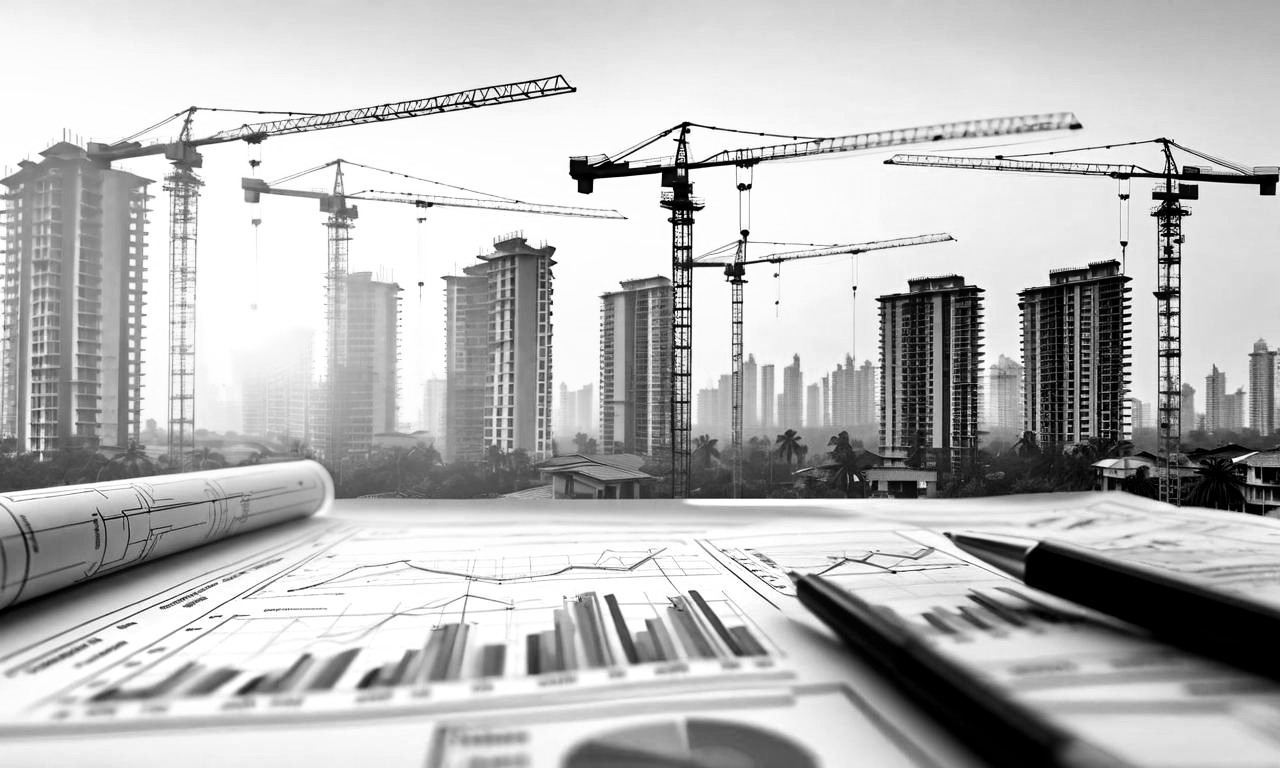
India’s real estate sector enters investment-driven growth phase, eyes record inflows
India’s real estate sector is entering a structurally stronger and more investment-driven phase , with capital inflows reaching record levels and demand expanding across asset classes and geographies, according to a report by global real estate services firm CBRE (Coldwell Banker Richard Ellis) .
CBRE is one of the world’s largest commercial real estate services and investment firms, operating in over 100 countries. It provides advisory, brokerage, property management, and investment services across office, retail, industrial, logistics, residential, and emerging sectors such as data centres and healthcare. Known for its research-backed insights, CBRE is widely regarded as an authority in real estate markets globally.
Equity investments into India’s real estate rose 14 per cent year-on-year , reaching a record USD 10.2 billion during the first nine months of 2025. The report projects total investments for the full year to touch USD 12-14 billion , marking the highest annual inflows ever recorded for the sector.
India’s real estate market has evolved significantly over the past 3-4 years. In 2022-2023, the sector was in a post-pandemic recovery phase, with office leasing gradually improving, retail stabilising, and industrial activity moderate. Equity inflows hovered around USD 7-8 billion, and non-metro markets were largely untapped.
By 2023-2024, growth accelerated as institutional investments increased and domestic demand rose. Office leasing in major cities surpassed pre-pandemic levels, while logistics and warehousing expanded rapidly due to e-commerce growth. Annual inflows reached around USD 9 billion, signalling growing investor confidence.
The current 2024-2025 phase reflects a decisive shift to an investment-driven growth trajectory. Equity inflows in the first nine months hit USD 10.2 billion, with projections of USD 12-14 billion by year-end. Emerging sectors such as data centres, hotels , and healthcare assets saw a 55 per cent year-on-year jump in investment. Tier-II and tier-III cities are attracting increasing capital, reflecting better infrastructure and investor confidence beyond tier-I hubs.
Several factors have fueled this shift. Sustained investments and equity inflows have provided developers with strong financial backing, enabling expansion across segments. Broadening demand from industrial, office, retail, residential, and emerging asset classes is supporting higher leasing and new projects.
Rising disposable incomes and urbanisation are driving demand for premium and luxury residential housing , while stronger consumer spending boosts retail expansion. The office sector continues to recover post-pandemic, with multinational corporations and Global Capability Centres (GCCs) leasing modern, flexible workspaces.
Non-metro markets are emerging as major investment destinations, with cities like Ahmedabad, Indore, Coimbatore, Panipat, and Ludhiana attracting substantial capital. Rapid digitisation, modern infrastructure, and plug-and-play transit, logistics, and service facilities have made Indian real estate more future-ready . Policy support under initiatives like RERA and PMAY has further enhanced transparency and investor confidence.
The office sector is expected to exceed 80 million square feet in gross leasing for 2025, with 60 million square feet leased in the first nine months alone, the highest ever for this period. Industrial and logistics real estate recorded steady growth, driven by e-commerce and third-party logistics, while Grade-A warehousing and multimodal connectivity supported rental growth. Retail real estate remains resilient, powered by experience-led expansion and strong demand from fashion and apparel brands, including growing interest from foreign retailers.
Investment in land, development sites, and office properties accounted for nearly three-fourths of total equity inflows. Emerging segments like data centres, hotels, and healthcare assets have attracted a surge in capital, reflecting investor interest in diversified and future-ready assets.
The residential sector continues to perform strongly, supported by steady sales, new launches, and growing demand for premium and luxury housing. CBRE notes that the sector’s robust fundamentals across all segments position it to play a critical role in India’s long-term economic growth, with the shift from recovery to structural, investment-led strength marking a key turning point.