
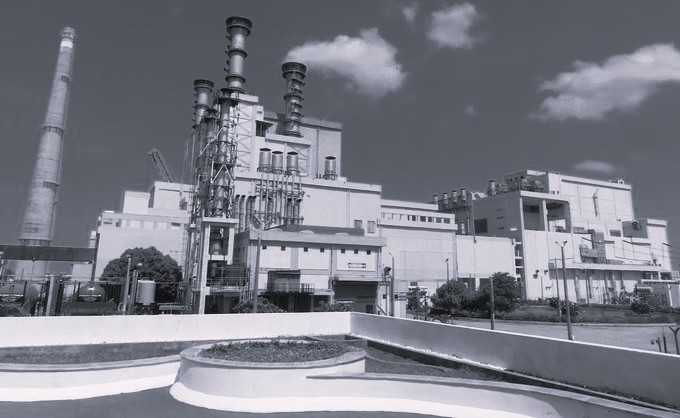
India’s Prototype Fast Breeder Reactor Gains Global Recognition
India’s Prototype Fast Breeder Reactor ( PFBR ) at Kalpakkam in Tamil Nadu has emerged as a major milestone in the country’s advanced nuclear energy programme after successfully achieving first criticality , marking the beginning of a self-sustaining nuclear chain reaction.
The development places India firmly in the second stage of its three-stage nuclear programme , designed to optimise nuclear fuel use and eventually support thorium-based energy systems. The PFBR uses plutonium-based mixed oxide fuel and liquid sodium coolant , enabling it to produce more fissile material than it consumes, making it a key technology for long-term fuel sustainability.
Developed indigenously by Indian nuclear institutions under the Department of Atomic Energy, the reactor is operated through Bharatiya Nabhikiya Vidyut Nigam Limited and forms an important part of India’s closed nuclear fuel cycle vision first conceptualised by nuclear pioneer Homi Jehangir Bhabha.
The achievement has drawn significant international praise. The Director-General of the International Atomic Energy Agency, Rafael Grossi, congratulated India, calling it an “impressive progress” in nuclear fuel sustainability and reaffirming the agency’s support for India’s safe nuclear development.
The International Energy Agency also praised the milestone, describing it as an “important technological achievement” and highlighting its role in advancing efficient fuel usage and reducing nuclear waste.
Experts note that only Russia currently operates a similar fast breeder reactor on a comparable scale, while countries like the United States and Japan had previously discontinued such complex programmes due to technical challenges.
The PFBR will now undergo a series of low-power physics experiments before gradually increasing output and being connected to the national electricity grid. Once fully operational, it is expected to play a crucial role in strengthening India’s energy security and supporting its long-term target of expanding nuclear power capacity significantly in the coming decades.
In addition to global recognition from the IAEA and IEA, the development has also been widely noted in international energy circles as a step forward in next-generation nuclear technology, reinforcing India’s position as a key emerging leader in advanced nuclear research.