
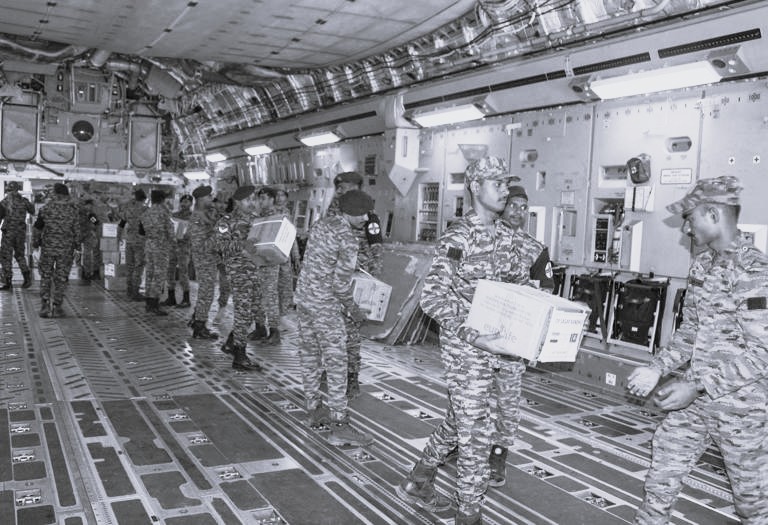
India’s NDRF ends high-risk rescue mission in cyclone-ravaged Sri Lanka
India’s National Disaster Response Force (NDRF) concluded its search, rescue and relief mission in Sri Lanka on Friday, marking the end of an intensive humanitarian effort in a country devastated by Cyclone Ditwah. The operation comes at a time when Sri Lanka is grappling with widespread flooding, landslides and severe damage to infrastructure, leaving hundreds dead and thousands displaced. The scale of destruction has overwhelmed local authorities, making international support crucial for the island’s recovery. According to Sri Lanka’s Disaster Management Centre, 486 people have been confirmed dead while 341 remain missing since extreme weather struck the country on November 16.
India was the first nation to respond to Sri Lanka’s international appeal for help under Operation Sagar Bandhu. An 80-member NDRF team, including specialised K9 rescue dog units, arrived on November 29 and was deployed immediately to several of the worst-hit regions. The Indian High Commission in Colombo noted that the teams began work the moment they landed, coordinating closely with Sri Lankan officials to address urgent rescue and relief needs.
The NDRF operated across multiple severely affected districts, including Badulla, Kochchikade, Puttalam, Colombo and Gampaha. These regions were left submerged, cut off or buried under mud due to days of relentless rain. The teams navigated flooded neighbourhoods, damaged roads and unstable landslide zones to reach stranded residents and deliver immediate aid.
Their work included rescuing and evacuating around 150 people, assisting those trapped inside damaged structures, recovering mortal remains from collapsed areas and providing essential medical attention to the injured. They also ensured support for vulnerable groups such as pregnant women, infants, persons with disabilities and the elderly. In several cases, NDRF personnel even recovered stranded animals to help families who had lost their homes.
Some of the most challenging operations took place in Badulla district, one of the worst hit by landslides. Slopes had collapsed under heavy rainfall, leaving debris as deep as eight to ten feet. NDRF teams trekked long distances through slippery, unstable terrain while carrying specialised equipment. The K9 units proved crucial in locating people trapped beneath mud and rubble, helping speed up recovery efforts despite adverse conditions.
After completing all assigned rescue and recovery tasks, the NDRF teams departed Colombo on Friday. The Indian High Commission highlighted the deeply humanitarian nature of the mission and praised the professionalism with which the teams worked despite life-threatening conditions.
Meanwhile, Indian High Commissioner Santosh Jha met Sri Lanka’s Minister of Housing, Construction and Water Supply, Susil Ranasinghe, to discuss reconstruction needs in the aftermath of the cyclone. The discussion focused on strengthening India-Sri Lanka cooperation in rebuilding homes and restoring essential infrastructure.
As per official data, 2,303 houses have been completely destroyed and over 52,000 partially damaged. India continues its broader humanitarian support to Sri Lanka through air, sea and ground operations under Operation Sagar Bandhu, as the island prepares for the long and difficult recovery ahead.