
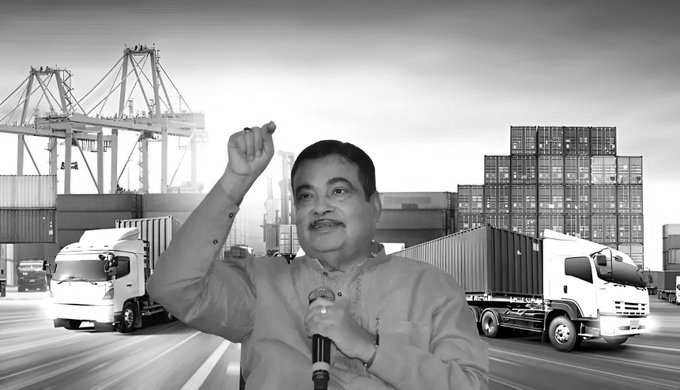
India’s logistics cost to drop to single digits by December: Gadkari
India is on track to reduce its logistics costs to 9% of India’s GDP by December 2025, Union Minister Nitin Gadkari announced on Friday. This milestone is expected to make Indian industries more competitive and boost exports. The reduction comes amid rapid expansion of expressways and economic corridors, according to a report jointly prepared by IIT Chennai, IIT Kanpur, and IIM Bangalore.
Currently, India’s logistics costs stand at 10%, down from 16% a few years ago, compared to 12% in the US and European countries and 8-10% in China. Gadkari said, “Lower logistics costs will make Indian industry more competitive and enhance the global competitiveness of our exports.”
What is logistics and how it has evolved: Logistics is the planning, execution, and management of the flow of goods, services, and information from origin to consumption, including transportation, warehousing, inventory management, and supply chain coordination. Efficient logistics ensures that products reach markets on time, in good condition, and at minimal cost, benefiting businesses, consumers, and exporters alike.
In India, logistics has evolved significantly over the past two decades. Earlier, poor road connectivity, fragmented supply chains, and inefficient warehousing led to higher costs and delays. The introduction of national highways, dedicated freight corridors, economic corridors, and digital tracking systems has transformed the sector, reducing cost and time while improving reliability.
Real-life example: For instance, consider an e-commerce company in Delhi delivering electronics nationwide. In the past, congested highways and slow transport increased storage and delivery costs. With expressways and economic corridors, deliveries are faster, more predictable, and cheaper. Similarly, manufacturers exporting goods to ports benefit from quicker and lower-cost transport, improving India’s global competitiveness.
Automobile sector growth: Gadkari highlighted India’s ambitions in the automobile sector, aiming to become the world’s largest within five years. The industry has grown from ₹14 lakh crore to ₹22 lakh crore, supporting 4 lakh jobs and contributing the highest GST to the Centre and states. For context, the US automobile market is valued at ₹78 lakh crore, China at ₹47 lakh crore, and India at ₹22 lakh crore, highlighting the potential for growth.
Clean energy and pollution: India’s dependence on fossil fuels costs ₹22 lakh crore annually and contributes significantly to urban air pollution, particularly in Delhi. Gadkari emphasized the need for bio-fuels and alternative energy adoption, linking economic savings with environmental sustainability.
Agriculture and ethanol production: Farmers in Uttar Pradesh and Bihar have earned an additional ₹45,000 crore from bio-ethanol production from corn. Corn prices rose from ₹1,200 to ₹2,800 per quintal, tripling cultivation in these states. Gadkari urged industry bodies to focus on research, technology, and innovation in agriculture to boost GDP growth and reinforce India’s self-reliance.
Waste-to-value initiatives:
The government plans to use segregated solid waste in road construction by 2027, turning waste into infrastructure and further improving logistics efficiency.
India’s logistics sector has made remarkable strides, positioning the country on a path toward global competitiveness. China maintains logistics costs of 8–10%, benefiting from highly integrated infrastructure, streamlined ports, and efficient supply chains, while the US and Europe, at 12%, rely on mature networks with advanced technology and regulatory efficiency. India, at 10%, is rapidly closing the gap, driven by new expressways, economic corridors, and digital initiatives.
The automobile sector is growing steadily, with strong potential to match global leaders in scale and technology. Clean energy initiatives and waste-to-infrastructure programs are gaining momentum, reflecting India’s commitment to sustainability and innovation. Agricultural gains from bio-ethanol demonstrate how policy interventions can directly benefit farmers and boost the economy. Overall, India’s logistics evolution provides a solid foundation, and with continued investment, technology adoption, and coordination, the country is well on its way to becoming a global logistics leader.