
India’s living landscapes, celebrating the International Day of Biosphere Reserves
On the International Day of Biosphere Reserves, we highlight the vital role of UNESCO’s 784 ‘living laboratories’ spread across 142 nations, each a symbol of sustainable coexistence between humanity and nature. This global network is reaffirming its commitment to the Kunming-Montreal Global Biodiversity Framework and the Paris Agreement, strengthening the world’s collective effort to protect the planet’s living systems.
Every year on November 3, the world celebrates the regions where people and nature coexist in balance, the biosphere reserves. These are not just protected areas but living models of how conservation and development can thrive together. Created under UNESCO’s Man and the Biosphere (MAB) Programme, they serve as testing grounds for sustainable living, research, and environmental education. India marks this day with pride, nurturing 18 biosphere reserves that stretch from the Himalayas to the Sundarbans, showcasing the nation’s enduring philosophy of harmony with nature.
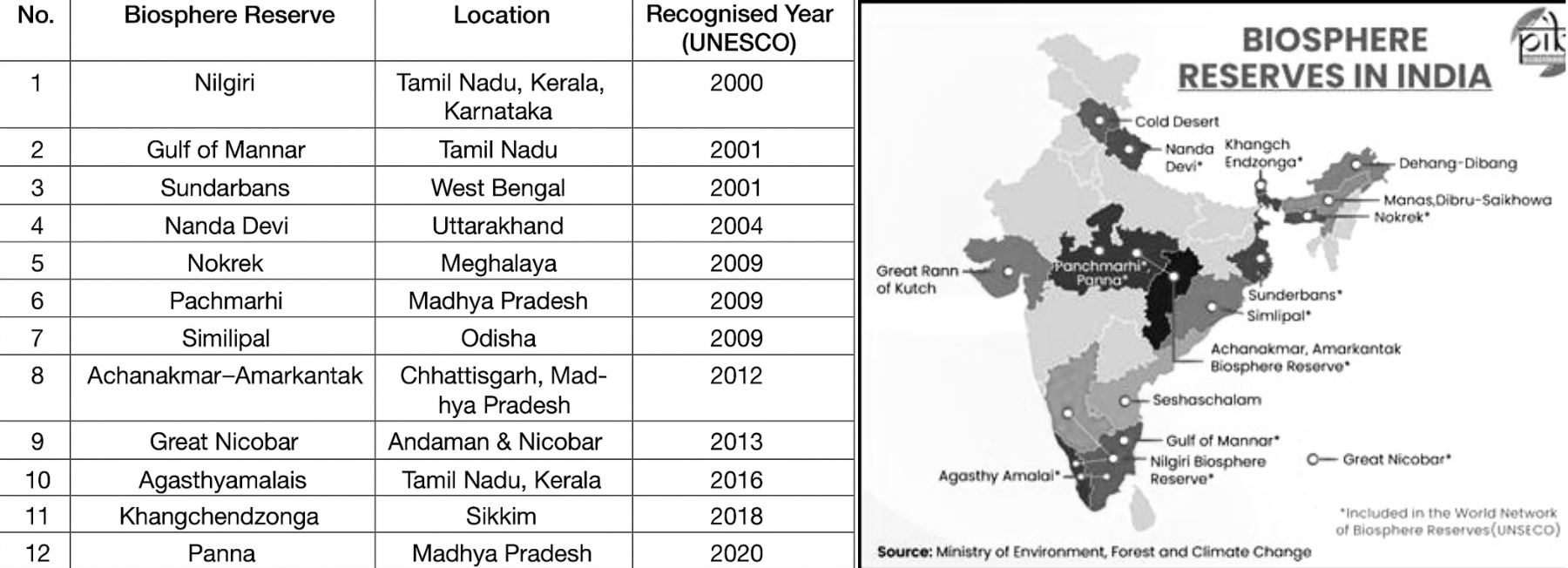
India’s role in this global network is remarkable, 13 of its 18 reserves are part of UNESCO’s World Network of Biosphere Reserves (WNBR) . From the pioneering Nilgiri Reserve to the expansive Gulf of Kachchh, these landscapes reveal how ecosystems and communities can flourish together. In September 2025, the Cold Desert Biosphere Reserve in Himachal Pradesh was added to the UNESCO list, reinforcing India’s position as a global conservation leader. Together, India’s biosphere reserves now span over 91,000 square kilometres, protecting a vast range of life and culture.
Each reserve is built on the principle of balance, a core zone for strict protection, a buffer zone for limited activity, and a transition area where communities pursue sustainable livelihoods. Managed by the Ministry of Environment, Forest, and Climate Change (MoEFCC) under a Centrally Sponsored Scheme, the initiative follows a 60:40 funding model between the Centre and States, and 90:10 for North Eastern and Himalayan regions. The government has doubled its allocation for biodiversity conservation to ₹10 crore in 2025-26, reflecting a stronger push toward ecosystem management. What defines India’s model is community participation, from forest dwellers in the Nilgiris to coastal families along the Gulf of Mannar, people remain the heart of conservation, adopting eco-friendly practices and alternative livelihoods.
The biosphere reserve movement also aligns closely with the Paris Agreement , adopted in 2015 and signed by 195 countries under the United Nations Framework Convention on Climate Change (UNFCCC). The agreement commits nations to limit global warming to well below 2°C , while striving to keep it under 1.5°C compared to pre-industrial levels. Countries must regularly submit nationally determined contributions (NDCs) , plans detailing how they will cut greenhouse gas emissions, promote renewable energy, and build resilience against climate change. Biosphere reserves are natural allies in achieving these goals, acting as carbon sinks, stabilising local climates, and conserving biodiversity that sustains life. Forests, wetlands, and grasslands within these reserves absorb carbon dioxide and support climate adaptation, directly advancing the objectives of the Paris Agreement.
India’s efforts extend beyond these reserves through flagship missions like Project Tiger, Project Elephant, the Green India Mission, and the Integrated Development of Wildlife Habitats. Together, they form a cohesive framework that protects biodiversity while enhancing community welfare. According to the FAO’s Global Forest Resources Assessment 2025, India now ranks ninth globally in total forest area and third in annual forest gain, a testament to its successful conservation model and people’s participation.
Each biosphere reserve tells its own story, from the frozen valleys of Himachal’s Cold Desert to the coral reefs of the Gulf of Mannar and the mangroves of the Sundarbans. Together, they represent a living mosaic of India’s ecological and cultural diversity.
The International Day of Biosphere Reserves is thus not only a celebration but a reminder of our shared responsibility. By blending science with tradition and policy with participation, India’s biosphere reserves prove that sustainable progress and nature’s protection can go hand in hand. As climate and biodiversity challenges intensify, these living landscapes offer hope, showing that the future of humanity is inseparable from the well-being of the Earth.