
India’s labour codes: Balancing reform, Welfare, and Industry growth
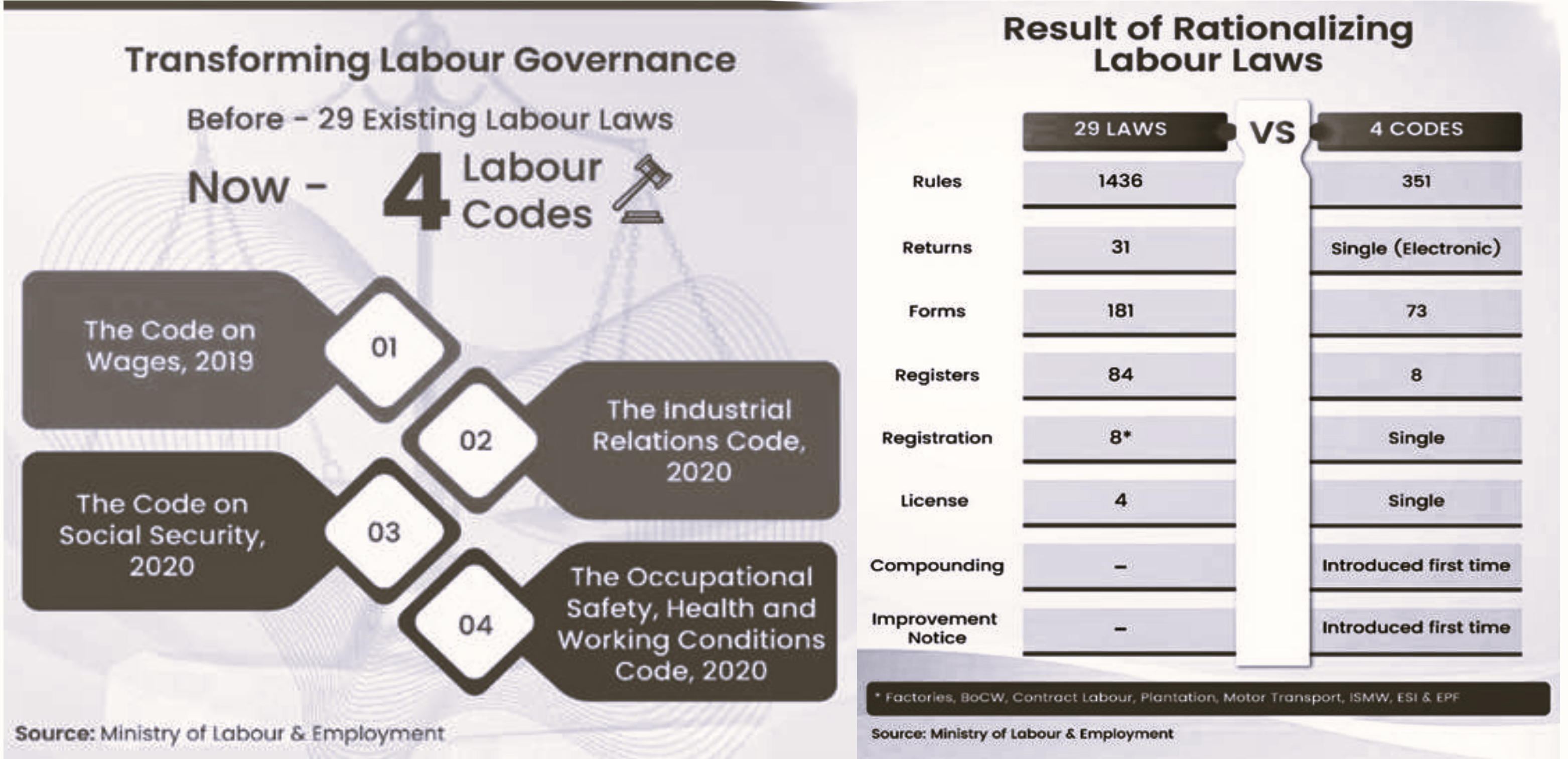
India has ushered in an era of transformational labour reform, with the government notifying four consolidated labour codes Code on Wages (2019), Industrial Relations Code (2020), Social Security Code (2020), and Occupational Safety, Health and Working Conditions Code (2020) effective November 21, 2025. This decisive overhaul replaces 29 fragmented laws, aiming to simplify compliance, broaden social security, and align India with progressive international standards.
The move has been lauded by leaders across the spectrum. Prime Minister Narendra Modi has called the reform “the most comprehensive and progressive labour transformation since Independence,” emphasizing empowerment and dignity for workers while streamlining business operations. Union Home Minister Amit Shah described the reforms as "the biggest step in the history of Indian labour laws," forecasting the codes as key to a developed and self-reliant India. Labour Minister Mansukh Mandaviya highlighted their transformative impact on timely, fair wages and expanded safety measures, noting benefits for all categories of workers including women and the gig economy. Andhra Pradesh Chief Minister N. Chandrababu Naidu praised the reforms for their future-ready stance, spotlighting enhanced protection and parity for gig and platform workers. The Confederation of Indian Industry (CII) Director General Chandrajit Banerjee termed the codes a “historic milestone” for both workers and industry, and international organizations have echoed support, with the International Social Security Organisation (ISSO) lauding India’s emphasis on inclusive welfare.
At the ground level, the new codes introduce mandatory appointment letters, national minimum wage guarantees, and streamlined dispute resolution mechanisms. For the first time, gig and platform workers traditionally outside formal protection are covered by statutory social security, with aggregators like Swiggy contributing to a dedicated welfare fund. Workplace safety across sectors is strengthened, offering safeguards for women and equal opportunity provisions.
However, the rollout has faced sharp opposition. The Congress party and central trade unions have criticized the reforms, demanding greater safeguards for workers and warning against what they perceive as a pro-industry tilt. Congress leaders like Jairam Ramesh argue the codes risk repackaging existing laws without genuine benefit, pushing for a ₹400 per day minimum wage, universal health coverage, and security for unorganized workers. Trade unions such as AIUTUC and CITU have held demonstrations, alleging that the increased threshold for layoffs now up to establishments with 300 workers reduces job security and collective bargaining rights, while longer work shifts (up to 12 hours) could mount pressure on employees.
Adding to concerns, critics warn that while the codes simplify compliance for businesses, implementation remains patchy. Many states have yet to issue necessary notifications, raising questions about uniform enforcement. Experts also highlight the challenges of extending benefits to India’s vast, diverse, and often informal workforce, particularly gig workers who juggle multiple jobs.
Despite these debates, the new labour codes represent a bold leap toward a modern, inclusive workforce, balancing operational flexibility for businesses with expanded protections for employees. Success will depend on effective and responsive implementation, robust safeguarding of worker interests, and continuous engagement with evolving employment realities. As India moves forward, these reforms have the potential to reshape its labour market, empower millions, and set new standards for economic growth and social welfare.