
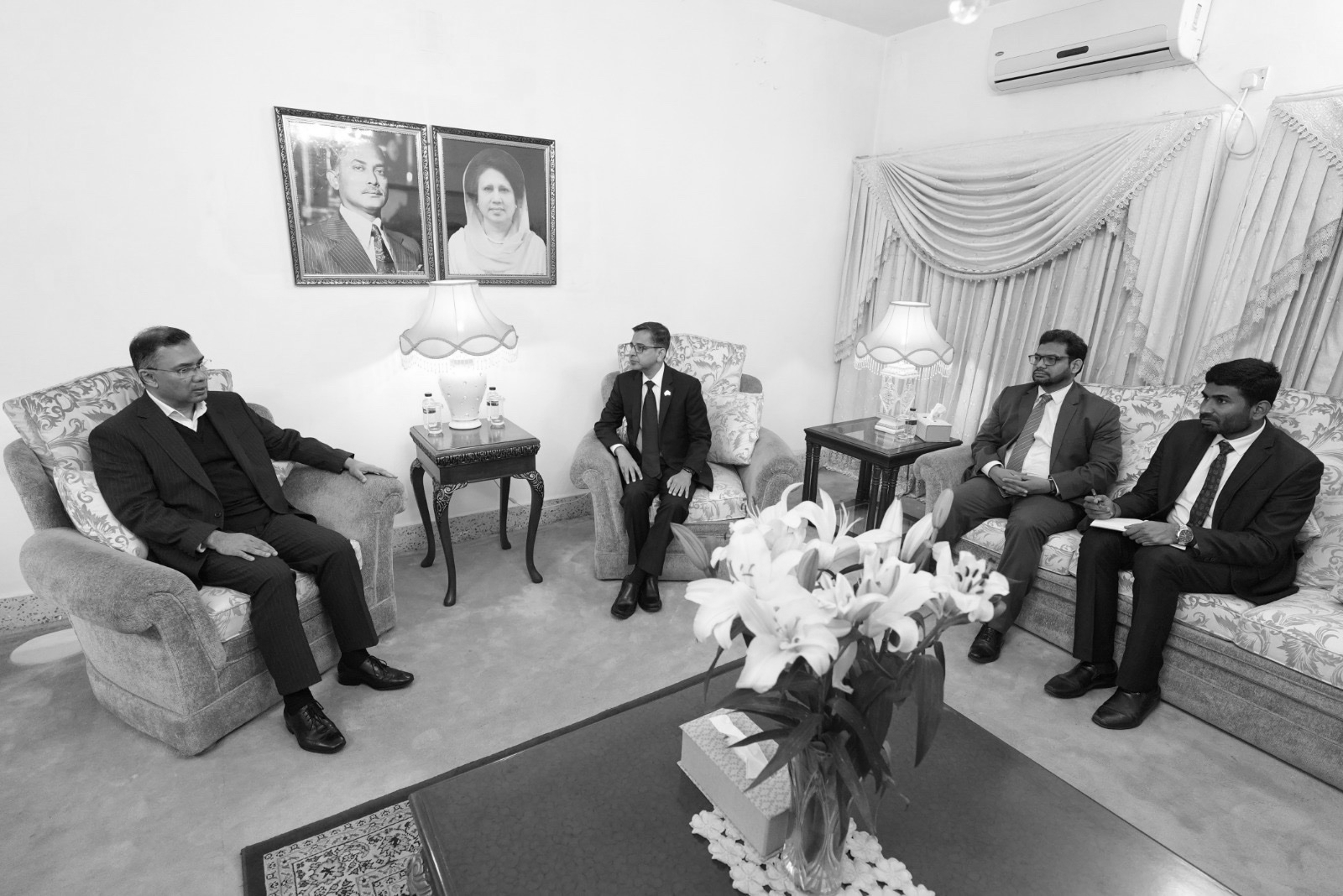
India’s High Commissioner meets BNP Chief Tarique Rahman amid Bangladesh political transition
India’s High Commissioner to Bangladesh, Pranay Kumar Verma , met Bangladesh Nationalist Party (BNP) Chairman Tarique Rahman on Saturday, a day after he formally assumed charge of the party following the death of his mother, former Prime Minister Begum Khaleda Zia , marking a key moment in Bangladesh’s ongoing political transition.
The meeting comes amid significant political churn in Bangladesh after the July 2024 uprising that led to the ouster of the Sheikh Hasina-led Awami League government and the installation of an interim administration headed by Nobel Laureate Muhammad Yunus . Bangladesh is currently navigating a fragile transition phase ahead of national elections scheduled for February.
In a statement posted on X, the BNP said Tarique Rahman was unanimously appointed Chairman by the party’s National Standing Committee, in accordance with its constitution, after the post fell vacant following Khaleda Zia’s death on December 30.
Rahman’s elevation is widely seen as positioning him as the BNP’s prime ministerial candidate , with his return to Bangladesh last month after nearly 17 years in exile adding momentum to the party’s political revival. He had left the country following his arrest during the 2007–08 political crisis and later settled in London. After the fall of the Awami League government, he was acquitted in several cases filed during its tenure, clearing the way for his return.
The meeting between the Indian High Commissioner and Rahman is being viewed as politically significant , signalling New Delhi’s engagement with all major political stakeholders during Bangladesh’s transition. India has traditionally enjoyed closer ties with Awami League governments, and the outreach to BNP leadership reflects a pragmatic recalibration as Dhaka prepares for elections.
The engagement also takes place amid growing concerns over law and order , particularly reports of violence against religious minorities, including Hindus , following the political upheaval. Minority safety has emerged as a sensitive issue in India–Bangladesh relations, with New Delhi urging Dhaka to ensure protection and accountability.
The Yunus-led interim government has pledged to restore stability, uphold democratic freedoms, and conduct credible elections, but faces criticism over policing gaps, political tensions, and its handling of communal violence. These internal challenges are closely watched by regional partners, including India, given their potential impact on bilateral ties and border security.
Last month, External Affairs Minister S. Jaishankar met Tarique Rahman in Dhaka and conveyed India’s condolences on the death of Begum Khaleda Zia. Jaishankar handed over a personal letter from Prime Minister Narendra Modi and expressed confidence that Khaleda Zia’s vision and values would continue to guide the development of India–Bangladesh relations.
Observers say the evolving political landscape in Bangladesh, the conduct of the interim government, and the outcome of the upcoming elections will be crucial in shaping the future trajectory of India–Bangladesh relations , particularly in areas such as security cooperation, minority protection, trade, and regional stability.