
India’s Governance Pipeline Witnesses Historic Surge in Women IAS Officers
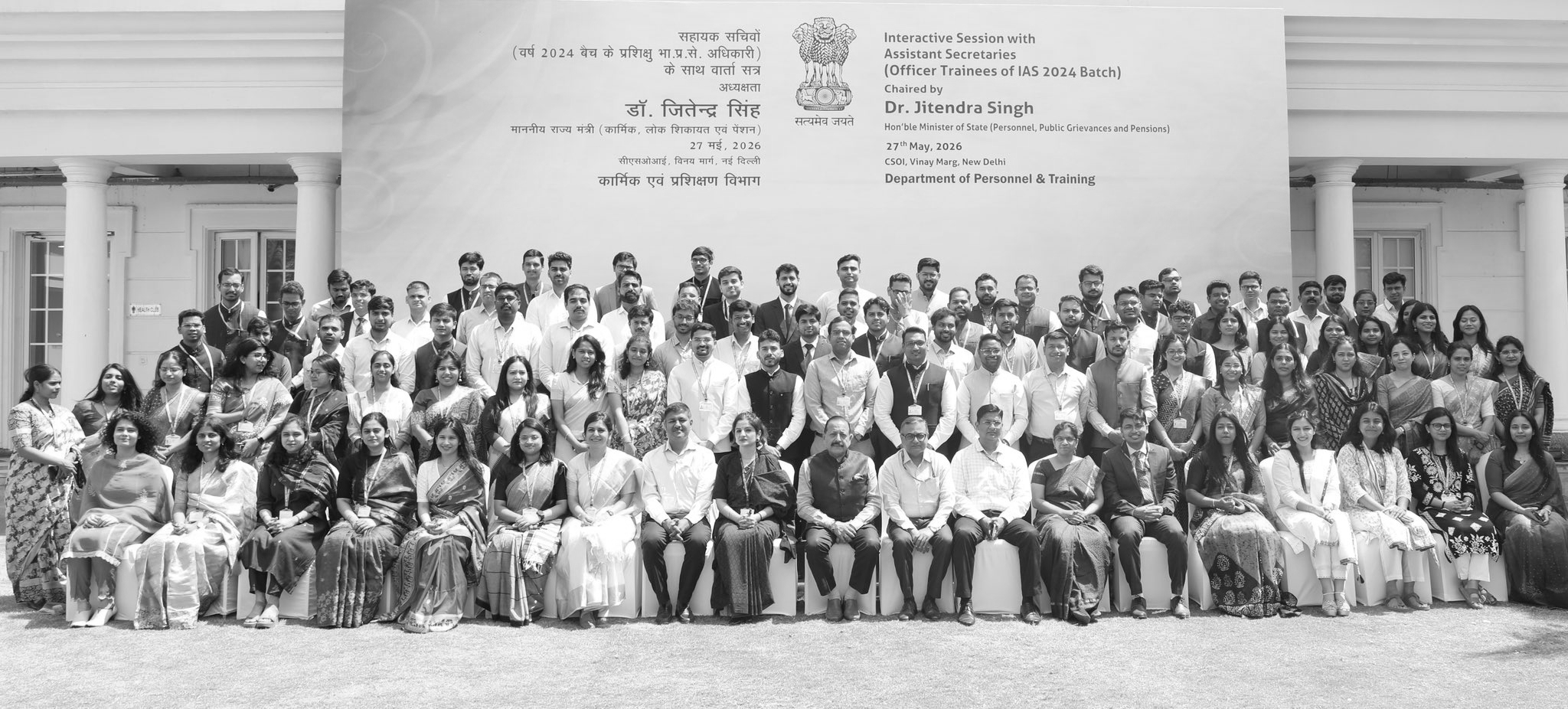
India’s premier bureaucracy is witnessing a historic transformation, with women now accounting for nearly 41% of the 2024 IAS officer trainees batch , marking one of the highest-ever levels of female representation in the history of the Indian Administrative Service. The development, highlighted by Union Minister Dr. Jitendra Singh , reflects a broader shift underway in India’s governance structure, where access to opportunity, education and professional aspirations are expanding beyond traditional barriers.
Interacting with IAS officer trainees under the Assistant Secretary Programme in New Delhi, Dr. Singh said the changing character of India’s Civil Services mirrors the transformation taking place across the country. He noted that the officers entering service today would occupy leadership positions when India completes 100 years of Independence in 2047, placing them at the centre of the country’s future governance journey.
The current batch includes 184 IAS officers attached to 49 ministries and departments for an eight-week programme aimed at exposing young officers to policymaking and administrative functioning at the Centre. Introduced in 2015 under Prime Minister Narendra Modi’s leadership, the programme is designed to create a more confident, policy-oriented and institutionally connected bureaucracy early in officers’ careers.
While the 41% figure specifically refers to the IAS batch and not the entire combined UPSC Civil Services intake, experts say it reflects a larger trend visible across India’s competitive examinations. Over the last five years, women have steadily increased their presence in UPSC selections, regularly securing top ranks and dominating merit lists. Analysts attribute the rise to expanded access to higher education, digital coaching platforms, online learning ecosystems and stronger family support, particularly from Tier-2 and Tier-3 cities.
The growing visibility of successful women IAS and IPS officers has also played a major role in inspiring aspirants. Policy measures such as scholarship support, fee waivers and residential coaching academies have further widened participation among women candidates.
Despite the recent surge, women still constitute only around one-fifth of serving IAS officers nationwide due to historically low recruitment levels over previous decades. The latest batch, therefore, is being viewed as a significant generational shift rather than long-established parity.
Dr. Singh also highlighted the changing academic profile of India’s bureaucracy, noting that 78 officers in the current batch come from engineering backgrounds alongside professionals from medicine, law, management and humanities. He said governance today increasingly requires expertise in Artificial Intelligence, digital governance, data analytics and public communication as administration becomes more technology-driven and citizen-focused.
The minister further pointed to changing regional trends in Civil Services selections, saying states that once had limited representation are now producing larger numbers of successful candidates. Analysts say the development reflects a deeper transformation in India’s bureaucracy, one that is becoming more gender-balanced, technologically skilled and socially diverse as the country advances toward its India@2047 vision.