
India’s Food Processing Revolution: From Farm to Future
India’s food processing industry is no longer a silent sector tucked away between farms and supermarket shelves. It is becoming one of the country’s most dynamic economic engines, shaping everything from farmer incomes to consumer health. In the past year alone, the pace of activity has been striking. Reliance Consumer Products announced a sweeping ₹40,000-crore plan to build food parks across the country, starting with a ₹768-crore unit in Kurnool that will churn out staples like noodles, spices and flour. Amul, the cooperative giant that once powered India’s white revolution, is setting up a ₹75–100-crore dairy plant in Assam capable of processing one lakh litres of milk each day. Meanwhile, the Ministry of Food Processing Industries (MoFPI) has cleared more than 1.44 lakh projects under schemes such as PM Kisan Sampada Yojana and PM Formalisation of Micro Food Enterprises. Together, these moves reveal a sector in motion one that holds the power to reshape rural livelihoods, consumer markets and the nation’s economic trajectory.
The numbers tell a compelling story. The Indian food processing market was valued at around ₹30.5 lakh crore in 2024 and, if current trends continue, could nearly double to ₹65 lakh crore by 2028. It already contributes about 7.7% of total manufacturing output, roughly 32% of the domestic food and grocery market, and nearly 13% of merchandise exports. This is not a niche business; it is a cornerstone of national growth.
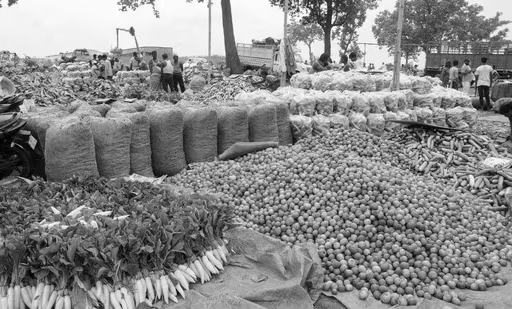
Why does this matter so much? For decades, Indian farmers have struggled with post-harvest losses that rob them of income and waste precious resources. Every year, produce worth ₹90,000 crore to ₹1.1 lakh crore is lost to spoilage. Processing whether by turning tomatoes into puree, milk into cheese or mangoes into pulp reduces that waste dramatically. It allows farmers to earn 20–40% higher prices than selling raw crops and keeps food available year-round for consumers.
The sector’s employment potential is equally critical. More than 70 lakh people are directly or indirectly engaged in processing units, cold chains, packaging, logistics and retail. For a country where rural underemployment remains a stubborn challenge, food processing offers jobs that are both scalable and relatively stable.
Government support has played a major role in this expansion. Projects under the Pradhan Mantri Kisan Sampada Yojana have sanctioned 41 Mega Food Parks, 399 Cold Chain projects, 76 Agro-processing Clusters, and 588 stand-alone units across India. These initiatives aim to modernise supply chains, provide common infrastructure and encourage private investment. The goal is clear: reduce wastage, add value and ensure farmers share in the gains of a more sophisticated food economy.
Yet this revolution is not without its blemishes. The rapid rise of packaged, ready-to-eat foods many loaded with salt, sugar and unhealthy fats is contributing to a surge in lifestyle diseases such as diabetes and hypertension. Over-processing can strip essential nutrients, while adulteration scandals continue to emerge from the unorganised sector. Environmental concerns are mounting as well. Cold storage facilities consume significant energy, and packaging waste, particularly from single-use plastics, is growing at an alarming pace.
Structural bottlenecks persist. India’s supply chain remains fragmented, with millions of small farmers making it difficult to guarantee consistent quality and year-round supply. Financing remains a hurdle for micro and small enterprises, which struggle to meet collateral requirements for bank loans. Logistics costs exacerbated by patchy rural roads and frequent power shortages inflate prices and reduce competitiveness. Compliance with FSSAI standards, while vital for food safety, adds to the expense for smaller players.
Still, the economic prospects are enormous. Analysts project that the market could exceed ₹70 lakh crore by 2030, driven by rising incomes, urban lifestyles and the expansion of organised retail. The cold chain segment alone is expected to attract ₹20,000 crore in fresh investment over the next five years. Sectors such as dairy, with annual milk production already topping 230 million tonnes, and fruits and vegetables, exceeding 320 million tonnes, offer vast opportunities for value addition. India’s marine products and spice exports are also gaining global traction, opening doors for higher-value processed goods.
What should policymakers and industry leaders do next? First, expand multi-commodity cold storage networks with capital subsidies for energy-efficient units, especially in underserved regions. Second, create low-interest credit lines and shared testing facilities to help small processors meet food-safety standards. Third, mandate clear front-of-pack labelling and set upper limits on salt, sugar and trans fats to protect public health. Fourth, incentivise biodegradable packaging and recycling to reduce the environmental footprint. Finally, strengthen Farmer Producer Organisations (FPOs) so that farmers can aggregate produce, negotiate better contracts and participate more fairly in value chains.
The food processing story is more than a tale of factories and export earnings. It is about transforming agriculture from a subsistence activity into a profitable, technology-driven enterprise. It is about ensuring that the food we eat, whether a packet of frozen peas or a carton of fortified milk, is safe, nutritious and sustainably produced. It is about giving farmers, many of whom still live at the mercy of monsoon rains and volatile markets, a chance to share in India’s broader economic rise.
India stands at a decisive moment. With a market already worth ₹30–35 lakh crore and set to climb towards ₹65–70 lakh crore within this decade, food processing can be the bridge between farm and future. If the country can balance growth with health, innovation with sustainability, and scale with fairness, the food on our plates may well become the foundation of a more prosperous nation.