
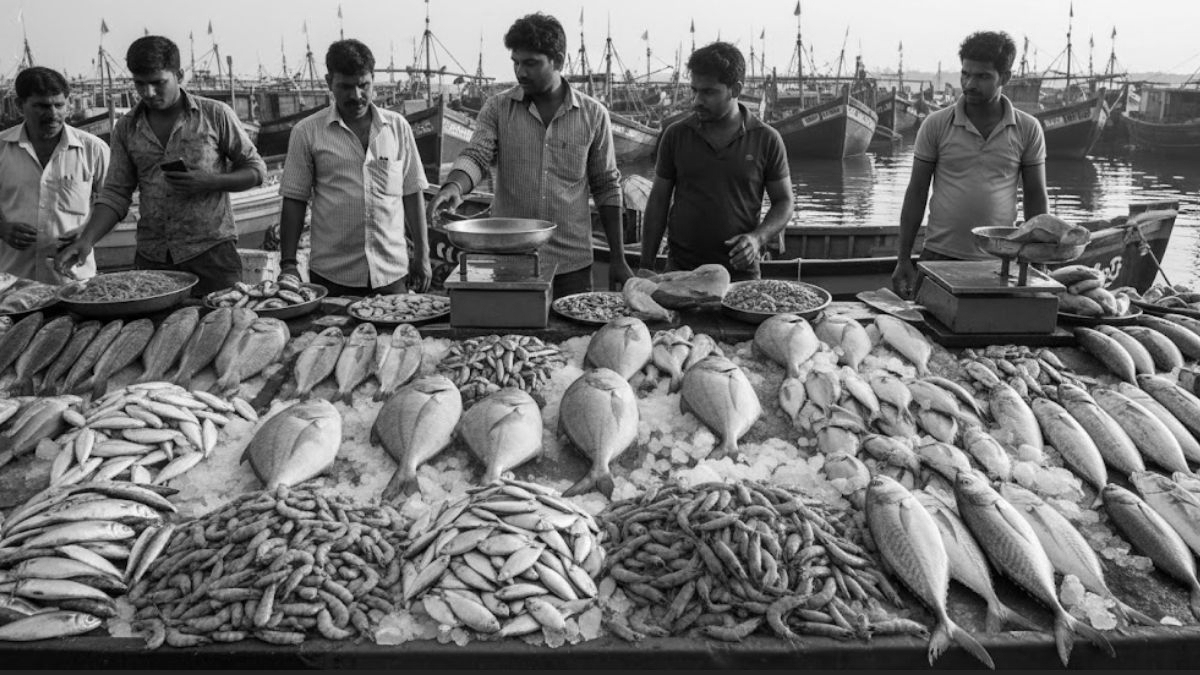
India’s fish production doubles in a decade, govt schemes drive sectoral transformation
India’s fisheries and aquaculture sector has witnessed remarkable growth over the last decade, with fish production rising from 95.79 lakh tonnes in FY 2013-14 to 197.75 lakh tonnes in FY 2024-25, marking a 106% increase, the Ministry of Fisheries, Animal Husbandry & Dairying said. The country is now the second-largest producer of aquaculture in the world , contributing significantly to global seafood output. The sector provides livelihoods to around three crore fishers and fish farmers and has generated 74.66 lakh employment opportunities since 2014-15, supported by financial inclusion initiatives such as Kisan Credit Cards, group insurance, and other assistance programs during fishing ban periods.
The government’s transformative initiatives, including Blue Revolution, Pradhan Mantri Matsya Sampada Yojana (PMMSY), Pradhan Mantri Matsya Kisan Samridhi Sah-Yojana (PMMKSSY), and Fisheries and Aquaculture Infrastructure Development Fund (FIDF) , have played a pivotal role in boosting production, improving infrastructure, and enhancing market access. Cumulative investments of ₹38,572 crore have been approved since 2015, with projects worth ₹32,723 crore implemented across inland and marine fisheries, aquaculture, seafood processing, and value chains.
Modernization has transformed the sector, with thousands of ponds, cages, hatcheries, biofloc and recirculatory aquaculture systems developed for inland fisheries, while marine fisheries have seen upgrades to deep-sea vessels, open-sea cages, brackish water ponds, and marine hatcheries. Fish transport and market infrastructure, including refrigerated trucks, ice-box motorcycles, live fish vending centres, feed mills, and cold storage units, have improved supply chain efficiency. In addition, safety and technology measures such as vessel transponders, aquatic disease diagnostic labs, and mobile testing centres have been implemented to ensure sustainable and secure operations.
India’s seafood exports reached an all-time high of ₹62,408 crore in FY 2024-25, with aquaculture contributing 62% of the export value. Andhra Pradesh remains the largest contributor to India’s seafood exports , reflecting the state’s strong aquaculture and processing infrastructure. Value-added seafood products have grown 56% over the past five years, establishing India as a hub for high-value processed seafood. New initiatives, including Integrated Aquaparks, EEZ deep-sea fishing rules, and fisheries clusters, are expected to further enhance production, technology adoption, sustainability, and employment. Digital platforms, such as onboarding Fisheries Farmer Producer Organizations onto ONDC, have improved market access and e-commerce opportunities for fishers.
With these developments, the fisheries and aquaculture sector has contributed 7.43% to Agriculture GVA since 2014-15 , the highest among agri-allied sectors, underscoring its critical role in livelihoods, exports, and India’s emerging Blue Economy .