
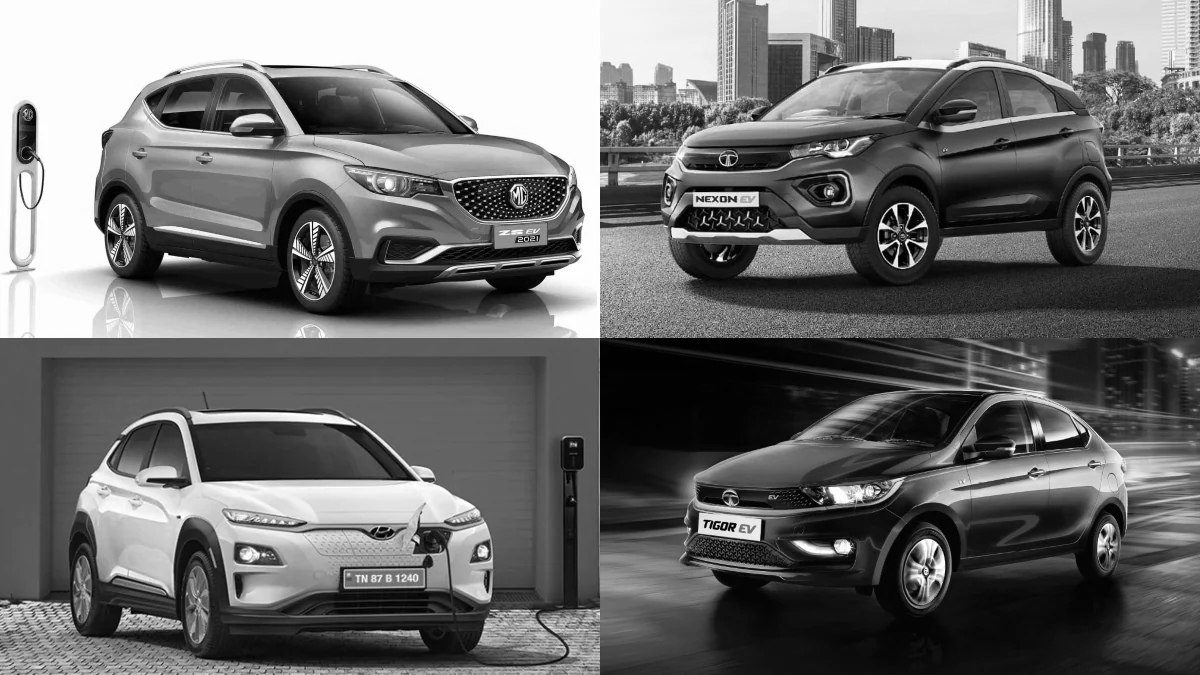
India’s EV market accelerates, charging infrastructure becomes key
India’s electric vehicle (EV) market is growing rapidly, with retail sales rising across all segments in October 2025. The growth was driven primarily by passenger and commercial vehicles, while two- and three-wheelers recorded modest gains, according to the Federation of Automobile Dealers Associations (FADA).
The electric passenger vehicle (PV) segment recorded a 57.5 per cent year-on-year increase, selling 18,055 units compared to 11,464 units in October 2024. Tata Motors Passenger Vehicles Ltd led the segment with 7,239 units sold, followed by JSW MG Motor India Pvt Ltd (4,549 units) and Mahindra & Mahindra Ltd (3,911 units). Kia India, Hyundai Motor India, BYD India, and BMW India also posted significant growth. Vietnamese EV maker VinFast entered the market this year, selling 131 units in October.
The electric commercial vehicle (CV) segment posted the fastest growth, rising 105.9 per cent to 1,767 units from 858 units a year earlier. Tata Motors Ltd led with 603 units, followed by Mahindra Group (306 units), Switch Mobility Automotive Ltd (152 units), and Euler Motors Pvt. Ltd (151 units). Olectra Greentech Ltd and PMI Electro Mobility Solutions also contributed to the increase. The growth in commercial EVs reflects rising interest in fleet electrification among logistics and public transport operators.
Electric three-wheelers grew moderately, with sales up 5.1 per cent to 70,604 units from 67,173 units in October 2024. Mahindra Group remained the top seller with 11,860 units, followed by Bajaj Auto Ltd (8,033 units), YC Electric Vehicle (3,500 units), TVS Motor Company Ltd (2,862 units), and Saera Electric Auto Pvt Ltd (2,264 units).
The electric two-wheeler (2W) segment saw a slight 2.6 per cent increase, selling 143,887 units compared to 140,225 units a year earlier. Bajaj Auto Ltd led with 31,246 units, followed by TVS Motor Company Ltd (29,515 units), Ather Energy Ltd (28,101 units), and Ola Electric Technologies Pvt Ltd (16,036 units). Other contributors included Hero MotoCorp, Greaves Electric Mobility, BGauss Auto, River Mobility, and PUR Energy Pvt Ltd.
While two- and three-wheelers showed incremental gains, passenger and commercial EVs emerged as the main growth drivers. The momentum is supported by new product launches, improving battery technology, government incentives, and expanding charging infrastructure. However, industry analysts stress that widespread adoption requires a robust network of EV charging stations, particularly in major urban centers such as Hyderabad, Bengaluru, Delhi, and Mumbai. Availability of fast chargers, public charging points, and private charging solutions will be key to ensuring convenience for both personal and commercial users.
Looking ahead, the EV market in India is expected to continue its upward trajectory, with further growth driven by government policies, fleet electrification, and rising consumer awareness about sustainable mobility. If infrastructure keeps pace with sales, India could see a transformative shift toward cleaner, electric transportation in the next few years.