
India’s energy sector offers $500 bn investment as reforms boost growth: PM Modi
India’s energy sector presents vast investment opportunities worth USD 500 billion , while the country will need to mobilise USD 145 billion annually to sustain economic growth of around 6 per cent through 2035 and meet its long-term climate commitments, global consultancy Wood Mackenzie and Prime Minister Narendra Modi said on Tuesday.
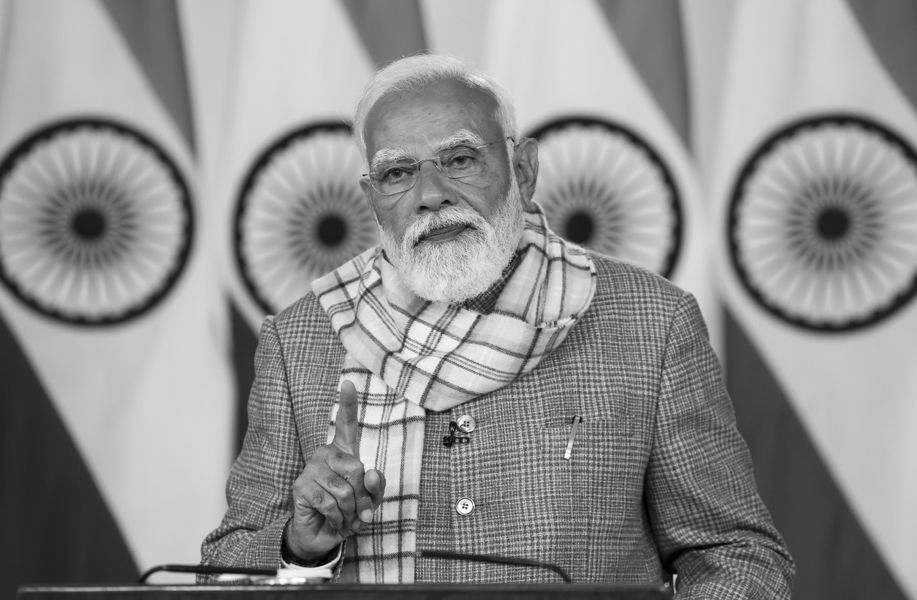
Addressing the inaugural ceremony of India Energy Week 2026 via video conferencing, PM Modi said India is rapidly moving from energy security to energy independence , with reforms creating a transparent, investor-friendly environment. “Today, India is riding on the Reforms Express,” he said, highlighting the government’s focus on upstream and downstream oil and gas, refining capacity, natural gas expansion, and LNG infrastructure.
The Prime Minister said the country is targeting USD 100 billion investment in the upstream oil and gas sector by 2030 , opening one million square kilometres for exploration under initiatives like the Samudra Manthan Mission , while the downstream sector aims to make India the world’s largest oil refining hub , expanding refining capacity beyond 300 million tonnes per annum . He highlighted opportunities in LNG terminals, pipelines, city gas distribution and the growing demand for petrochemical products , while emphasising India’s position as a top-five global exporter of petroleum products to more than 150 countries.
Speaking at the same event, Joshua Ngu, Vice Chairman (Asia Pacific) at Wood Mackenzie , said the coming decade is decisive for India, as it faces the dual challenge of meeting immediate energy security needs while building a low-carbon energy system . “India must de-risk its immediate energy security even as it constructs the low-carbon architecture required for a top-tier global economy,” Ngu said.
Wood Mackenzie estimated that India will require USD 1.5 trillion in energy transition investment between 2026 and 2035 , with a significant share directed to transmission and distribution, grid modernisation, energy storage , and scaling renewables. While non-fossil installed capacity has surpassed fossil capacity, coal, oil, and natural gas will remain critical in the near term for reliability and industrial growth. Crude oil import dependence is projected to rise to 87 per cent by 2035 , and natural gas demand is expected to double to over 140 bcm by 2050 , with LNG imports peaking at 90 million tonnes per annum .
On the clean energy front, India has emerged as the world’s second-largest solar module manufacturer , but gaps remain in cells, wafers, and battery supply chains . Domestic content requirements for solar cells from June 2026 may cause short-term pressures, while battery capacity faces execution risks, with only 100 GWh operational out of 200 GWh announced by 2030 . Progress on green hydrogen and carbon capture, utilisation and storage (CCUS) is still nascent, though the Carbon Credit Trading Scheme 2026 introduces regulatory certainty for emissions reduction.
Wood Mackenzie said that despite near-term challenges, India is well-positioned to become a credible alternative to China in global clean energy supply chains, provided policy momentum and investment scale are maintained. “By scaling domestic manufacturing and sustaining reforms, India can achieve its 500 GW renewable target and emerge as a central pillar of the global energy transition,” Ngu added.
PM Modi concluded by urging global investors to “Make in India, Innovate in India, Scale with India, Invest in India,” stressing that India’s reforms and growth trajectory create one of the world’s largest investment opportunities in energy .