
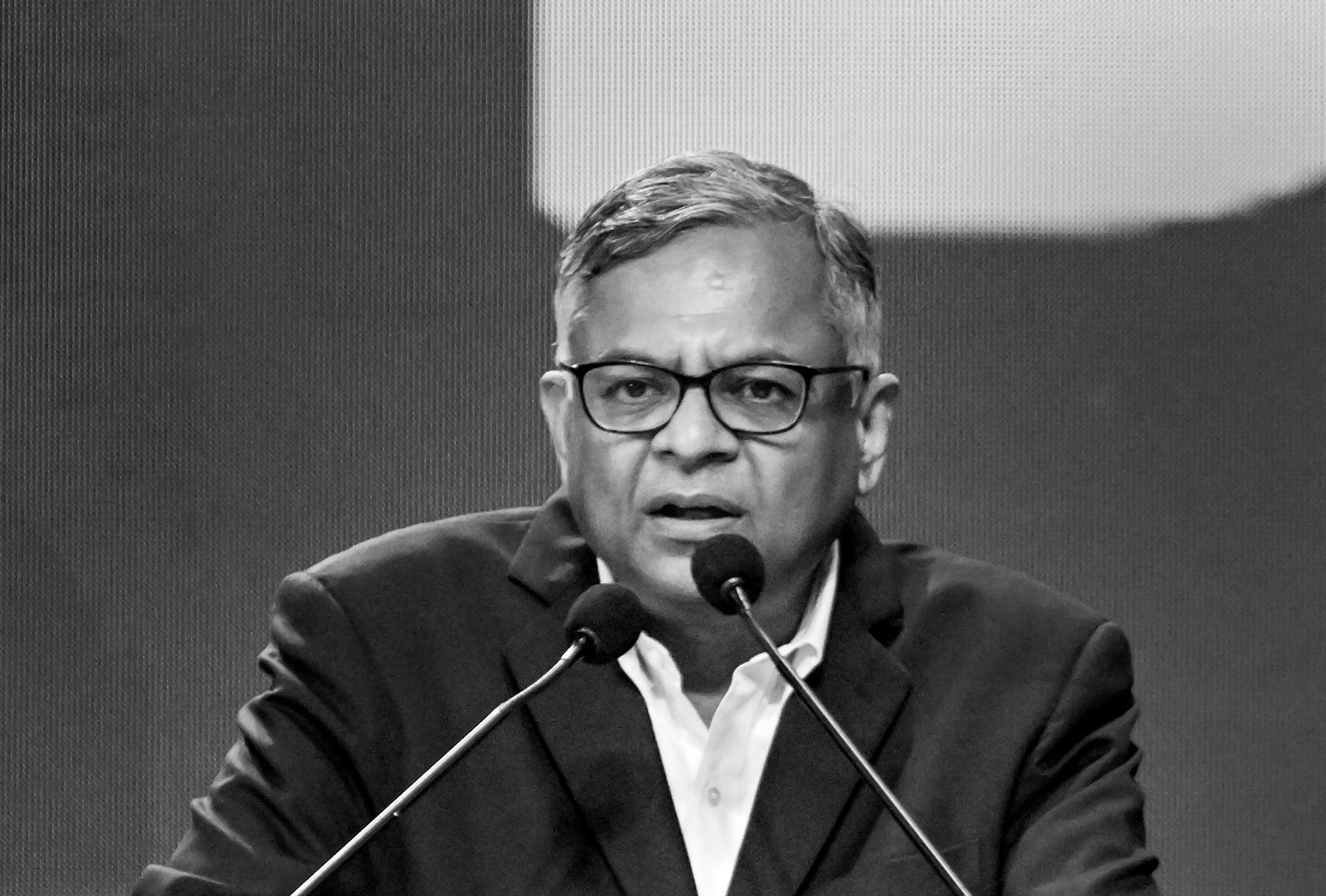
India’s Economy Strong, Energy Security Key to Sustained Growth: Tata Sons Chairman
India’s economy remains robust and stable despite a challenging global environment, but sustaining long-term growth will require greater focus on energy security, advanced manufacturing jobs and human capital, Tata Sons Chairman N Chandrasekaran said on Monday.
Speaking at the Indian Foundation for Quality Management (IFQM) Symposium 2026, Chandrasekaran said India has consistently exceeded expectations in recent years, supported by strong domestic demand, services exports and an enabling policy environment.
He pointed to double-digit growth in several high-frequency indicators, including automobile sales and credit growth, along with strong activity in the power and cement sectors. A current account deficit consistently below one per cent of GDP, healthy foreign exchange reserves and low bank non-performing assets also indicate that the economy is in a “stable and strong place”, he said.
However, Chandrasekaran said maintaining this momentum over a longer period would require addressing key structural priorities. Energy security, he said, is fundamental to economic growth, while India must create more advanced and precision manufacturing jobs to shift workers from low-productivity agriculture towards high-productivity manufacturing and modern services.
He also stressed the need for greater investment in education, skill development and vocational training to build the human capital required for future growth.
Chandrasekaran said the Viksit Bharat 2047 vision has spread across sectors, but achieving it will require inclusive and sustainable development backed by world-class infrastructure, strong institutions and intellectual property.
On manufacturing, he called for India to move beyond its current assembly-led model towards end-to-end domestic capabilities, including product development, equipment manufacturing, research and development and intellectual property creation.
He cited Toyota as an example of how quality can become a driver of innovation, productivity and competitiveness rather than simply an outcome. Germany, he added, transformed its national competitive advantage by focusing on engineering, standards, precision and a strong supplier and SME ecosystem.
Indian manufacturers should similarly embed quality and sustainability into their manufacturing strategies, he said. A stronger SME and supplier network, combined with skilled professionals and R&D capabilities, can help India become globally competitive.
Chandrasekaran also highlighted the Tata Group’s investments across automotive, aerospace and telecom infrastructure, while stressing that India's next phase of growth should build capabilities across the entire value chain.