
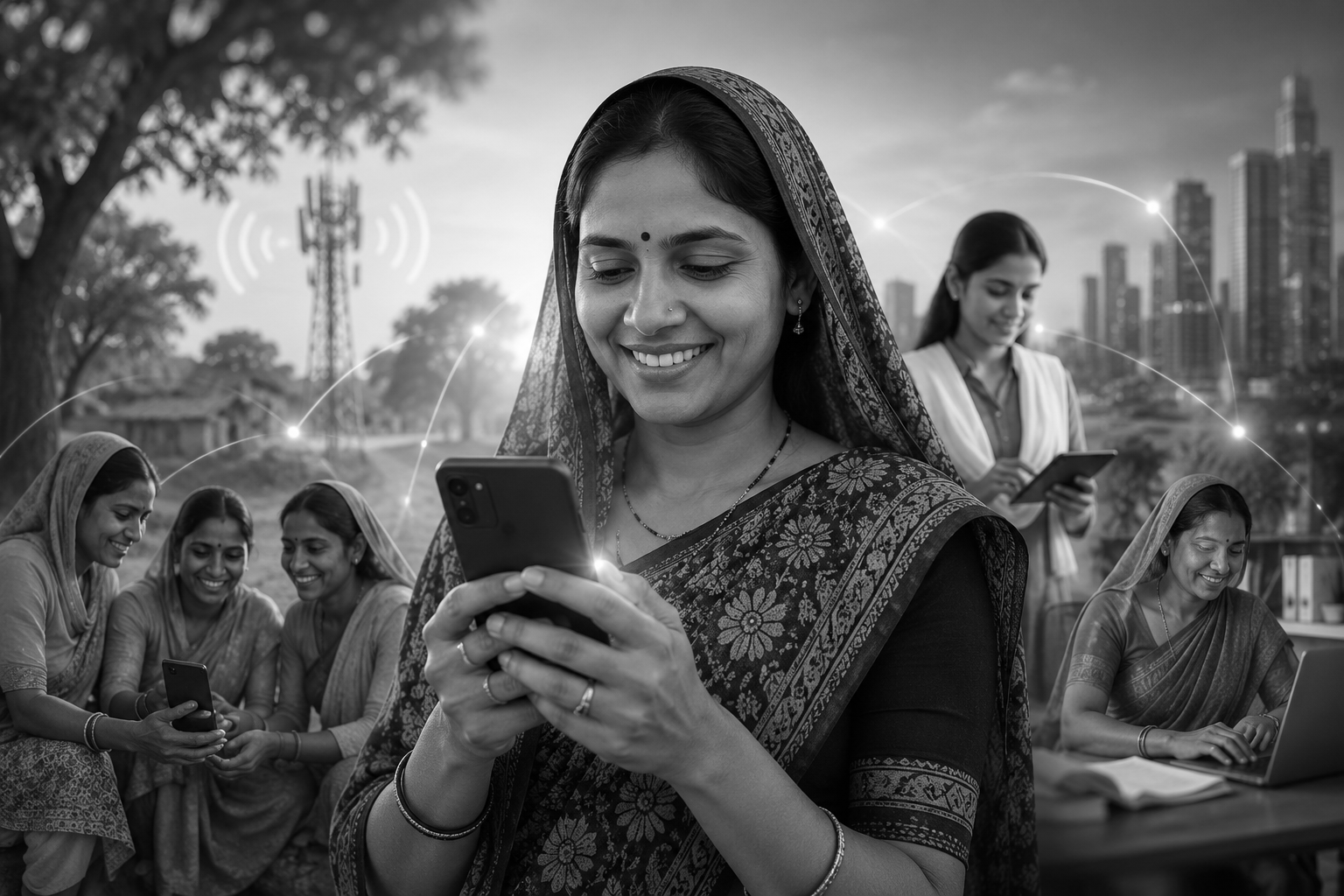
India’s Digital Gender Gap Narrows as Women’s Internet Access Nearly Doubles in Three Years
India’s digital transformation is increasingly becoming a story of women’s empowerment. The latest findings from the National Family Health Survey (NFHS-6) reveal a significant shift in the country’s social and technological landscape, with the number of women accessing the internet nearly doubling in just a few years.
According to the survey, 64.3 per cent of Indian women reported having used the internet at least once in 2023-24 , a dramatic rise from 33.3 per cent recorded during 2019-21 . The sharp increase reflects not only the growing reach of digital infrastructure but also the expanding role of women in India’s rapidly evolving digital economy.
The data points to a broader trend of increasing access to technology and financial services. The proportion of women owning a personal mobile phone rose from 53.9 per cent to 63.6 per cent , while the share of women with a bank or savings account climbed from 78.6 per cent to 89 per cent during the same period. Together, these indicators highlight a steady strengthening of women’s financial independence and participation in formal systems.
Experts often view access to the internet, mobile devices and banking services as key drivers of social mobility. Greater connectivity opens doors to education, healthcare information, employment opportunities, entrepreneurship and digital financial services, particularly for women in rural and underserved regions.
The survey also recorded progress in menstrual hygiene awareness and adoption of safe practices . Among women aged 15 to 24 years , the use of hygienic menstrual protection methods increased from 77.6 per cent to 79.2 per cent . Government initiatives such as the Menstrual Hygiene Scheme and the availability of affordable sanitary products through the Janaushadhi network have contributed to improving awareness and accessibility.
While the findings paint an encouraging picture, the Union Health Ministry noted that new challenges are emerging. Rising cases of non-communicable diseases , lifestyle-related health risks and the coexistence of undernutrition and obesity continue to demand attention from policymakers and healthcare systems.
Conducted across nearly 6.79 lakh households in 715 districts , NFHS-6 serves as one of India’s most comprehensive health and social surveys. Its latest findings suggest that the country is making meaningful progress toward inclusive development, with women increasingly becoming active participants in the nation’s digital and economic growth story.