
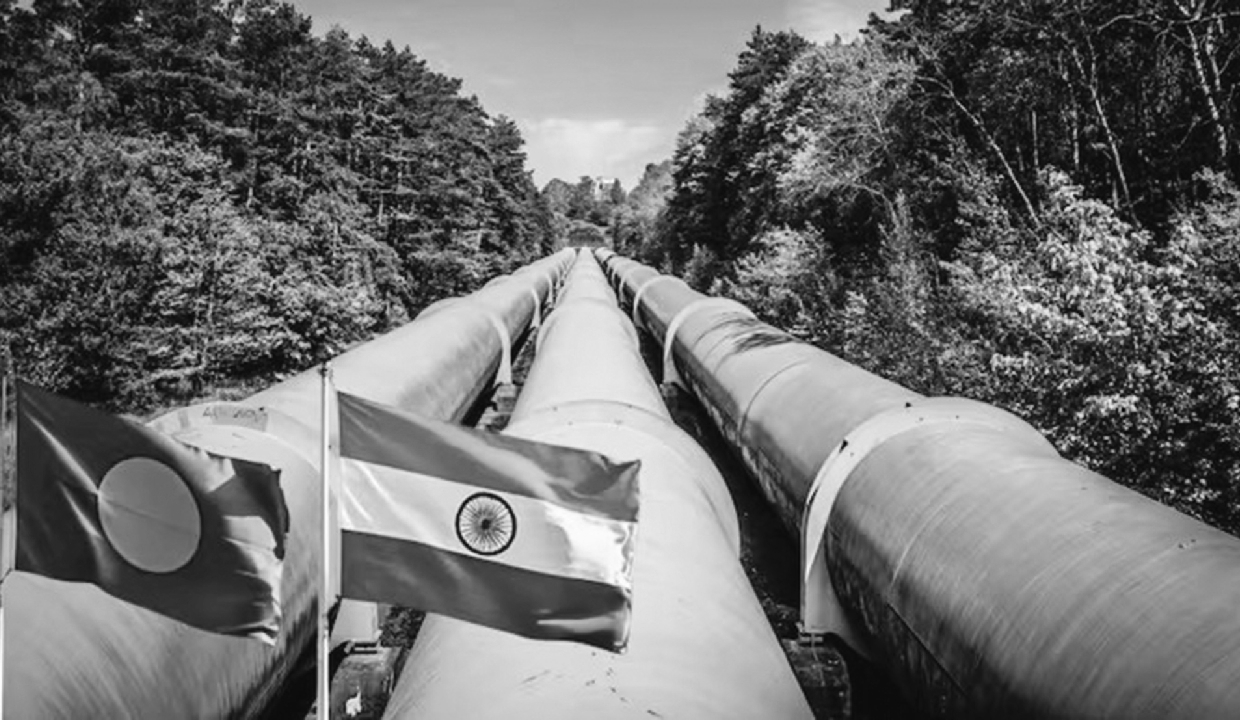
India's diesel lifeline to Bangladesh: Strategic move or risky bet?
As the Middle East faces turmoil and global oil markets spiral, a quieter but critical story unfolds on India’s eastern border. India has begun supplying diesel to Bangladesh through the 131-km Bangladesh-India Friendship Pipeline, with 5,000 tonnes reaching Parbatipur depot in Dinajpur on March 9. Transported from Numaligarh Refinery Limited (NRL) in Assam at 113 tonnes per hour, the shipment takes about 44 hours to arrive. Before the pipeline, diesel moved by slower, costlier rail.
Inaugurated by Prime Minister Narendra Modi and then Bangladesh Prime Minister Sheikh Hasina in 2023, the pipeline is now a strategic asset, enabling faster, more efficient fuel transfers during global disruptions. Under the bilateral agreement, India supplies 1,80,000 tonnes annually, with 90,000 tonnes mandated in the first six months. For 2026, 1,20,000 tonnes are scheduled, and discussions continue for an additional 50,000 tonnes, with Bangladesh also interested in the 60,000-tonne optional quantity under the existing deal.
Authorities in Bangladesh have closed schools and imposed fuel rationing amid long queues at gas stations. Diesel, making up 65–70% of demand , is almost entirely imported. Following reports of illegal stockpiling, the Energy Ministry launched inspections and mobile courts. In Dhaka, the Tejgaon City Filling Station ran completely dry. Strict fuel limits per vehicle are enforced, and violators are being prosecuted, though public anxiety remains high. Bangladesh, with virtually no strategic reserves, felt the impact almost immediately of the Middle East war.
Here is where many Indians are understandably asking: are we helping Bangladesh at our own expense? The answer is nuanced. India says diesel through the Friendship Pipeline is routine trade, not emergency aid, with domestic fuel closely monitored. The country still imports 88% of its crude, half via the Strait of Hormuz, recently disrupted by strikes and Tehran’s retaliation, pushing prices to $119.50 per barrel — every $1 rise adds ₹12,000 crore to imports.
India has shifted to non-Strait sources, now 70% of imports, from West Africa, Latin America, and the US. It holds 75 days of crude stock, with no immediate fuel price hikes. PSU refiners absorb extra costs, and emergency powers boost LPG production to protect domestic supply. With 256.8 million tonnes refining capacity and NRL Assam producing more than the Northeast consumes, pipeline exports cost little domestically.
Strategically, supplying Bangladesh its key eastern neighbour secures regional stability, limits refugee and radicalisation risks , and counters China’s growing influence in the country. The diesel pipeline thus serves both energy and diplomatic goals.
Fair criticism is warranted. In November 2024, the Adani Group cut Bangladesh’s electricity supply over $850 million in unpaid dues, fully restoring it only by March 2025. The episode showed that India-Bangladesh energy cooperation, despite its friendship branding, is transactional: supply is cut when payments aren’t made. The pipeline agreement also obliges Bangladesh to meet minimum import targets, with any shortfall creating contractual friction.
India’s long-term vulnerability remains high , with over 50% of gas and much LPG imported, mostly via the Hormuz chokepoint. Any supply disruption forces refineries to shift crude to LPG, reducing petrol and diesel output. Morgan Stanley estimates that every $10 per barrel sustained oil rise cuts Asia’s GDP growth by 20–30 basis points and widens India’s current account deficit by 50 points, leaving it among Asia’s most exposed economies.
In other words, India can afford to supply Bangladesh diesel today. Whether it can afford to do so two months from now if the Middle East war drags on and crude hits $150 per barrel is a genuinely open question.
The diesel flowing into Bangladesh today is a sign of a functioning relationship. Whether that relationship and India's own energy stability can withstand a prolonged global crisis is the question no pipeline can answer.