
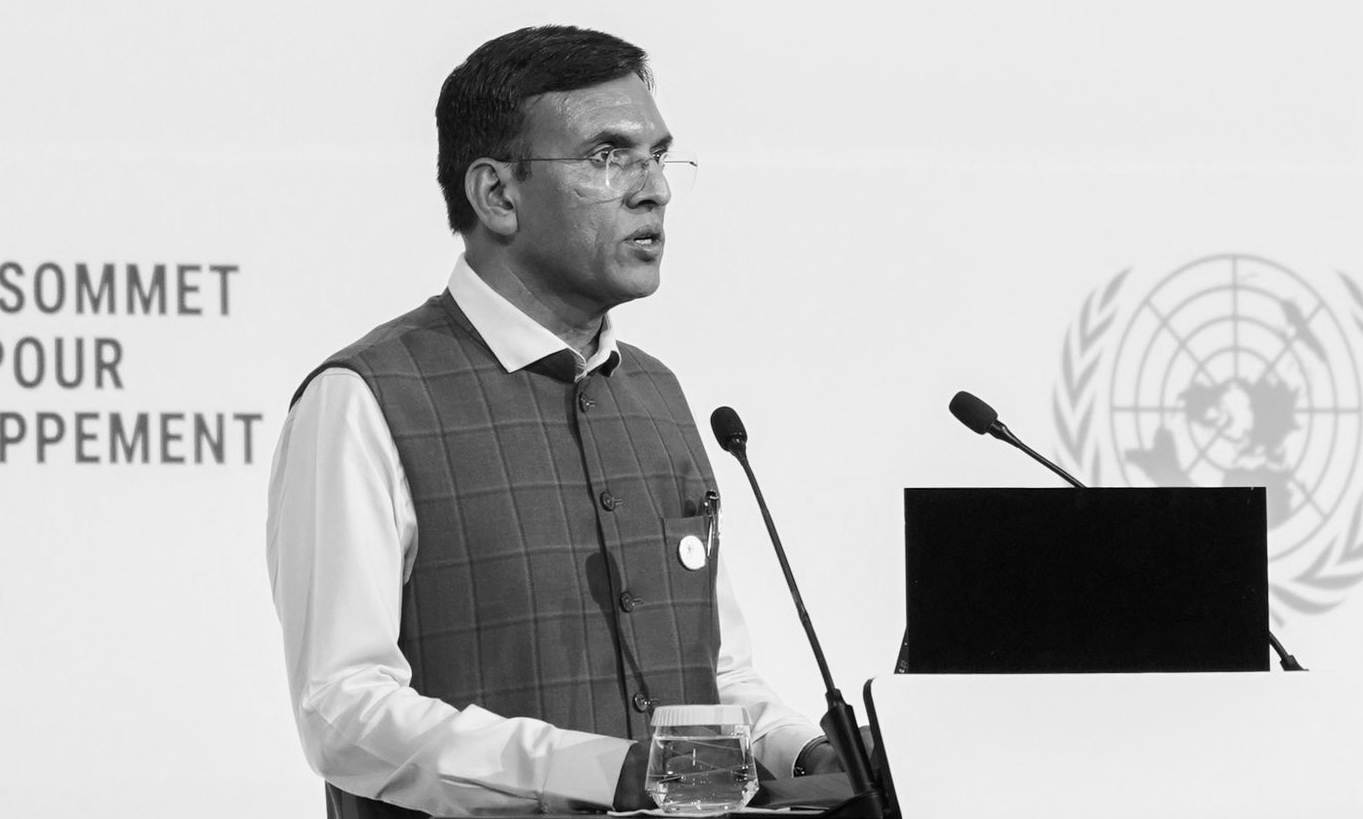
India’s development model a blueprint for Global South: Mansukh Mandaviya
India’s development trajectory offers a model for other nations, especially in the Global South, Union Minister for Labour and Employment Mansukh Mandaviya said on Wednesday at the Second World Summit for Social Development in Doha. Highlighting the lifting of 250 million people out of multidimensional poverty over the past decade, he said India’s progress reflects a lifecycle-based welfare system under Prime Minister Narendra Modi’s leadership.
“India’s journey is guided by the philosophy of Antyodaya, empowering the very last person in the line. Children receive nutritious meals, youth gain education and skills, workers secure decent employment, and the elderly are ensured dignity and income security,” Mandaviya said, referring to the government’s vision of ‘Sabka Saath, Sabka Vikas’.
The minister noted India’s achievements, including 118 million schoolchildren receiving midday meals, over 800 million citizens enjoying food security, 425 million covered by health services, and 37 million low-income families provided homes. Unemployment has fallen from 6% in 2017-18 to 3.2% in 2023-24, while women’s workforce participation has nearly doubled. Social security coverage has expanded from 19% in 2015 to 64.3% in 2025.
Mandaviya emphasized that India stands ready to share its best practices to strengthen global partnerships for inclusive development.
He also strongly condemned Pakistan’s remarks at the summit, calling them an abuse of an international platform to spread disinformation. Highlighting Pakistan’s obstruction of India’s legitimate projects under the Indus Waters Treaty and its cross-border terrorism, Mandaviya said, “Pakistan has no right to comment on India’s internal affairs, particularly Jammu and Kashmir. It should introspect and focus on addressing its own development challenges.”
India reaffirmed its alignment with the summit’s global priorities, including women-led development, traditional medicine systems, digital public infrastructure, and cooperative economic models. Mandaviya noted that India has empowered millions of women through Self-Help Groups and promoted cooperatives as a driver of sustainable growth.
The Second World Summit for Social Development, organised by the United Nations from November 4-6 at the Qatar National Convention Centre, aims to address gaps in global social development and accelerate the implementation of the 2030 Agenda, building on the Copenhagen Declaration and Programme of Action.