
India’s big leap in food processing innovation
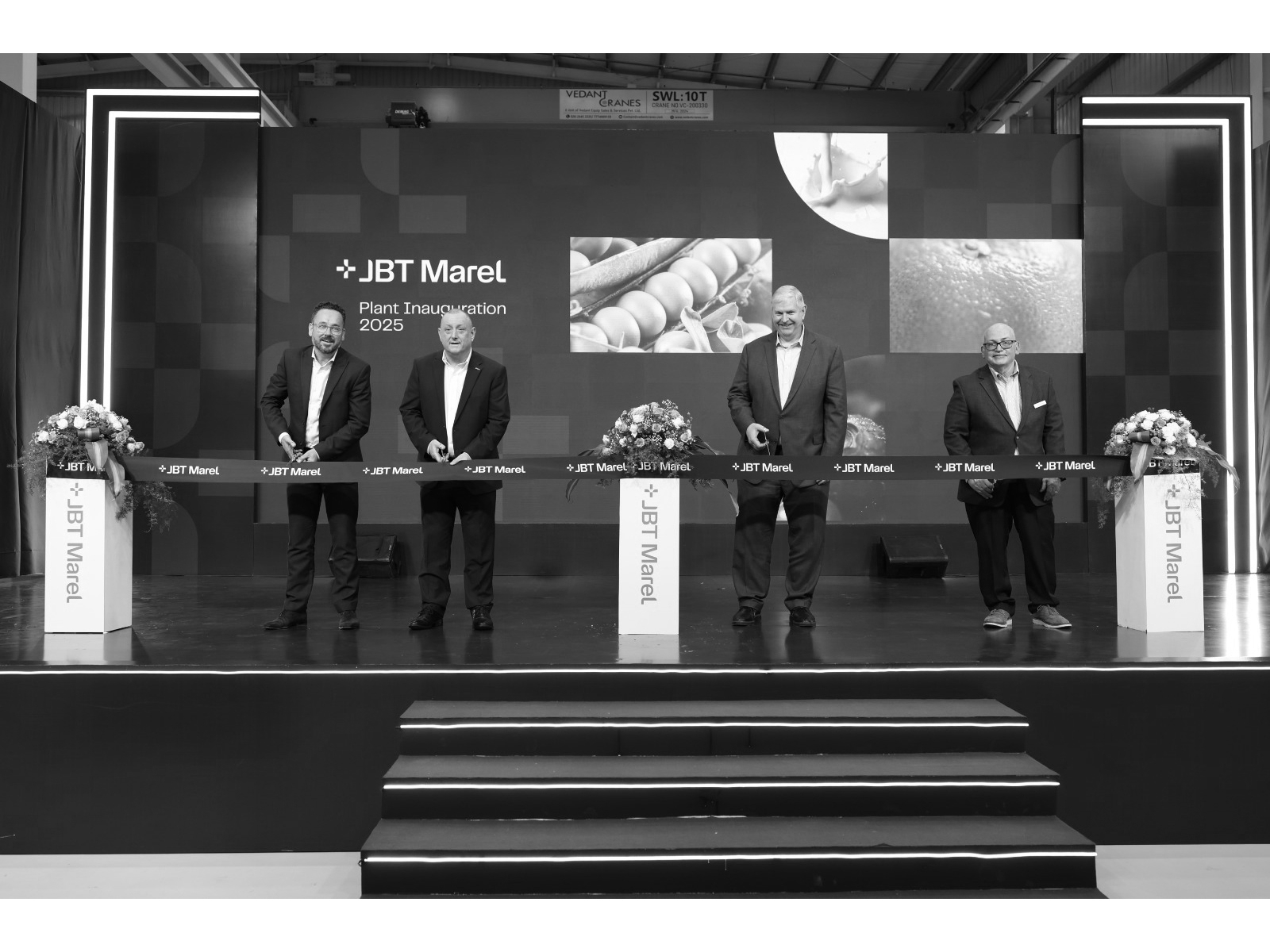
JBT Marel, a leading global provider of food processing technology, has inaugurated a Global Production Centre (GPC) in Pune, Maharashtra, strengthening its manufacturing and innovation capabilities in India and the wider Asia–Pacific region. The centre was officially opened on Tuesday in the presence of senior company executives, including Brian Deck, Chief Executive Officer; Augusto Rizzolo, Executive Vice President; Bob Petrie, and Jack Martin.
The new facility is designed to serve as a strategic hub for advanced food processing equipment, supporting JBT Marel’s customers in India while also supplying markets across South Asia, the Middle East, and Africa. According to the company, the Pune GPC will combine manufacturing, research and development, and customer application support, enabling faster prototyping, localised design, and reduced development cycles for new food processing solutions.
India’s food processing industry plays a significant role in the national economy, contributing about 12 per cent to the country’s manufacturing Gross Domestic Product (GDP) and employing more than 8 million people, according to government estimates. Rising consumer demand for packaged and ready-to-eat foods, combined with policy initiatives such as Make in India and the Production Linked Incentive (PLI) scheme, have made India a strategic location for multinational food technology companies.
The new Pune centre will focus on developing equipment tailored to India and other emerging markets. This includes compact and cost-optimised processing lines for small and medium-scale manufacturers, energy-efficient chilling and freezing systems, and machinery designed for region-specific products such as rice, dairy, spices, and ready-to-eat meals. The facility will also enable smarter, connected technologies by integrating Internet of Things (IoT) sensors, predictive maintenance tools, and AI-driven quality control, helping food processors improve efficiency and reduce waste.
JBT Marel stated that the centre is expected to strengthen its global supply chain by sourcing more components locally, lowering production costs, and shortening delivery timelines. Its proximity to customers will allow on-site testing and pilot runs, accelerating feedback and enabling customised solutions for Indian and regional food manufacturers. In addition, the facility aligns with the Atmanirbhar Bharat vision, contributing to reduced imports, increased exports, higher GDP, and employment generation. By establishing a major global production hub in India, JBT Marel is also likely to attract more international food processing companies to invest in the country.
The central and Maharashtra state governments are playing a supporting role through investment and manufacturing incentives, including 100 per cent foreign direct investment (FDI) under the automatic route for food processing, PLI subsidies, and industrial infrastructure in Pune. Improvements in highways, freight corridors, and port connectivity are expected to strengthen India’s position as an export hub for advanced processing equipment.
Over the next three to five years, the Pune GPC is expected to deliver sustainable and resource-efficient machinery, modular production lines with faster time-to-market, and training programs to build skilled talent in high-tech food manufacturing. The facility is positioned to serve both India’s growing domestic sector and neighbouring emerging markets.