
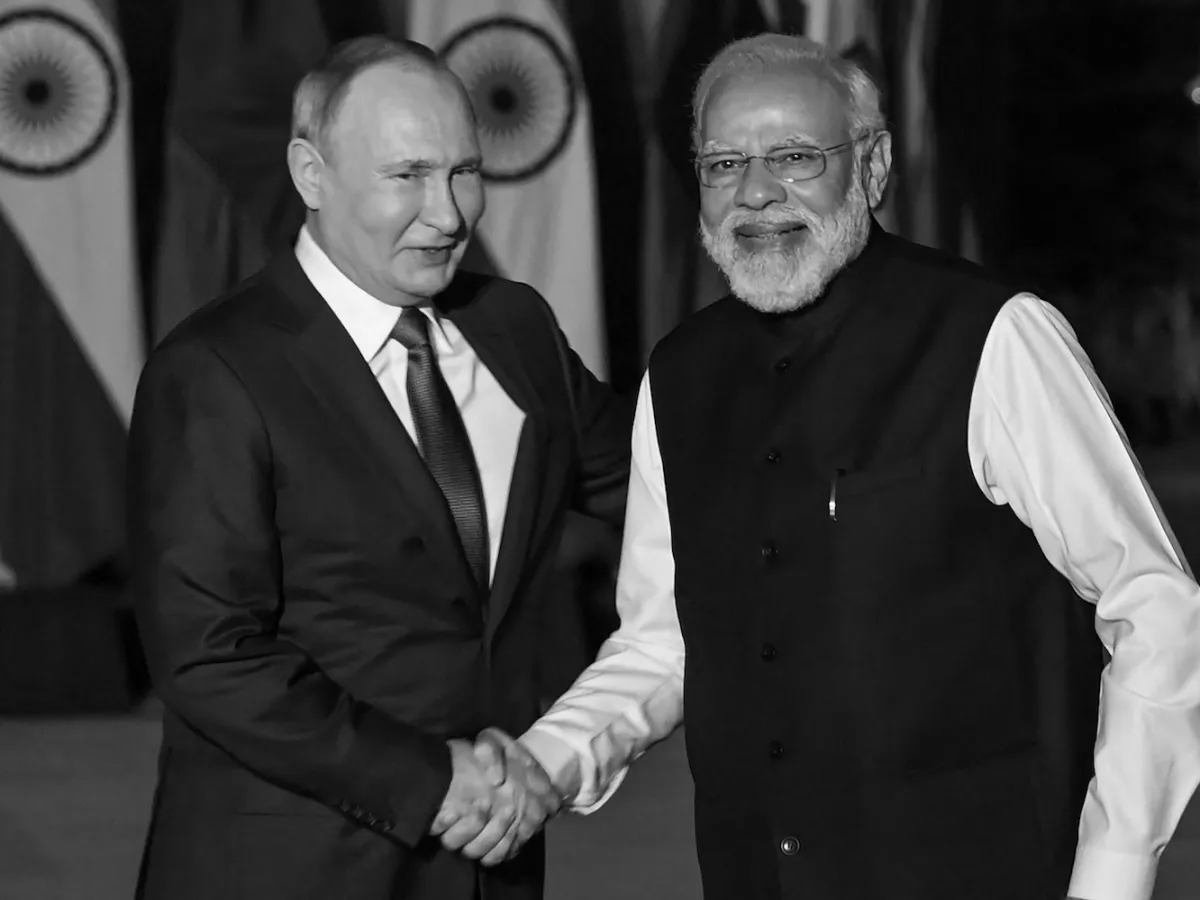
India’s balancing act: Putin’s visit and U.S. pressure reflect global diplomatic crossroads
Russia is “actively preparing” for President Vladimir Putin’s visit to India, expected before the end of December 2025, the Kremlin confirmed on Monday. The visit, which comes amid ongoing Western pressure on India to scale back Russian oil imports, is being seen as a key diplomatic event amid the continuing Russia–Ukraine war and shifting global power dynamics.
Kremlin spokesperson Dmitry Peskov told state media TASS that preparations are underway for the visit, which is planned “before the end of this year.” “We are currently actively preparing for Putin’s visit to India. We hope that it will be a meaningful visit,” he said.
If finalized, the visit would mark Putin’s first trip to India since 2021. The Russian leader last met Prime Minister Narendra Modi on September 1, 2025, in Tianjin, China, on the sidelines of the Shanghai Cooperation Organisation (SCO) Summit.
A visit amid war and global tensions :
The visit is expected to take place as Russia continues its military campaign in Ukraine, which began in 2022 and has since reshaped global alliances. Western nations, led by the United States, have imposed sweeping sanctions on Moscow and are pressuring countries, including India, to reduce their economic engagement with Russia.
India, however, has maintained a balanced diplomatic stance, calling for dialogue and diplomacy to end the conflict. While refraining from direct condemnation of Moscow, New Delhi has emphasized the need for territorial integrity, sovereignty, and peaceful resolution, positioning itself as a credible voice of moderation in the international arena.
Putin’s upcoming visit is expected to highlight India’s strategic independence and its ability to engage both Western powers and Russia amid geopolitical divides. Analysts believe the trip could serve to reaffirm bilateral cooperation in defence, energy, and technology, while also reflecting India’s growing importance as a bridge between conflicting global blocs.
India’s pragmatic peace push amid the Russia–Ukraine crisis :
India has maintained a measured and balanced stance on the Russia–Ukraine war, emphasizing the need for dialogue and diplomacy to end the conflict. Prime Minister Narendra Modi has reiterated that “this is not an era of war” and has expressed India’s willingness to play a constructive role in achieving peace. India has abstained from several UN resolutions condemning Russia’s actions, explaining that its focus is on fostering negotiation rather than division. At the same time, New Delhi has called for respect for the sovereignty and territorial integrity of all nations, including Ukraine. The Ministry of External Affairs continues to advocate for a peaceful settlement, while Foreign Minister S. Jaishankar has defended India’s continued import of Russian oil as an issue of national interest and energy security, asserting that India “should not be unfairly targeted” for pursuing its independent foreign policy.
Potential labour mobility agreement :
Media reports suggest that the two nations may sign a Labour Mobility Agreement during the December summit. The agreement would facilitate the official employment of more Indian workers in Russia under quotas managed by the Russian Ministry of Labour.
However, Peskov declined to confirm these reports, saying, “Let’s not get ahead of ourselves. We will announce all the agreements that are planned to be reached in due time.”
Energy ties under U.S. scrutiny :
The visit comes at a time when India faces intense diplomatic pressure from the United States and its allies to reduce imports of Russian crude oil, which have surged since the start of the Ukraine conflict. Despite this, India continues to defend its decision to buy discounted oil, arguing that its energy policy is guided by national interests and that affordable fuel is essential for economic stability.
Russia remains India’s top crude supplier, accounting for a major share of imports. Indian officials insist that the partnership is “non-political” and economically pragmatic, aimed at ensuring energy security amid global price volatility.
U.S. – India trade and Trump’s remarks :
Meanwhile, U.S. President Donald Trump said on Tuesday that trade negotiations with India are progressing positively, reiterating his claim that New Delhi has reduced its Russian oil imports. Speaking at the swearing-in ceremony of Sergio Gor as U.S. Ambassador to India, Trump said Washington continues to prioritize strengthening relations with New Delhi.
“We’re making a deal with India, a fair deal that’s good for both sides,” Trump said, adding that he maintains frequent contact with Prime Minister Modi. The U.S. President also suggested he may visit India as early as next year (2026).
Trump’s remarks reflect Washington’s delicate balancing act seeking to expand economic ties with India even as it nudges New Delhi to align more closely with the West on the Ukraine issue.
Strategic partnership and India’s global role :
India and Russia’s Strategic Partnership, signed in October 2000, remains a cornerstone of their bilateral relations, covering defence cooperation, nuclear energy, and trade. Despite global turbulence, both nations have managed to sustain a steady dialogue, underscoring the resilience of their partnership.
As the war in Ukraine continues and global fault lines deepen, India’s position as a neutral yet influential global actor has gained greater significance. Putin’s anticipated visit coupled with Washington’s renewed engagement underscores how New Delhi’s voice has become crucial in global diplomacy, capable of shaping conversations on energy, peace, and strategic balance.