
Indian women’s 1983 moment, a journey half a century in the making
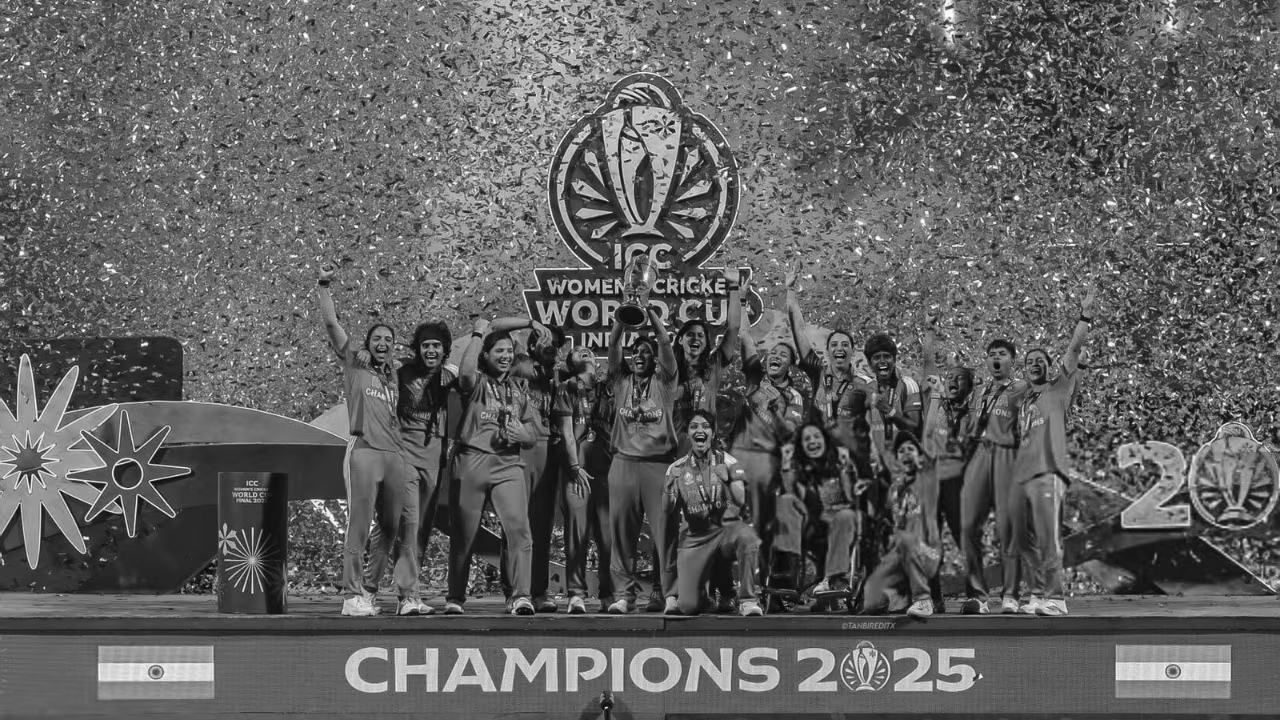
History came full circle on Sunday evening in Navi Mumbai as the Indian women’s cricket team lifted their maiden ICC Women’s World Cup title, defeating South Africa by 52 runs in a final that will be remembered for generations. With this victory, India finally achieved the moment its women cricketers had dreamed of for decades, their own ‘1983 moment’ , a triumph that symbolised resilience, growth, and the power of belief.
The win marked the end of a long and determined journey that began half a century ago, when women’s cricket in India existed far from the spotlight. What started in the early 1970s as a modest effort by a handful of passionate players has now transformed into a story of national pride. For years, Indian women’s cricket fought against limited opportunities and recognition, surviving on commitment rather than comfort. The 2025 World Cup victory stands as the ultimate reward for that perseverance.
India’s road to this triumph has been marked by both progress and heartbreak. The team made its World Cup debut in 1978 when India hosted the tournament, though they failed to move beyond the group stage. The following decades brought steady improvement, semifinal finishes in 1997 and 2000, a runners-up spot in 2005, and another final appearance in 2017 at Lord’s. Each setback deepened the team’s determination to rise higher, shaping the identity of modern Indian women’s cricket.
The foundation of this journey was laid in the 1970s, when the Women’s Cricket Association of India (WCAI) was formed in 1973. Those early years were marked by resource constraints and personal sacrifices. Players like Shantha Rangaswamy, Diana Edulji, and Shubhangi Kulkarni played without financial support or adequate facilities, travelling across cities on their own to represent the country. Their quiet strength built the path that later generations would walk on.
The 2000s brought a visible transformation. Icons such as Mithali Raj and Jhulan Goswami turned India into a competitive force on the global stage, earning respect and inspiring a new wave of talent. With the Board of Control for Cricket in India (BCCI) taking charge of women’s cricket in 2006, infrastructure, exposure, and professionalism improved significantly, helping India close the gap with top teams.
In recent years, the shorter T20 format also helped accelerate the sport’s growth. India’s run to the 2020 T20 World Cup final at the Melbourne Cricket Ground drew record crowds and global attention, confirming the sport’s expanding reach. Despite subsequent ups and downs, the team’s core, led by Harmanpreet Kaur, Smriti Mandhana, and Deepti Sharma, continued to evolve, blending experience with fearless new talent.
All of it came together in 2025, when India finally captured the title on home soil. The team delivered a composed batting display, followed by disciplined bowling that restricted South Africa’s chase and sealed a 52-run win. As celebrations erupted across the country, it became clear that this was more than a sporting victory, it was the realisation of a dream carried across generations.
From their humble beginnings in the 1970s to global triumph in 2025, the journey of Indian women’s cricket reflects persistence, transformation, and the power of representation. Just as the men’s 1983 World Cup win reshaped the nation’s cricketing destiny, this triumph will stand as a defining milestone, one that reaffirms that Indian cricket’s greatest stories are no longer written by one team alone.