
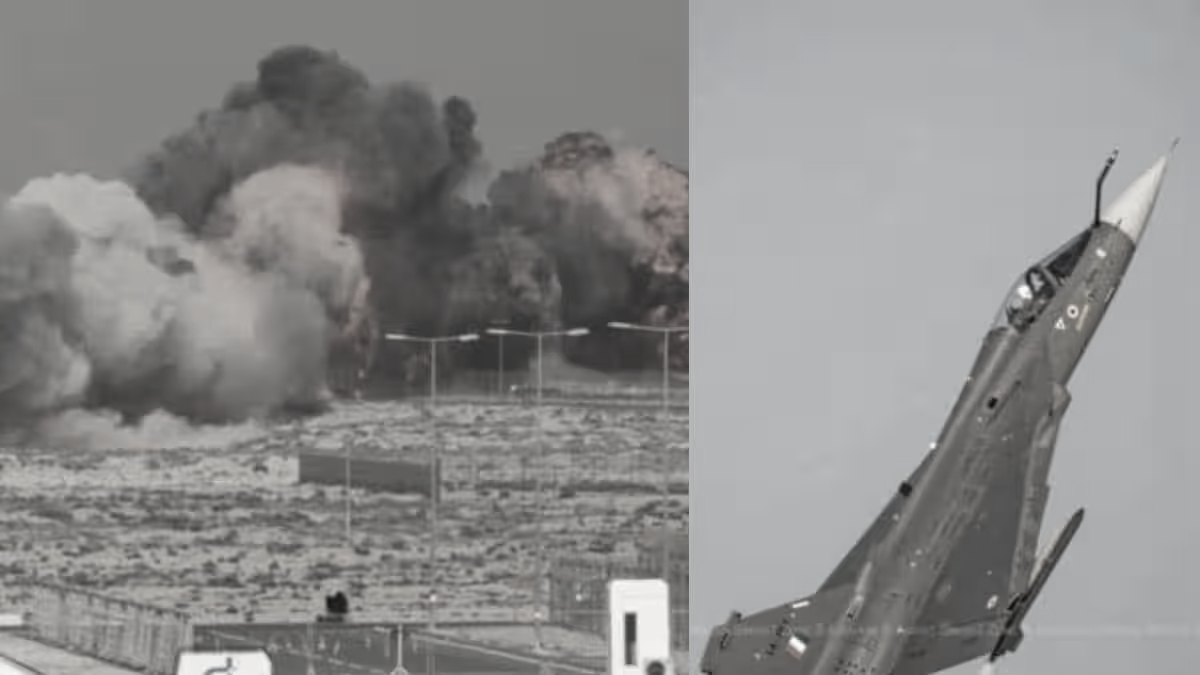
Indian Tejas aircraft crashes during Dubai Air Show display, pilot dies
A tragic accident took place at the Dubai Air Show on 21 November when an Indian Air Force (IAF) Tejas fighter jet crashed during a low-altitude manoeuvre at Al Maktoum International Airport. The crash occurred around 2:10 p.m. during a live flying display and resulted in the death of the pilot, Wing Commander Namansh Syal.
Following the accident, the Indian Air Force confirmed the loss of the aircraft and expressed deep sorrow over the passing of the pilot. The IAF announced that a Court of Inquiry had been ordered to investigate the cause of the crash, stating that all aspects including technical performance, environmental conditions, and pilot actions would be examined in detail. Hindustan Aeronautics Limited (HAL), the manufacturer of the Tejas aircraft, released a statement expressing condolences to the pilot’s family and affirmed that it would fully cooperate with the IAF and UAE authorities during the investigation. HAL clarified that the aircraft had undergone all required checks before the demonstration flight and urged the public and media to avoid speculation until official findings were released. The Ministry of Defence also responded, assuring that India would work closely with UAE investigators and emphasizing that transparency would be maintained throughout the inquiry. Officials further explained that earlier footage of fluid discharge from the aircraft, circulating on social media, showed normal condensation from onboard systems and was not related to any mechanical fault.
The investigation is now underway with teams examining flight data, maintenance logs, and video evidence from the air show. Both Indian and UAE authorities are participating in the probe, and early indications suggest that multiple possibilities are being reviewed. As with similar incidents worldwide, officials noted that determining an exact cause could take several weeks or months to ensure accuracy and avoid premature conclusions.
The Tejas fighter jet is considered one of the flagship achievements of the Make in India initiative, representing decades of research and development to strengthen the country’s self-reliance in defence technology. In recent years, Tejas has become central to the Indian Air Force’s modernisation plans, with India approving the purchase of 97 additional Tejas Mk1A aircraft worth ₹62,000 crore, adding to the earlier order of 83 aircraft. With a total of 180 Mk1A jets planned, this procurement marks the largest fighter aircraft order in India’s aviation history. Before the Dubai incident, Tejas had completed more than 10,000 successful sorties without a single crash caused by technical failure, giving it a strong safety record for a light combat aircraft.
In the broader context, the crash is unlikely to derail India’s Tejas plans. The aircraft remains central to the IAF’s fleet expansion and indigenous capability-building. Industry analysts believe the real test will be how effectively and transparently India handles the investigation and implements any corrective measures. A thorough inquiry, followed by visible safety enhancements and improved training standards, could help restore confidence and even strengthen the credibility of the program. For India, incidents like this often become turning points that drive improvements in design, safety procedures, and operational readiness.
While the loss of Wing Commander Syal is deeply saddening and the crash has cast a shadow over the program, it does not erase the technological progress India has made through Tejas. The aircraft continues to represent the country’s determination to develop advanced defence systems within its borders. The coming months will be crucial, as the investigation’s findings and the actions taken afterward will shape global and domestic perceptions. Despite the setback, Tejas remains an important symbol of India’s engineering capability and its long-term goal of achieving self-reliance in defence production.