
Indian Scientists Identify Echinorhinus Roinee, A New Deep-Sea Shark Species
Indian scientists have identified a new species of deep-sea shark in the Indian Ocean, resolving a decades-old misclassification in which the fish was believed to be identical to its Atlantic counterpart.
Named Echinorhinus roinee, or the Indian Bramble Shark, the species was identified by researchers from the Zoological Survey of India (ZSI) and the ICAR-Central Marine Fisheries Research Institute (CMFRI), according to a ZSI statement issued on Thursday.
The discovery marks an important step towards understanding the largely unexplored marine biodiversity of the Indian Ocean. The shark specimens were collected at Sakthikulangara Fishing Harbour in Kollam, Kerala, where they were brought ashore as accidental catches by deep-sea shrimp trawlers.
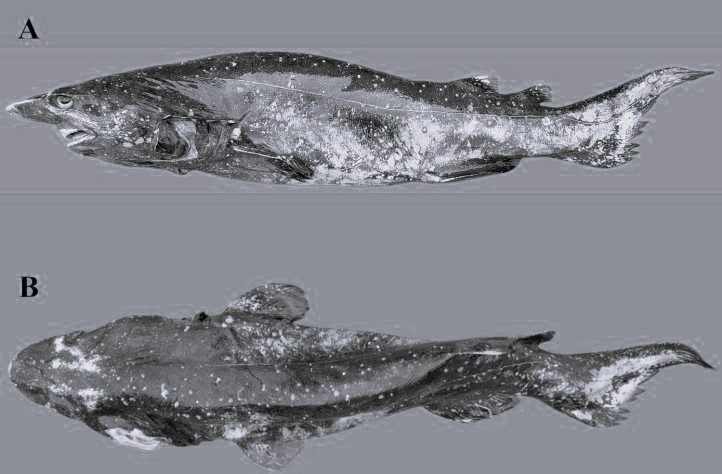
The species inhabits underwater slopes along the continental shelf at depths of 350 to 450 metres and can grow up to three metres in length. It has a dark brown to almost black body covered with large, thorn-like structures that gradually merge into plates with pointed edges as the shark matures.
Scientists identified several physical differences between the Indian Bramble Shark and related species, including larger eyes, bigger pelvic fins and a longer region between the snout and gills. DNA analysis further confirmed that it is genetically distinct from the Atlantic bramble shark (Echinorhinus brucus) and the Pacific prickly shark (Echinorhinus cookei).
Genetic records from other regions suggest that the newly identified species may also occur in waters of f Oman, Sri Lanka and Thailand, indicating a wider geographical distribution beyond the Indian coast.
ZSI Director Dhriti Banerjee said the findings demonstrated that several deep-sea species were yet to be properly identified and understood. She noted that the earlier misclassification had also affected fisheries records and marine ecological studies.
The research findings have been published in the journal Records of the Zoological Survey of India (Volume 126, Issue 1S, 2026). The study was funded by the Ministry of Earth Sciences under India's Deep Ocean Mission.