
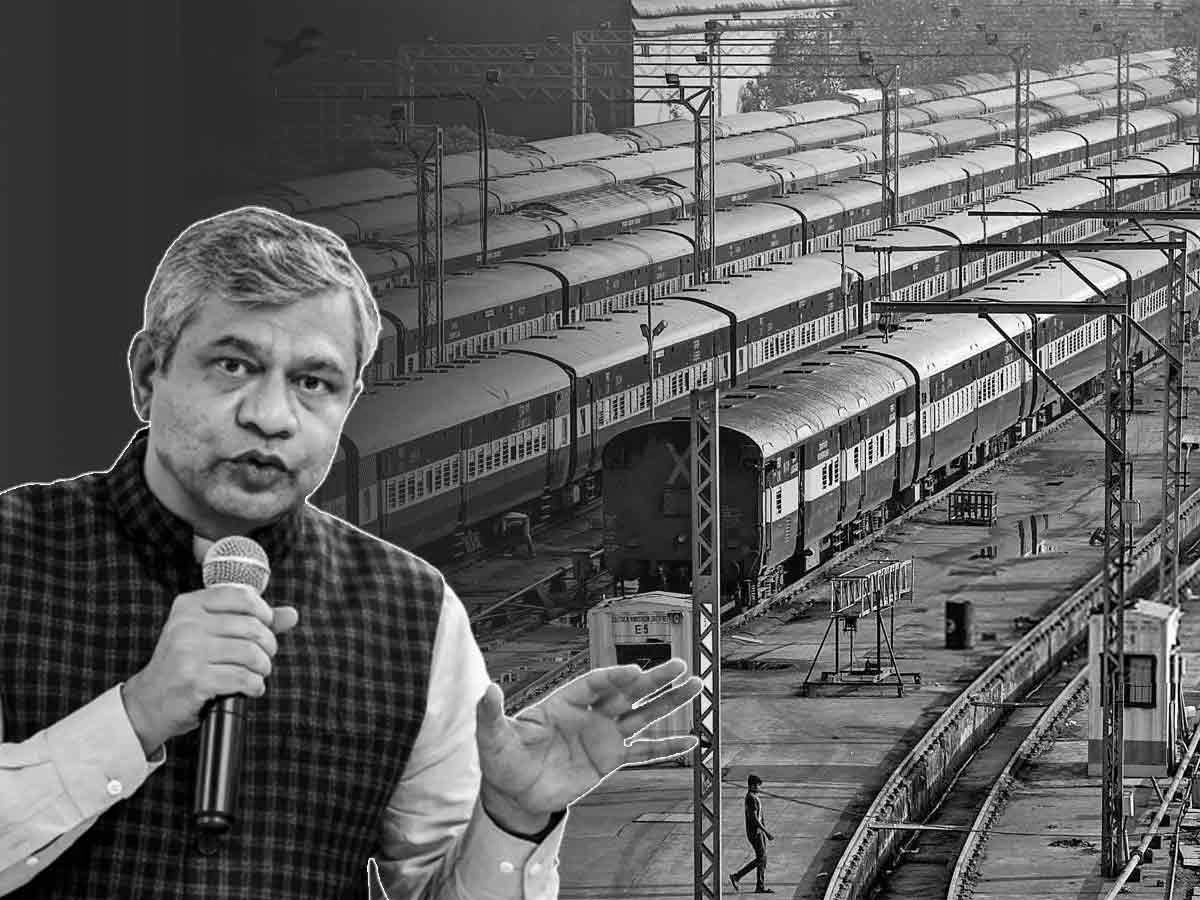
Indian Railways transformed after 50 years of neglect, says Vaishnaw
Union Minister for Railways, Communications, and Electronics & IT Ashwini Vaishnaw on Monday said Indian Railways, long neglected for over five decades, is now undergoing a major transformation under the NDA government. Speaking at the 41st Raising Day of the Railway Protection Force (RPF) in Valsad, Vaishnaw highlighted developments in infrastructure, train services, safety, and recruitment.
He announced that recruitment for RPF personnel will now happen annually instead of once every four to five years. “Annual recruitment will ensure a steady flow of new personnel, improving efficiency and cadre management,” the Minister said.
Over the past 11 years, nearly 35,000 kilometres of new tracks have been laid, 1,300 stations are being redeveloped, and 60,000 kilometres of tracks have been electrified, achievements that have drawn attention even from developed nations. Approximately 3,500 general coaches have been added to trains, with 7,000 more under production to serve passengers from all economic backgrounds.
Passenger safety has been upgraded with the installation of Kavach, an indigenously developed Automatic Train Protection system, on nearly 1,200 locomotives. The RPF is also being modernized with VHF walkie-talkie sets for officers and field staff.
Railways were first introduced in India by the British in 1853, when the maiden passenger train ran from Mumbai’s Bori Bunder to Thane, covering 34 km. Initially designed to transport goods, raw materials, and troops efficiently for colonial administration, the railways gradually became a backbone of India’s trade and passenger transport, connecting distant regions and fostering economic growth.
From steam engines to Vande Bharat: How trains evolved
India’s train network has undergone massive changes over the decades. The introduction of electric trains and mainline EMUs modernized urban travel, while the Vande Bharat Express, launched in 2019, marked a new era of high-speed, indigenously-built trains with reduced travel time and modern amenities.
Following this success, the government has rolled out Namo Bharat trains, with mass production set to begin, alongside new EMU and general coaches to meet growing passenger demand. “The Railways is working to provide modern, safe, and accessible services for all, especially middle- and low-income passengers,” Vaishnaw said.
In addition, Maharashtra is now undertaking a new underground tunnel project for bullet trains, part of the Mumbai-Ahmedabad high-speed corridor. This ambitious initiative will allow the bullet trains to pass beneath densely populated areas safely and efficiently, demonstrating India’s growing expertise in modern railway engineering.
Vaishnaw emphasized that for over 50 years, Indian Railways lacked investment and modernization. Today, with station redevelopment, electrification, high-speed trains like Vande Bharat, underground tunnels for bullet trains, and safety systems such as Kavach, the Railways is on track to become faster, safer, and more reliable. Annual RPF recruitment will further strengthen operations and security.
These steps, if sustained, could transform India’s Railways into a world-class system, balancing speed, safety, and inclusivity, while serving as a model for developing countries.
The transformation highlighted by Minister Vaishnaw is supported by the historical growth in railway budget allocations. In 1951-52, the Railways’ budget stood at around ₹1,000 crore, while the 2024-25 allocation exceeded ₹2.5 lakh crore, reflecting a more than 250-fold increase over seven decades. This surge has funded electrification of 60,000 km of tracks, 1,300 station redevelopments, the addition of thousands of modern coaches, and high-speed trains like Vande Bharat. Investments in advanced safety systems like Kavach and ambitious projects such as the Mumbai-Ahmedabad bullet train underground tunnels further demonstrate that modernization is no longer limited to plans but is being actively implemented, corroborating the minister’s claims.