
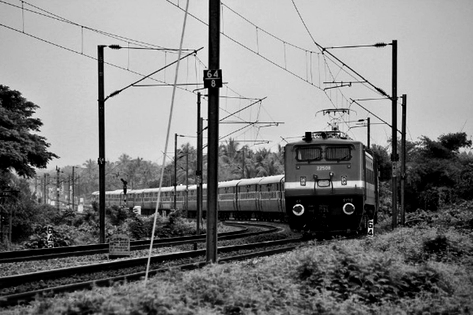
Indian Railways plans to double train origin capacity in 48 major cities by 2030
In a major infrastructure push aimed at meeting the rapidly growing demand for rail travel, Indian Railways has drawn up a comprehensive plan to double the originating train capacity in 48 major cities by 2030 , the Ministry of Railways said.
The move is aimed at easing congestion at India’s busiest railway hubs, many of which are already operating close to saturation due to a steady rise in passenger numbers. While the Railways has not yet released the complete list of cities, officials indicated that the plan will focus on high traffic metropolitan and tier one cities that originate a large number of long distance and suburban trains. These are expected to include major hubs such as Delhi, Mumbai, Chennai, Kolkata, Bengaluru, Hyderabad, Pune, Ahmedabad, Jaipur, Lucknow, Patna, and Guwahati, among others.
At present, several of these cities handle several lakh to over a million passengers daily , particularly in metropolitan regions with dense suburban rail networks. However, the Railways has not disclosed city wise annual passenger capacity figures , stating that detailed assessments are currently being prepared by zonal railways as part of the planning exercise.
As part of the capacity expansion, Indian Railways will augment existing terminals by adding new platforms, stabling lines, pit lines, and improved shunting facilities. New terminals will also be identified and developed in and around urban areas to reduce pressure on main stations. The plan includes setting up advanced maintenance facilities such as mega coaching complexes and enhancing sectional capacity through signalling upgrades, traffic facility works, and multi tracking on critical routes.
Officials said the exercise will not be limited to terminal stations alone. Nearby stations will be upgraded to ensure balanced capacity utilisation. For instance, in the Pune region, stations such as Hadapsar, Khadki, and Alandi will be developed alongside Pune railway station to distribute operational load more evenly.
The expansion will cater to both suburban and non suburban rail traffic, keeping in view the distinct requirements of each segment. A detailed city wise plan covering works that are already sanctioned, proposed, or planned will be submitted to the Railway Board’s Planning Directorate.
While the Railways has set 2030 as the target year for doubling capacity, it has stressed that capacity will be increased progressively over the next five years so that passengers can benefit at an early stage. Actions will be categorised into immediate, short term, and long term measures.
In a letter to all Zonal Railways, Satish Kumar , Chairman and CEO of the Railway Board, emphasised that proposals must be specific, time bound, and outcome oriented. He also directed zones to address not just terminal constraints but operational bottlenecks at stations, yards, and key sections across divisions.
No consolidated investment figure has been announced so far. Railway sources said the expenditure is expected to run into multiple tens of thousands of crore rupees , given the scale of terminal expansion, new station development, signalling modernisation, and track capacity enhancement involved. Final investment estimates will be firmed up once city specific plans are approved.
The initiative is expected to significantly ease congestion at major stations, improve train punctuality, and enhance overall passenger experience as rail travel demand continues to rise across the country.