
India withdraws bid to host COP33 climate summit in 2028: 2 years of preparation, 1 quiet letter
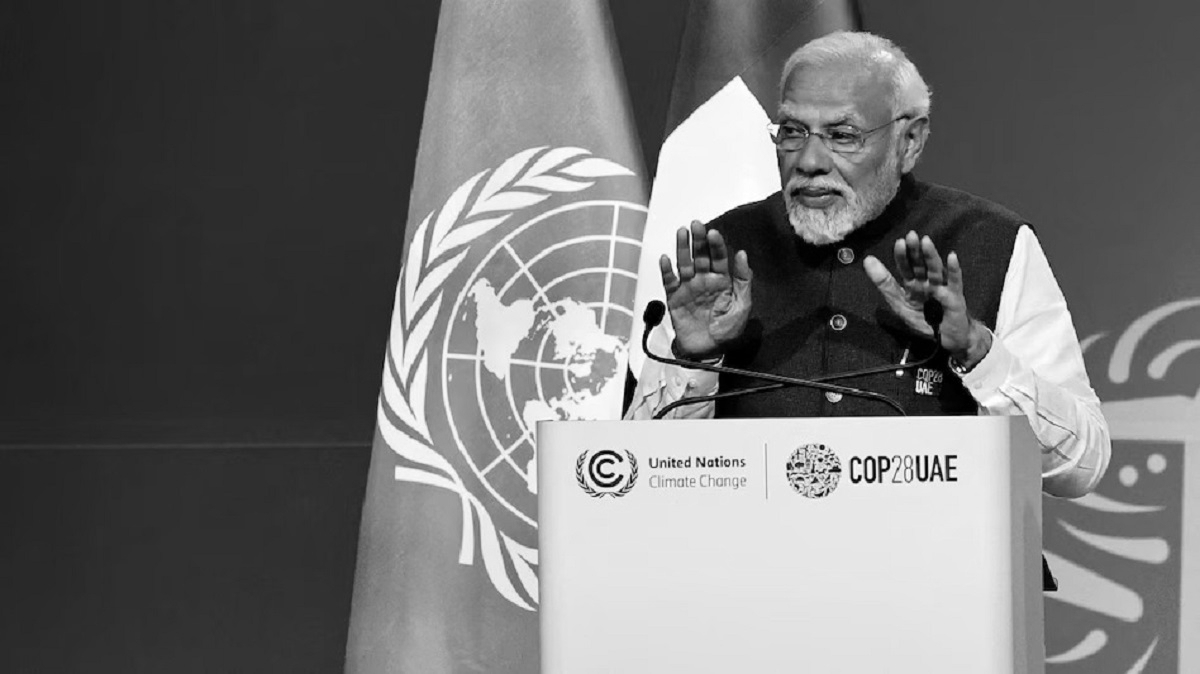
In December 2023, Prime Minister Narendra Modi stood before world leaders at COP28 in Dubai and made a pledge that reverberated across the global climate community. “India is committed to the UN Framework for Climate Change process,” he declared. “That is why, from this stage, I propose to host the COP33 Summit in India in 2028 .”
Less than two and a half years later, that promise has quietly been withdrawn.
COP, the Conference of the Parties , is the annual summit of nations bound by the 1992 UN Framework Convention on Climate Change , the treaty behind global climate agreements such as the Kyoto Protocol and the 2015 Paris Agreement . It is the forum where governments review climate progress, negotiate emissions targets, and shape policies that influence the planet’s climate future.
Hosting COP is not merely ceremonial. The host country presides over the conference, helps set the agenda, and works to build consensus among nearly 200 nations . For India, COP33 would have been only the second time hosting the summit , the first being COP8 in New Delhi in 2002 .
On April 2 , an Indian official informed other countries that the offer to host COP33 in 2028 was being withdrawn “following a review of its commitments for the year 2028.” There was no press conference, no detailed explanation, and the government has still not formally acknowledged the decision.
The reversal stands out because preparations had already begun. The environment ministry had even created an 11-member “COP33 Cell” within its Climate Change Division to coordinate planning. As recently as July 2025 , the BRICS bloc had formally welcomed India’s bid, suggesting the process was moving forward.
Officials have since pointed to several pressures behind the move. Ministry sources indicated concerns about the United States stepping away from the Paris Agreement under President Donald Trump , along with declining high-level participation at recent climate summits, including the conference in Belém, Brazil.
There was also a strategic concern. Hosting COP would require India to mediate global climate commitments that might conflict with its own domestic priorities . Holding the presidency means not only managing negotiations but also facing intense diplomatic expectations from nearly 200 countries.
The timing has raised questions. Just a week before withdrawing, India had strengthened its climate commitments under the UNFCCC and Paris Agreement, pledging to cut emissions intensity by 47% and generate 60% of electricity from non-fossil sources by 2035 .
The opposition response was swift and scathing. Congress general secretary and former environment minister Jairam Ramesh accused the government of a brazen “flip-flop,” alleging the original bid was never about climate leadership but political theatre. designed to generate diplomatic goodwill before the 2029 Lok Sabha elections , much like the G20 Summit was highlighted ahead of the 2024 polls.“No reasons have been given for this sudden decision. But it does reflect on the Modi government's true commitment to the 2015 Paris Agreement both in letter and spirit,” Ramesh said on X.
He also warned that hosting COP33 could have placed India under uncomfortable pressure. By 2028 , the IPCC’s seventh assessment report is expected, which could compel the host country to push for far more ambitious climate commitments than India is currently prepared to undertake.
Climate activist Harjeet Singh described the decision as “a strategic missed opportunity,” arguing that India has lost a chance to showcase its renewable energy expansion and electric mobility progress on a global stage.
For now, the host of COP33 remains uncertain . South Korea has been mentioned as a possible alternative, but its climate ministry said the government has not formally expressed interest, noting that hosting both the G20 summit and COP33 in 2028 could create logistical and financial strain.
India remains the world’s third-largest emitter and one of the countries most vulnerable to climate change impacts. Walking away from the presidency of COP33 does not change those realities, it simply means another nation will now guide the global climate negotiations in 2028 .