
India US Trade Deal Looks Bad. Until It Doesn’t.
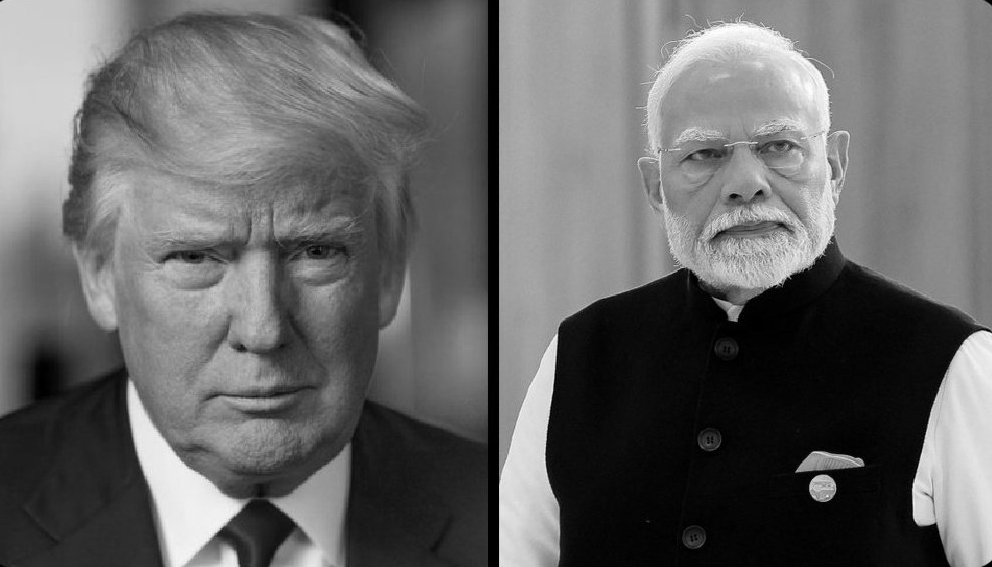
The India US interim trade agreement needs to be read not through headline numbers or social media soundbites, but through the detailed joint statement released by Commerce and Industry Minister Piyush Goyal , which provided far more substance than the initial celebratory posts by Donald Trump and Narendra Modi. That statement made it clear that the framework is not a one sided shopping list, but a reciprocal arrangement covering tariff relief, market access, non tariff barriers, technology cooperation , and a pathway towards a full bilateral trade agreement.
At first glance, the headline commitment, India intending to purchase 500 billion dollars worth of US goods over five years , appears excessive and politically awkward. The optics reinforce that discomfort, making India look as though it yielded under pressure. Yet this interpretation weakens once the numbers are placed in historical and structural context. India’s imports from the US have risen steadily for more than two decades, from an average of about 4 billion dollars annually in 2000 to 05 , to 15 to 20 billion dollars by 2010 to 15 , and to roughly 40 billion dollars a year in the 2021 to 25 period . Even without a trade pact, this trajectory alone suggests imports would naturally approach 60 billion dollars annually over the next five years .
Civil aviation explains much of this inevitability. India’s rapidly expanding aviation market has placed record aircraft orders running into well over a thousand passenger jets , to be delivered over the coming decade. While many of these aircraft will be sourced from the US, the story does not end there. The joint statement and industry responses underline a more important shift. Indian aerospace suppliers are becoming deeply embedded in US and global supply chains . As tariffs on aircraft parts fall and market access improves, India’s exports of components, sub assemblies and services can rise multi fold . Over time, this creates not just aircraft purchases, but capability building, employment, and high technology competence , a path similar to how China built depth in aviation manufacturing over two decades.
Energy arithmetic further demystifies the 500 billion dollar figure. India’s fuel import bill averaged around 150 billion dollars annually during the 2020 to 25 period , despite sharp price swings. With demand growth and global uncertainty, it would not be surprising if that bill touches 200 billion dollars a year in the next five years . Sourcing merely a quarter or a third of that energy from the US would account for a substantial share of the commitment, without any dramatic reshaping of India’s trade flows.
Agriculture, often portrayed as the most sensitive concession, is largely misunderstood. Most agricultural imports from the US, such as tree nuts, animal feed inputs and soybean oil, do not meaningfully compete with Indian farmers , because India does not produce these goods at scale. What is foregone is customs revenue , not livelihoods. That loss is modest and easily outweighed by gains elsewhere. Crucially, cheap apple imports remain protected , ensuring domestic producers in Himachal Pradesh and Jammu and Kashmir are insulated from price shocks.
Where the deal becomes genuinely positive is in access to the vast US market and institutional capital . Tariff relief for Indian exporters, clearer rules on digital trade, and commitments to address non tariff barriers significantly improve conditions for manufacturing, MSMEs and technology firms . Just as important is the signal to US institutional investors , particularly in technology and advanced manufacturing, that India intends to remain integrated into trusted supply chains. India’s exports to the US are already nearing 80 billion dollars annually , and given current momentum, 120 billion dollars a year within five years is no longer implausible.
The real weakness of the agreement lies not in economics, but in optics. The public narrative makes India appear to have cowered to Trump’s negotiating style. That discomfort is understandable. Yet diplomacy often involves managing personalities as much as policies. Appeasing an ego to secure long term market access, investment flows and technology spillovers is not surrender, it is realism .
Concerns that India is abandoning its long standing relationship with Russia are also overstated. With the possibility of a Ukraine Russia settlement emerging, and Volodymyr Zelensky stating that Trump has set a June deadline , sanctions relief could reopen space for Russian energy exports. If oil flows resume, India can buy again. If not, defence procurement, including S 400 systems and combat aircraft , remains firmly on the table. Strategic autonomy has not been traded away .
Viewed in isolation, the India US trade deal looks bad . Viewed through the lens of long term import trends, aviation demand, energy arithmetic, export growth, technology transfer and investment access , it looks far more calculated than capitulatory. The economics hold, the strategic upside is real, and the commitments are less dramatic than they appear. What needs better handling is the narrative, because while fundamentals compound quietly, optics travel faster than facts .