
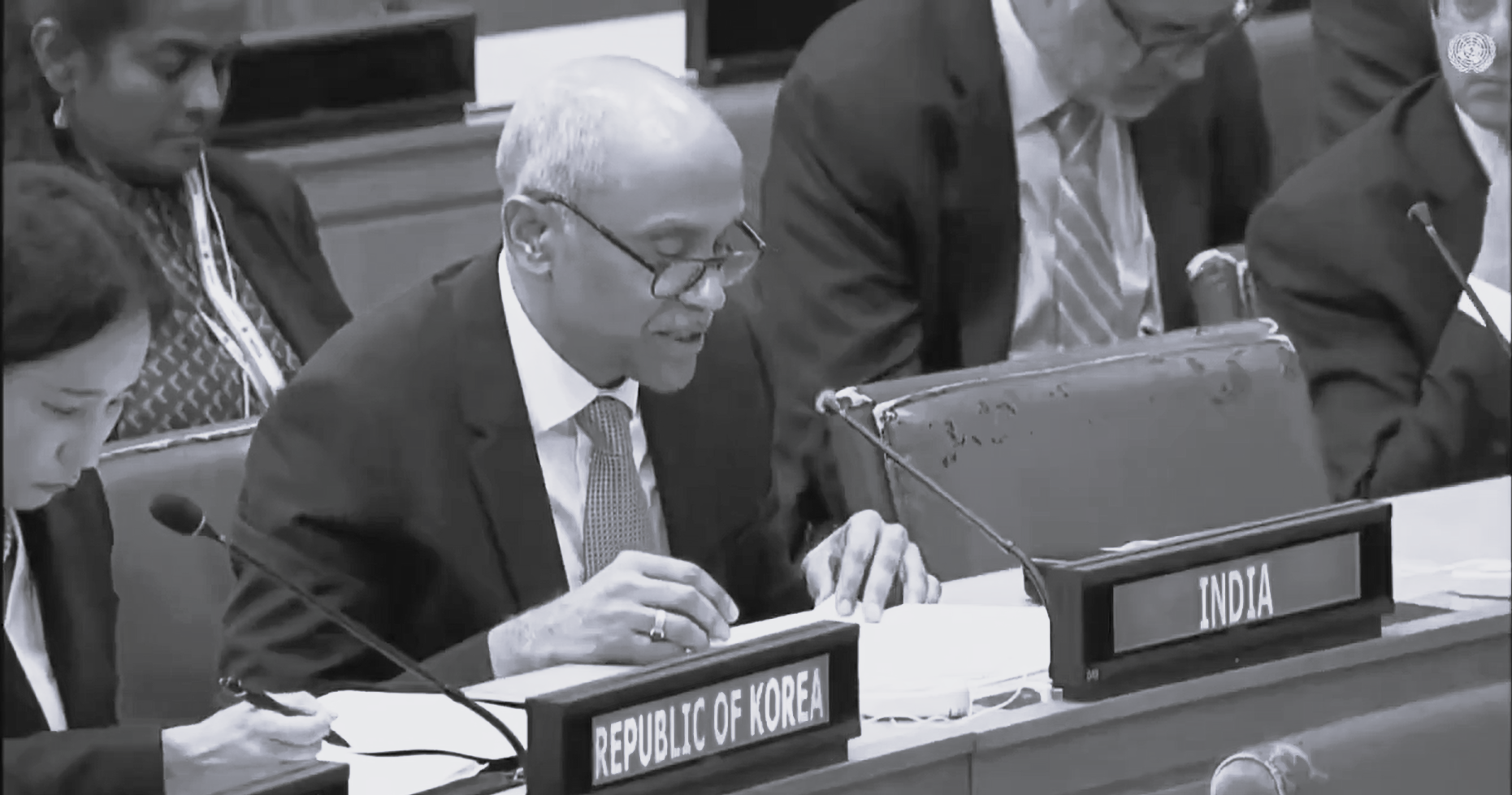
India Urges Global Action to Protect Freedom of Navigation
India has called for stronger international measures to protect freedom of navigation, saying shipping routes must not face threats, unlawful restrictions or interference as conflicts around the world disrupt important sea routes and put ships and seafarers at risk.
Speaking at a UN Security Council meeting on safe seas and freedom of navigation, India’s Permanent Representative to the UN, Ambassador Harish Parvathaneni, said recent disruptions to major shipping routes showed that maritime security is closely linked to global peace, economic growth, energy supplies and food security.
His remarks came amid continuing disruption around the Strait of Hormuz, a key route for global energy supplies. According to UNCTAD, around one-fourth of the world’s seaborne oil trade passes through the Strait. About one-third of global seaborne fertilizer trade, or nearly 16 million tonnes, also moves through the waterway. Disruptions can increase shipping charges, war-risk insurance and fuel costs, putting additional pressure on developing countries.
The crisis has also put thousands of seafarers at risk. The International Maritime Organization (IMO) has verified 80 attacks on international shipping in and around Hormuz since February 28, with at least 22 seafarers killed. Around 20,000 seafarers, port workers and offshore workers have been affected. At one stage, up to 400 ships carrying about 6,000 seafarers were unable to safely leave the Gulf. An IMO evacuation operation later helped evacuate 136 vessels involving around 2,900 seafarers.
Parvathaneni called for better plans to evacuate seafarers from conflict zones, along with medical help, crew changes and repatriation. India also said commercial ships must not become targets of geopolitical conflicts and backed a free, open and secure maritime system based on international law, including UNCLOS.
India warned that disruption at one major chokepoint can put pressure on other routes, increasing travel distances and costs and affecting energy, food and humanitarian supplies. It called for arrangements that can keep essential supplies moving during crises instead of waiting until a crisis ends to restore shipping.
India also highlighted its own maritime-security efforts. Operations in the Gulf of Aden and Red Sea have helped more than 449 merchant vessels carrying nearly 20.3 million tonnes of cargo and oil, worth over $8.4 billion, transit safely. The Indian Navy also deployed 11 units under Operation Urja Suraksha in the Western Arabian Sea.
New Delhi further highlighted the Information Fusion Centre–Indian Ocean Region (IFC-IOR) and called for cooperation against new threats such as unmanned systems, cyberattacks, GNSS interference and disruption of navigation and communication systems.
India said the goal should be to build a strong and resilient maritime system that can withstand crises before they spread into wider economic and humanitarian problems.