
India Upgrades 200+ Ports to Compete with World’s Best Logistics Hubs
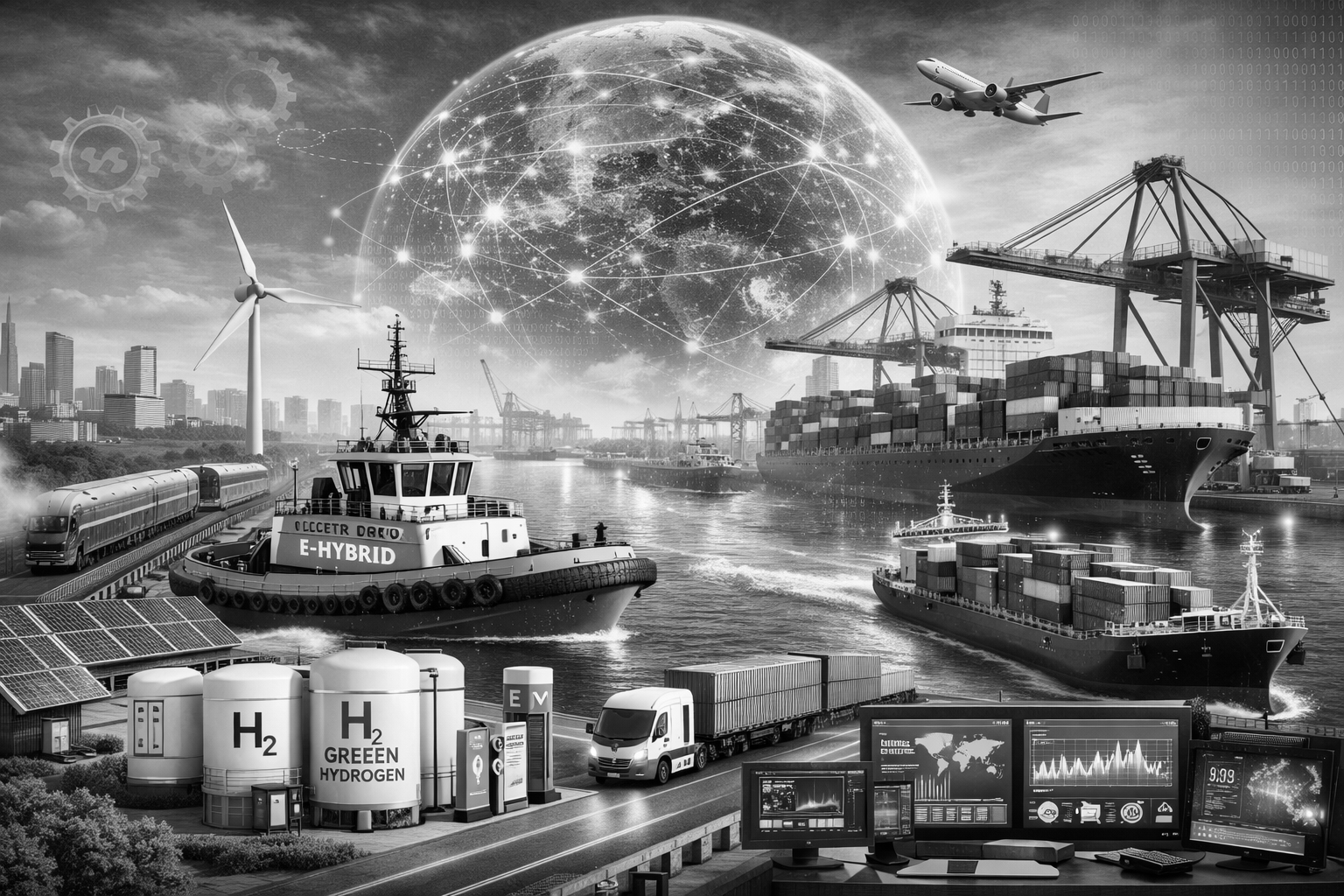
In a recent statement in the Lok Sabha, Union Minister Sarbananda Sonowal highlighted a series of green and modernisation initiatives being undertaken across Indian ports, including the Green Tug Transition Programme, renewable energy adoption, electrification of equipment, and green hydrogen hubs . The initiatives form part of the government’s broader push under Maritime India Vision 2030 to transform India’s ports into sustainable and globally competitive logistics hubs .
India’s maritime sector, which handles nearly 95% of trade by volume , is anchored by a vast network of around 13–14 major ports and over 200 non-major ports spread across its coastline. This extensive infrastructure is now undergoing a significant upgrade, backed by a multi-lakh crore investment pipeline aimed at boosting capacity, efficiency, and environmental sustainability.
At the core of this transformation is a long-term investment plan of ₹3–3.5 lakh crore under Maritime India Vision 2030 , complemented by the Sagarmala Programme , which envisages over 800 projects worth ₹5.8 lakh crore . These projects focus not only on expanding port capacity but also on creating port-led industrial ecosystems and improving multimodal connectivity .
Modernisation efforts are increasingly technology-driven. Ports are adopting AI-based monitoring systems, IoT-enabled logistics platforms, and digital tracking tools to reduce congestion and improve cargo handling efficiency. Recent projects across ports include enhanced rail-road connectivity, smart safety systems, and real-time operational analytics , which are helping reduce turnaround time and strengthen logistics performance.
At the same time, sustainability has emerged as a defining pillar. The government is pushing for electric and hybrid tugboats , shore-to-ship power supply , and zero-emission cargo movement within ports . Three major ports Deendayal, Paradip, and V.O. Chidambaranar have also been designated as green hydrogen hubs , aligning India’s maritime strategy with global decarbonisation goals. India aims to cut carbon emissions per cargo ton by 30% by 2030 , signalling a strong commitment to green shipping corridors.
Despite this rapid progress, India is still in a catch-up phase globally . The country ranks 38th in the World Bank’s Logistics Performance Index , reflecting improvements in infrastructure and shipment efficiency, but remains behind global leaders such as China and Singapore , which dominate transshipment and port efficiency. While India has significantly reduced ship turnaround time from nearly 96 hours to around 35 hours in recent years it still lags behind top global ports where turnaround is under a day.
To bridge this gap, India is focusing on building mega ports, improving last-mile connectivity, and reducing logistics costs , which remain higher than global benchmarks. Upcoming projects and policy reforms, including new maritime laws and increased private participation, are expected to further enhance ease of doing business in the sector.