
India unveils homegrown SODAR at IMD
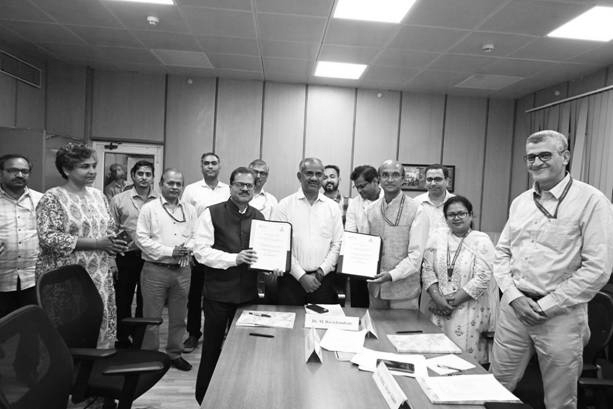
On the occasion of CSIR’s Foundation Day, an indigenous SODAR (Sound Detection and Ranging) system developed by CSIR–Advanced Materials and Processes Research Institute (AMPRI), Bhopal, was formally inaugurated at the India Meteorological Department (IMD), Delhi by Dr. M. Ravichandran, Secretary, Ministry of Earth Sciences. The launch marks a significant step towards strengthening India’s self-reliance in meteorological technology.
The inauguration was attended by senior officials including Dr. M. Ravichandran, Secretary, Ministry of Earth Sciences; Dr. Mrutyunjay Mohapatra, Director General of Meteorology, IMD; Prof. Thallada Bhaskar, Director, CSIR-AMPRI. The event was also attended by Dr. N. Kalaiselvi, Director General, CSIR and Secretary, Department of Scientific and Industrial Research (DSIR).
As part of the event, a Memorandum of Understanding (MoU) was signed between CSIR-AMPRI and IMD to facilitate joint research and development in areas such as climate studies, environmental monitoring, weather forecasting, climate variability, and disaster risk reduction. The agreement ensures that SODAR data will be shared across IMD’s network for forecast validation, research, and operational use.
The SODAR system uses sound waves to measure wind speed, wind direction, turbulence, and the vertical structure of the lower atmosphere up to 1–2 km above the ground. These measurements are crucial for improving the accuracy of weather forecasts, predicting storms, monitoring air pollution, and understanding boundary layer dynamics. By providing real-time atmospheric data, the system supports short-term and local forecasts, enhances disaster preparedness, and contributes to climate research.
Previously, India relied largely on imported meteorological equipment or satellite-based observations for studying the lower atmosphere, which offered limited resolution for local weather prediction. Traditional methods, such as weather balloons (radiosondes) and radar systems, provided valuable data but could not continuously monitor atmospheric conditions at fine spatial scales. The indigenous development of SODAR by CSIR-AMPRI marks a significant step towards self-reliance, enabling continuous, high-resolution, and real-time observations tailored to India’s diverse climatic regions.
Officials highlighted that the collaboration between CSIR-AMPRI and IMD will strengthen India’s indigenous technological capabilities and facilitate advanced scientific studies in meteorology and environmental sciences. The partnership is expected to expand further with the deployment of SODAR units across multiple locations, enhancing data availability and enabling more accurate, timely, and location-specific forecasts.
The launch of the indigenous SODAR system demonstrates India’s commitment to leveraging homegrown science and technology to support national weather services, protect communities, and advance research in atmospheric sciences.