
India-UK Trade Deal Goes Live: 99% Tariff-Free Access Opens Huge Export Opportunity
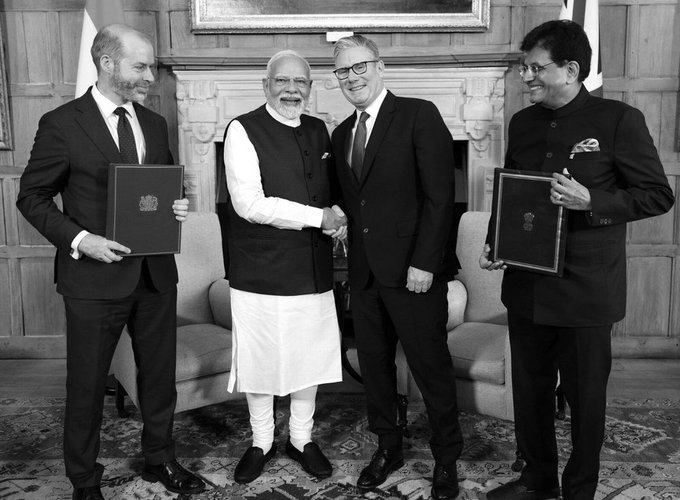
16 Jul 2026, New Delhi: The India-UK Comprehensive Economic and Trade Agreement (CETA) officially entered into force on Wednesday, alongside a companion pact on social security, marking the culmination of a deal signed a year ago by Prime Minister Narendra Modi and UK counterpart Keir Starmer in London. The agreement, concluded after 14 rounds of negotiations spanning three years, is India's most comprehensive trade pact with a G7 nation and the sixth FTA implemented by the Modi government, following similar deals with Mauritius, the UAE, Australia, EFTA and Oman.
From day one, the UK will scrap duties on 99 per cent of Indian tariff lines , wiping out rates that currently run as high as 70 per cent on processed foods, 21.5 per cent on marine products, 18 per cent on engineering goods and auto components, 16 per cent on leather and footwear, and 12 per cent on textiles. Labour-intensive sectors such as garments, carpets, fish and spices stand to gain the most, given their weight in India's export basket to Britain.
Running alongside CETA is the Double Contribution Convention (DCC) , which spares Indian professionals on UK assignments from paying social security twice. The exemption window has been stretched from three to five years , a change officials say will benefit over 75,000 professionals and more than 900 companies. On its part, India will phase in car and truck concessions, allowing 3.78 lakh conventional passenger cars from the UK at reduced duty over 15 years, while truck tariffs fall from 44 per cent to 8.8 per cent within an expanding quota. Scotch whisky's 150 per cent tariff will nearly halve immediately, before dropping further to 40 per cent over a decade.
Bilateral trade already grew 8.62 per cent to touch $25.12 billion in 2025-26, though India's exports slipped 7.6 per cent even as imports from the UK surged past 36 per cent. Commerce Minister Piyush Goyal , who led a business delegation to London last month to build momentum, called the deal a dismantling of "long-standing tariff walls." A separate understanding has also shielded most of India's steel exports from Britain's tightened import measures effective since July 1.
Industry voices on both sides were effusive. City of London's Lady Mayor Susan Langley described CETA as a "landmark moment," while UKIBC's Kishore Jayaraman said the pact puts both economies "on the right growth curve." Analysts at Grant Thornton expect Indian companies operating in the UK to double to 4,000 by 2030 , with technology, defence and life sciences leading fresh investment.