
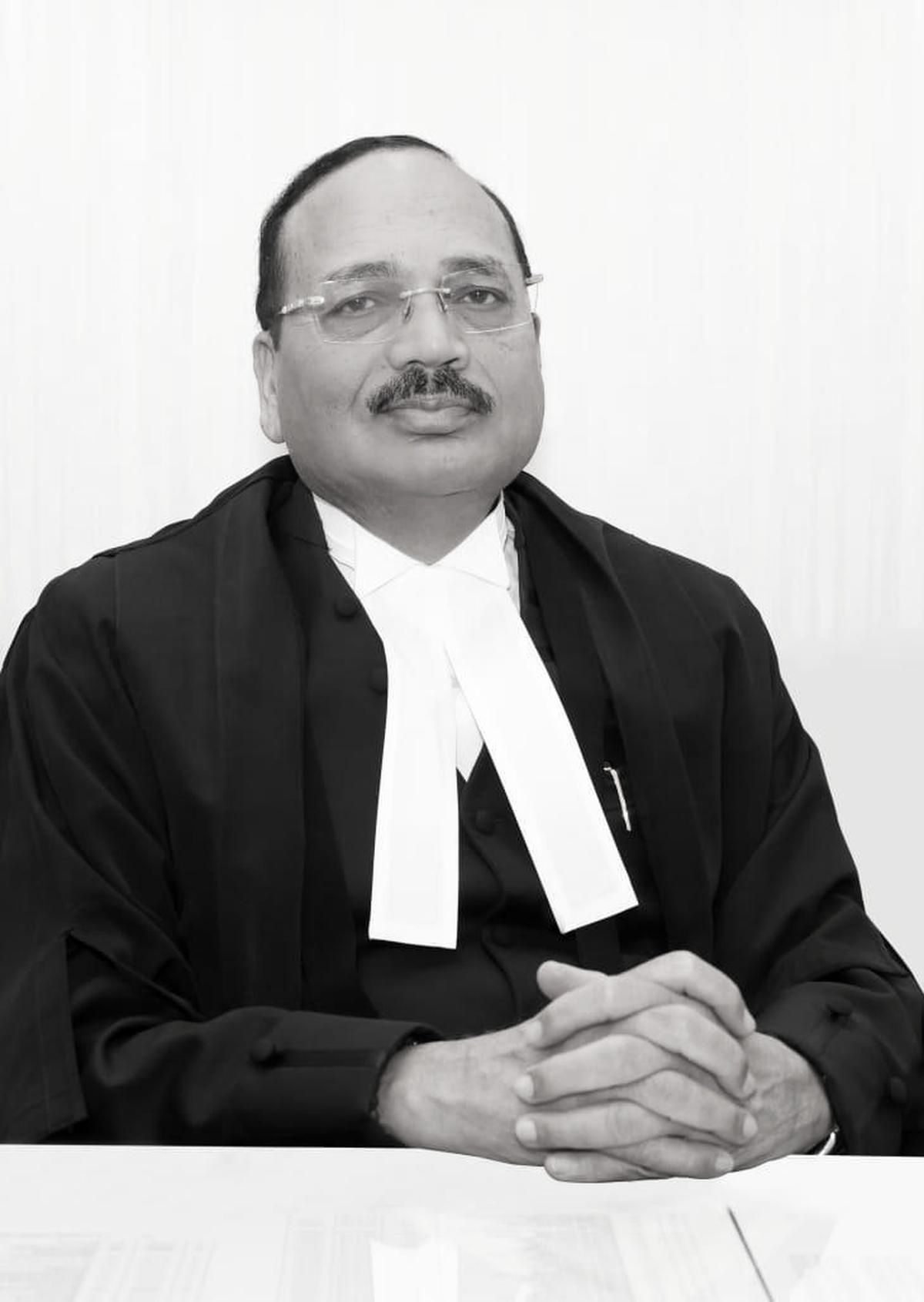
India to get a new CJI as Justice Surya Kant succeeds Justice B. R. Gavai
Justice Surya Kant, a senior Supreme Court judge, will take oath on Monday as the 53rd Chief Justice of India (CJI). He succeeds Justice B. R. Gavai, whose tenure is regarded as historic and socially significant for advancing inclusivity, judicial accessibility, and constitutional morality. Notably, it was Justice Gavai who recommended Justice Surya Kant as his successor. This follows the long-standing Supreme Court convention of appointing the senior-most judge as the next CJI, in line with the Second Judges Case (1993) and Third Judges Case (1998), which established the principle of seniority in recommending the next Chief Justice.
Born on February 10, 1962, in Petwar village of Hisar district in Haryana, Justice Kant’s journey exemplifies determination and dedication to public service. Educated in a modest village school with minimal resources, he went on to graduate from Government Post Graduate College, Hisar, and completed his law degree from Maharishi Dayanand University, Rohtak, in 1984. He began his legal practice in Hisar before moving to the Punjab and Haryana High Court. His swift rise in the legal profession led to his appointment as Advocate General of Haryana in 2000 and his designation as Senior Advocate in 2001. He was elevated as a judge in 2004, became Chief Justice of the Himachal Pradesh High Court in 2018, and joined the Supreme Court in May 2019.
During his Supreme Court tenure, Justice Kant has been part of several landmark rulings that shaped constitutional governance and public accountability. He was a member of the bench that upheld the abrogation of Article 370, ending Jammu and Kashmir’s special status in 2019. He played a key judicial role in the Pegasus spyware case, reinforcing privacy rights and state accountability. He also adjudicated on Bihar’s electoral rolls revision, highlighting electoral transparency and democratic fairness.
He is widely known for his balanced judicial approach, often blending constitutional principles with practical realities. In several judgments, he emphasized that constitutional rights must be protected while ensuring administrative efficiency and national security. He has frequently cautioned against judicial overreach while strongly protecting fundamental rights — reflecting his belief in legal restraint, fairness, and institutional balance.
His commitment to ordinary citizens is evident through his judgments that upheld the rights of domestic workers, undertrial prisoners, and socially marginalized groups. He has repeatedly stressed that the justice system must be accessible to the common person and not only to privileged litigants. He has also advocated gender representation in bar bodies and supported environmental protection with a citizen-centric perspective.
He takes over from Justice B. R. Gavai, the 52nd Chief Justice of India, who made history as the first Buddhist and the second person from a Scheduled Caste community to hold the nation’s highest judicial office. Justice Gavai, who authored nearly 300 judgments during his tenure beginning May 14, 2025, emphasized socio-economic justice, inclusivity, and upholding constitutional rights. His recommendation of Justice Surya Kant as his successor highlights a shared vision of a compassionate, accessible, and constitutionally robust judiciary.
With nearly 15 months ahead of him, Justice Surya Kant’s tenure as CJI is expected to uphold institutional integrity, expand access to justice, and further strengthen the judicial commitment to constitutional values and the rights of ordinary citizens.