
India Strengthens Nuclear Capabilities with New DAE Technology Facilities
In a major step towards strengthening India's nuclear technology ecosystem and strategic self-reliance, the Department of Atomic Energy (DAE) on Sunday inaugurated a new Versatile Deuterated Compounds Production Plant (VDPP) and commissioned a 24 kA Prototype Sodium Cell at the Heavy Water Board Facilities (HWBF) in Vadodara, Gujarat.
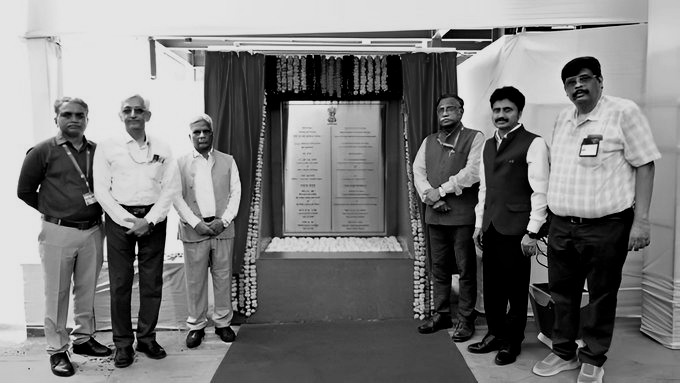
The facilities were inaugurated by Dr. Ajit Kumar Mohanty , Secretary, DAE and Chairman of the Atomic Energy Commission, who described the projects as important milestones in India's efforts to develop critical technologies through indigenous research and innovation.
The newly established VDPP is designed to produce high-purity deuterated compounds and solvents, which are essential for advanced scientific research, strategic applications, pharmaceuticals, nuclear science, and emerging technologies. The facility is expected to significantly reduce dependence on imports while strengthening the country's capability in producing specialized materials required for frontier research.
Alongside the plant, DAE commissioned a 24 kA Prototype Sodium Cell , marking a significant breakthrough in the indigenous production of nuclear-grade sodium . Sodium serves as a crucial coolant in fast breeder reactors, a key component of India's long-term nuclear energy strategy.
The project assumes greater importance as it supports the Fast Breeder Reactor Programme , which forms the second stage of India's three-stage nuclear power programme envisioned by nuclear physicist Homi Bhabha. The programme aims to maximize the use of India's vast thorium reserves and ensure long-term energy security.
According to DAE, the sodium cell has been developed through sustained research, engineering expertise and technological innovation, paving the way for industrial-scale production of nuclear-grade sodium within the country.
Officials said the two facilities will enhance India's technological independence in strategic sectors while contributing to the goals of AtmaNirbhar Bharat and Viksit Bharat . The developments are also expected to strengthen the domestic nuclear supply chain and support future expansion of the country's clean energy infrastructure.
The inauguration ceremony was attended by senior officials, scientists and engineers from the Department of Atomic Energy and the Heavy Water Board.