
India strengthens defence self-reliance with Tejas Mk1A, HTT-40 expansion
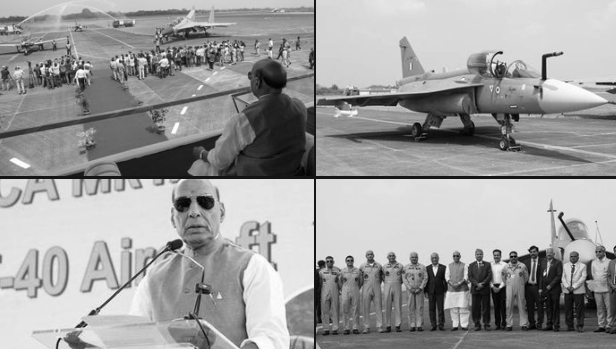
Defence Minister Rajnath Singh on Friday inaugurated two new production lines at Hindustan Aeronautics Limited (HAL) in Nashik. These include the third production line for the Light Combat Aircraft (LCA) Tejas Mk1A, a modern fighter jet, and the second production line for the HTT-40, a trainer aircraft used to prepare pilots for advanced fighter jets. He also flagged off the first LCA Mk1A produced at this facility.
A step towards self-reliance in defence
Speaking at the event, Rajnath Singh described the new aircraft as a shining symbol of India’s growing self-reliance in defence. He explained that, in the past, India depended heavily on other countries for critical military equipment, importing about 65-70% of its defence needs. Today, thanks to consistent efforts by the government and HAL, around 65% of India’s defence equipment is made within the country, and the goal is to reach 100% in the near future.
“When we came to power in 2014, India faced many challenges in defence. We had limited preparedness and relied too much on imports, which increased costs and strategic risks. We lacked advanced technology and private sector participation. Over the last decade, we focused on reforms, innovation, and domestic production. Today, India manufactures fighter jets, missiles, engines, and electronic warfare systems domestically,” Singh said.
Growth in production and exports
The Defence Minister highlighted the impressive growth in India’s defence production and exports over the past ten years. Annual production has risen from ₹46,429 crore in 2014-15 to more than ₹1.50 lakh crore in 2024-25. Defence exports have also increased dramatically, from less than ₹1,000 crore to ₹25,000 crore. The government has set an ambitious target of reaching ₹3 lakh crore in production and ₹50,000 crore in exports by 2029.
Preparing for modern warfare
Singh emphasized that modern warfare is changing. Conflicts today involve drones, cyberattacks, artificial intelligence, and next-generation aircraft. He urged HAL to expand its capabilities beyond the Tejas and HTT-40, including unmanned systems, advanced fighter jets, and even civil aviation.
The Defence Minister also praised HAL’s contribution to operations like Operation Sindoor, where the Indian Air Force used BrahMos missiles mounted on Su-30 jets to target terrorist hideouts. HAL Nashik provided round-the-clock support for maintenance and operational readiness during the mission, proving India’s ability to rely on homegrown technology in critical situations.
Collaboration and employment opportunities
Singh pointed out that the success of the LCA Tejas and HTT-40 projects is due to collaboration between the government, private industry, and academic institutions. The new Maintenance, Repair, and Overhaul facility at HAL Nashik will create new employment opportunities for local communities. He also noted that the HAL campus is now fully digital, paperless, and sustainable, reflecting India’s technological progress.
Dr DK Sunil, Chairman and Managing Director of HAL, said the new production lines have increased the division’s capacity, created around 1,000 jobs, and engaged more than 40 industry partners in the region. Defence Production Secretary Sanjeev Kumar described the LCA Tejas Mk1A and HTT-40 as examples of India’s design and manufacturing excellence, fully developed in the country by HAL, DRDO, the Aeronautical Development Agency, and the Indian Air Force.
Celebrating the milestone
The event concluded with a test flight of the LCA Tejas Mk1A, piloted by HAL’s Chief Test Pilot Group Capt KK Venugopal (Retd). The flight was followed by aerial displays of the Su-30MKI and HTT-40 aircraft. The Tejas Mk1A was honored with a water cannon salute, marking the occasion as a proud moment for India’s defence sector.
This event not only strengthens India’s aerospace production capabilities but also highlights the country’s growing self-reliance and readiness to meet modern defence challenges with homegrown technology.