
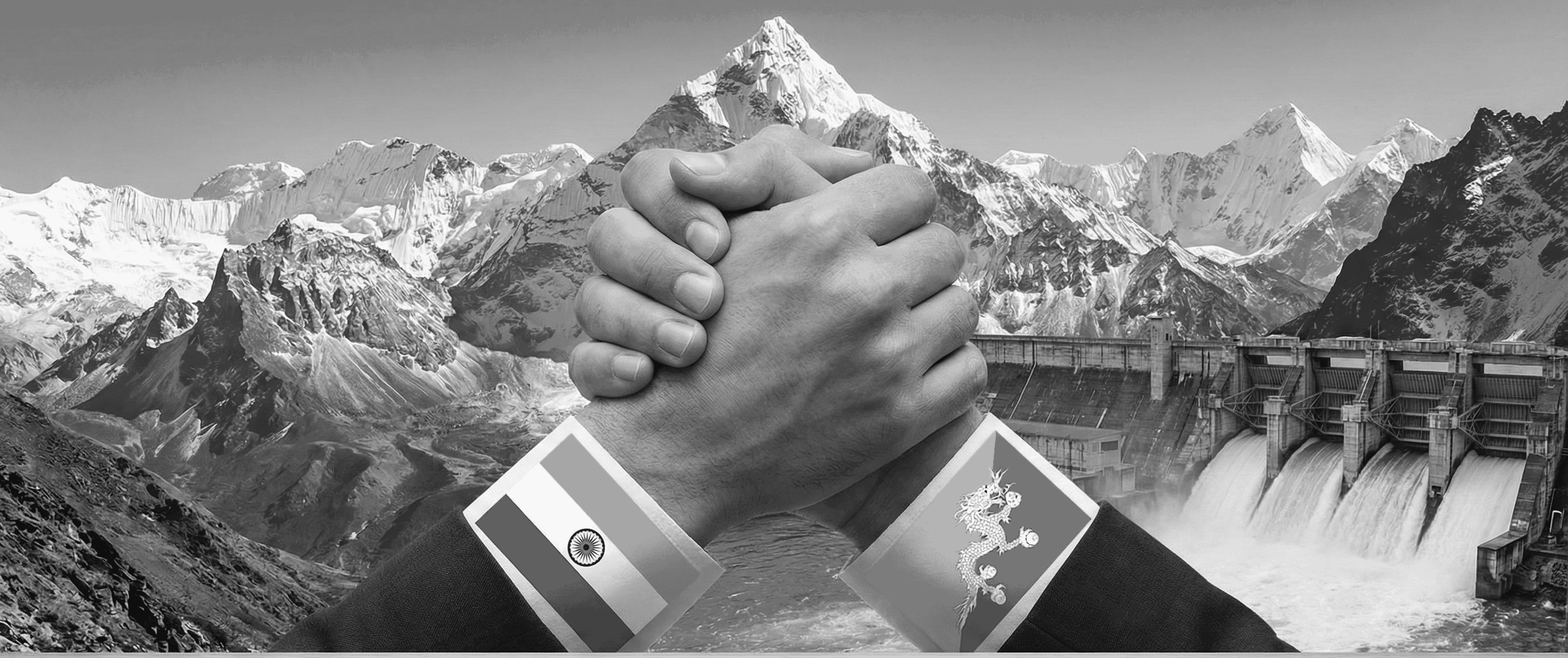
India strengthens Bhutan power ties amid China’s growing influence in Himalayas
India and Bhutan have given fresh momentum to their power partnership, expanding cooperation in hydropower development to drive clean energy growth, economic stability and strategic alignment in the eastern Himalayas. The renewed focus underscores the central role of energy ties in one of India’s closest regional relationships.
Bhutan’s minister of energy and natural resources, Lyonpo Gem Tshering, met union minister of power and housing and urban affairs Manohar Lal and minister of state Shripad Naik in New Delhi on 3 February. Beyond energy cooperation, the talks carried wider strategic weight, as closer India-Bhutan engagement helps reinforce stability amid China’s growing hydropower activity upstream on the Yarlung Tsangpo river (Brahmaputra) . Reflecting this priority, India continues to extend substantial budgetary assistance to Bhutan , with annual development aid typically exceeding ₹2,000 crore , the highest allocation among India’s neighbouring countries.
The discussions reaffirmed a partnership that began in 1961 and was formalised under the 2006 hydroelectric power agreement . Over the decades, landmark projects such as Chukha, Kurichhu, Tala and Mangdechhu have added more than 3,000 MW of installed capacity , transforming hydropower into Bhutan’s main export sector and a pillar of its economy.
A key focus of the meeting was the optimisation of generation from the Punatsangchhu-II Hydroelectric Project , which has recently become fully operational with Indian support through grants and concessional loans. The ministers also stressed the early commissioning of the Punatsangchhu-I project , delayed earlier by geological challenges but now being fast-tracked to further boost export revenues.
The future of the Sankosh Hydropower Project also featured prominently in the discussions, along with long-term transmission planning up to 2040 to ensure seamless evacuation of power and deeper integration with India’s national grid. Strengthened transmission links are expected to improve reliability and unlock new trading opportunities.
Both sides discussed easing approvals for power scheduling during lean months , a move aimed at stabilising tariffs and ensuring predictable revenues for Bhutan while helping India meet rising demand for renewable electricity.
Hydropower cooperation has also delivered tangible social and economic dividends, generating thousands of local jobs , improving connectivity in remote regions and building long-term technical expertise among Bhutanese workers. Environmental safeguards remain central, with projects largely following run-of-river designs that limit ecological impact and align with Bhutan’s carbon-negative status.
At a broader level, deeper India-Bhutan energy ties strengthen regional energy security , reduce dependence on fossil fuels and reinforce trust in a strategically sensitive Himalayan region.
The ministers welcomed the enduring friendship between the two countries and expressed confidence that expanded power cooperation would continue to yield economic, environmental and strategic gains for both India and Bhutan.