
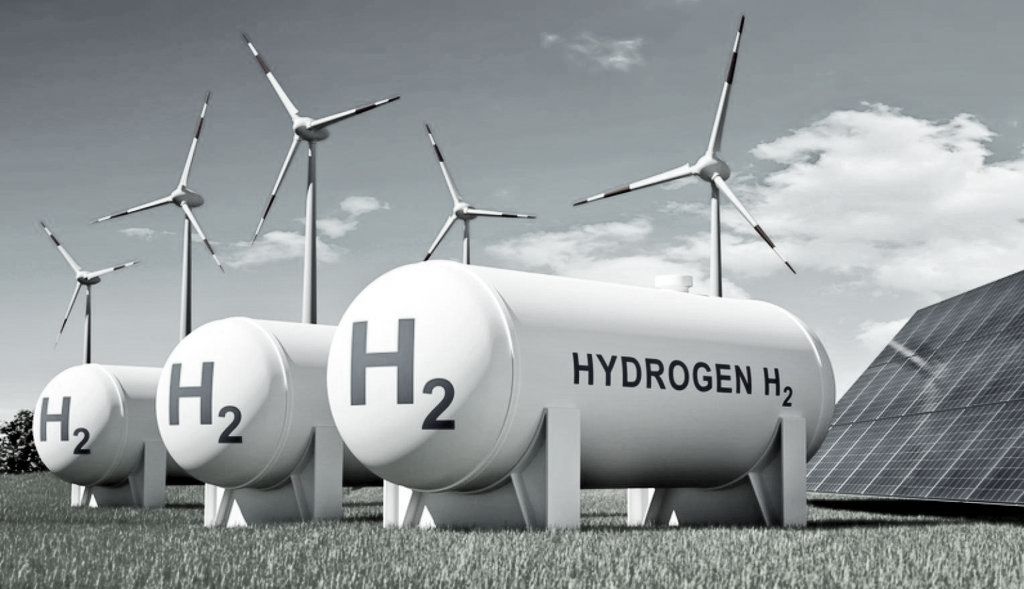
India steps up green hydrogen push to become global clean energy hub by 2030
The Government of India is accelerating efforts to position the country as a global leader in green hydrogen through the National Green Hydrogen Mission (NGHM), being implemented by the Ministry of New and Renewable Energy (MNRE). The mission aims to make India a major hub for the production, use and export of green hydrogen and its derivatives, while strengthening energy security and supporting long-term climate goals.
Green hydrogen is produced by splitting water using electricity generated from renewable sources such as solar and wind energy. Unlike conventional hydrogen made from fossil fuels, it does not emit carbon dioxide, making it a clean fuel option for sectors that are difficult to decarbonise through direct electrification, including refineries, fertilisers, steel, cement and heavy transport.
India has set an ambitious target of achieving 5 million metric tonnes per annum of green hydrogen production capacity by 2030. This scale-up is expected to significantly reduce the country’s dependence on imported fossil fuels and help lower industrial carbon emissions.
To reduce the high cost of green hydrogen production, the government has introduced multiple incentive-based schemes under NGHM. Under the electrolyser manufacturing incentive scheme, 15 companies have been awarded manufacturing capacity of 3,000 MW per annum, with incentives totalling ₹4,440 crore. Electrolysers are a key component in hydrogen production, and boosting domestic manufacturing is expected to reduce costs and import dependence.
In parallel, under the green hydrogen production incentive scheme, 18 companies have been awarded projects with a cumulative production capacity of 8.62 lakh tonnes per annum, encouraging large-scale production and competitive pricing. To promote early adoption in oil refineries, which currently rely on fossil-fuel-based grey hydrogen, two companies have been awarded contracts to supply a total of 20,000 tonnes per annum of green hydrogen.
Several policy measures have also been introduced to improve project viability. Green hydrogen and green ammonia plants commissioned on or before December 31, 2030, and using renewable energy, have been granted exemption from Inter-State Transmission System charges for a period of 25 years from the date of commissioning. This reduces the cost of transmitting renewable electricity required for hydrogen production. Additionally, duty benefits under Section 26 of the SEZ Act, 2005, have been extended to Special Economic Zone units for the installation, operation and maintenance of renewable energy equipment used exclusively for captive consumption.
The government is also supporting innovation and technology development to further lower costs. MNRE is funding a research and development project titled ‘Scale-up of Perovskite Tandem Solar Cells (Phase-I)’, with a total project cost of ₹83.19 crore, aimed at scaling up and indigenising advanced high-efficiency solar cell technology. Lower-cost and more efficient renewable power is expected to directly reduce green hydrogen production costs.
Green hydrogen is seen as strategically important for India’s energy transition. It enhances energy security, enables the large-scale integration of renewable energy, and provides a pathway to decarbonise heavy industries. It also creates new opportunities for domestic manufacturing, employment and exports, aligning with the government’s Make in India and Atmanirbhar Bharat initiatives. With growing global demand, India is positioning itself as a potential exporter of green ammonia and green methanol.
Environmentally, the adoption of green hydrogen helps reduce greenhouse gas emissions and local air pollution, supporting India’s commitment to achieve net-zero emissions by 2070. The details of these initiatives were shared by Union Minister of State for New and Renewable Energy Shri Shripad Yesso Naik in a written reply in the Rajya Sabha, outlining the government’s comprehensive approach to making green hydrogen affordable, scalable and globally competitive.